
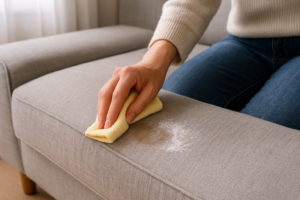
To remove a grease stain from a couch, first blot away any excess grease without rubbing. Cover the stain with baking soda or cornstarch for 15–30 minutes to absorb the oil, then vacuum the powder away. Repeat if necessary before using any moisture on the upholstery.
For older or deeply embedded grease stains, the safest method depends on the couch material and its cleaning code. Avoid soaking or aggressively scrubbing the stain, as this can spread the grease and may leave water marks or damage the fabric.
Below, we’ll walk through the safest methods for removing fresh and old grease stains from a couch, including what to do on fabric and microfiber upholstery.
🧵 How to Remove Grease Stains From a Couch Step by Step
1. Blot away excess grease. If the spill is fresh, gently blot or lift away as much grease as possible with a clean paper towel or cloth. Do not rub, as this can push the oil deeper into the upholstery.
2. Apply an absorbent powder. Cover the stained area with baking soda or cornstarch and leave it for 15–30 minutes. The powder helps draw grease out of the fabric before you introduce any liquid cleaner.
3. Vacuum the area. Remove the powder thoroughly with a vacuum. If the powder looks oily or the stain is still visible, repeat the absorption step.
4. Check the couch cleaning code. Before using water, detergent, or another cleaning solution, check the upholstery label. A “W” or “WS” fabric generally allows water-based cleaning, while an “S” code requires a solvent-based approach.
5. Treat the remaining stain gently. Use a cleaning method appropriate for the upholstery and work from the outside of the stain toward the center. Avoid soaking the fabric.
6. Let the couch dry completely. Allow plenty of airflow around the treated area and avoid sitting on it until both the surface and the material underneath feel dry.
🧽 What You’ll Need to Remove Grease Stains from a Couch
Before starting, gather the following basic items:
-
Clean white cloths or paper towels
-
Absorbent powder (such as baking soda or cornstarch)
-
Vacuum cleaner with upholstery attachment
-
Soft brush or dry cloth
-
Distilled water
Avoid harsh chemicals, bleach, or excessive water, as these can worsen grease stains or damage the fabric.
How to Remove Grease Stains From Different Couch Fabrics
Microfiber couches: Start with an absorbent powder and vacuum it away thoroughly. Before applying any moisture, check the cleaning code, since some microfiber upholstery requires solvent-based cleaning rather than water.
Fabric couches: If the care label allows water-based cleaning, use only a small amount of moisture after absorbing as much grease as possible. Blot gently instead of scrubbing to avoid spreading the stain.
Velvet couches: Grease stains on velvet require extra caution because moisture and rubbing can affect the pile and appearance of the fabric. Avoid aggressive home treatment, especially on delicate or natural velvet.
Leather couches: Do not use the same method you would use on fabric upholstery. Remove excess grease gently and use a product specifically intended for the type of leather on your couch.
⚠️ Common Mistakes to Avoid When Treating Grease Stains
Always check the manufacturer’s care label before attempting to remove grease stains, especially on delicate upholstery materials.
Many people accidentally make grease stains worse by using too much water or scrubbing too hard. Excess moisture can create water rings or push grease deeper into the cushion padding. Using heat, steam, or strong chemicals may permanently set the stain or damage upholstery fibers.
Always test any method on a hidden area first and allow the couch to dry fully between steps.
🧼 When Home Methods May Not Be Enough
Deep grease stains that have been sitting for months can penetrate inner cushion layers. When grease combines with dirt and body oils, home cleaning methods may not fully remove the stain. In these cases, professional upholstery cleaning may be the safest option, especially for delicate or expensive furniture.
Frequently Asked Questions
Can baking soda remove grease from a couch?
Baking soda can help absorb fresh grease from upholstery, but it may not completely remove an older stain. Let it sit on the affected area for 15–30 minutes, vacuum it thoroughly, and repeat if necessary.
Can I use dish soap on a grease stain on my couch?
Only if the couch’s cleaning code and manufacturer instructions allow water-based cleaning. Use a very small amount and test it on a hidden area first, since excess soap or moisture can leave residue or water marks.
Can old grease stains be removed from a couch?
Older grease stains can sometimes be reduced or removed, but they usually require more than one gentle treatment. If grease has penetrated deeply into the cushion or the upholstery is delicate, professional cleaning may be safer.
Should I use hot water on a grease stain?
Avoid soaking upholstery with hot water. Heat and excess moisture can affect some fabrics and may spread the stain or push contamination deeper into the cushion.
✅ Conclusion
Removing grease stains from a couch requires patience, gentle handling, and the right techniques. By focusing on absorption, minimal moisture, and careful blotting, you can reduce or remove many grease stains without damaging the fabric. Acting early and maintaining regular cleaning habits helps prevent grease buildup from becoming a long-term problem.