Sofa & Couch Cleaning

Practical upholstery and sofa-care guides covering stains, odors, moisture, drying, fabric-specific cleaning, and damage prevention. We focus on safe methods, realistic limits, and when professional upholstery care is the better option.

How Long Does a Couch Take to Dry? (2–72 Hours Explained)

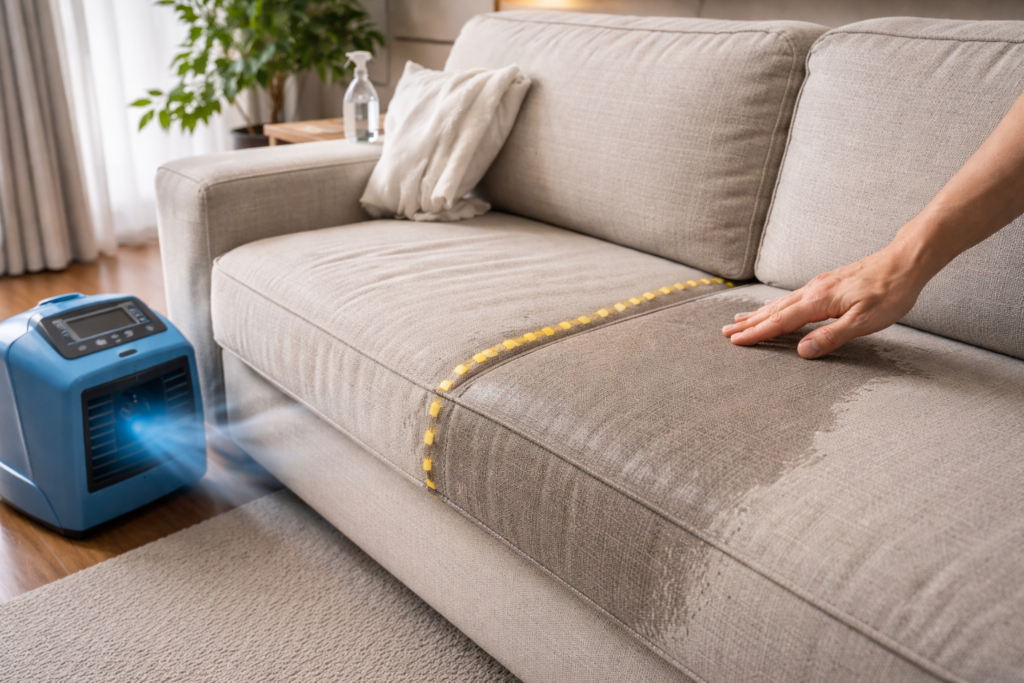
After light cleaning, the upholstery surface may feel dry within hours, but cushion foam and inner layers can take substantially longer. Any drying-time estimate is only a planning guide, not a reliable test that the couch is dry inside. After shampooing or extraction cleaning, ask the cleaner how much moisture may remain and follow their

How Long Does a Couch Take to Dry? (2–72 Hours Explained) Read More »

The Complete Guide to Couch Moisture and Drying After Cleaning or Spills

Moisture inside a couch is rarely just a surface issue. What appears to be a simple damp patch is often the beginning of a much deeper internal process. Upholstered furniture is built in layers, and each layer reacts differently to water exposure. Fabric may dry quickly. Foam may retain moisture for days. Internal structural elements

The Complete Guide to Couch Moisture and Drying After Cleaning or Spills Read More »

When Letting a Couch “Dry on Its Own” Is the Wrong Call

After a spill or cleaning session, one of the most common decisions is to simply let the couch dry on its own. The logic feels sound. Air exists, time passes, and moisture should evaporate naturally. In many minor cases, this approach works without noticeable consequences. For practical drying checks rather than a fixed waiting time,

When Letting a Couch “Dry on Its Own” Is the Wrong Call Read More »

When Using a Couch Normally After Cleaning Causes Hidden Damage

After cleaning a couch, the most natural step is returning to normal use. The surface looks dry, the smell seems neutral, and daily life resumes. In many cases, this works without issue. In others, using the couch “as usual” too soon can quietly contribute to damage that only becomes visible later. The difficulty lies in

When Using a Couch Normally After Cleaning Causes Hidden Damage Read More »

How Internal Moisture Shifts After a Couch Returns to Normal Use

After a couch has been cleaned or exposed to moisture, there is often a cautious period where use is limited. Once the surface feels dry and odors seem reduced, the couch typically returns to normal daily activity. What is less visible is how internal moisture continues to respond when regular use resumes. Moisture does not

How Internal Moisture Shifts After a Couch Returns to Normal Use Read More »

Why Couch Damage Often Appears After Drying Seems Complete

It can be frustrating to believe a couch has finished drying, only to notice damage days later. The fabric feels normal, odors have faded, and the surface appears unchanged. Then subtle issues begin to appear—wrinkles, sagging, stiffness, faint stains, or structural shifts. The timing can make it seem like something new has happened. A change

Why Couch Damage Often Appears After Drying Seems Complete Read More »

How Repeated Use Alters Drying Patterns Inside Cushions

Drying is not necessarily uniform across a couch: exposed fabric may dry before seams, dense padding, or the underside of a cushion. Repeated sitting can compress damp areas, but there is no reliable way to infer the direction of moisture movement from that alone. If the care label permits, lift removable cushions to improve airflow

How Repeated Use Alters Drying Patterns Inside Cushions Read More »

Why Couch Frames Can Stay Damp Long After Fabric Feels Dry

A couch can feel dry on the seat while water remains in seams, padding, or the frame after a heavy spill. Check accessible underside fabric and the edges of removable cushions for persistent dampness, staining, or a musty smell. Avoid cutting open upholstery, dismantling supports, or applying a heater directly to the frame to investigate.

Why Couch Frames Can Stay Damp Long After Fabric Feels Dry Read More »