
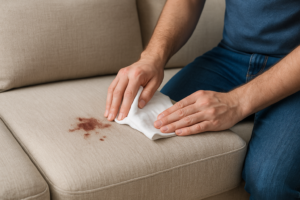
Blood stains on a couch can be alarming, especially when they appear suddenly and soak into the fabric. Whether caused by a small cut, a nosebleed, or an accident, blood stains tend to draw attention and can be difficult to remove if handled incorrectly.
Knowing how to remove blood stains from a couch properly can help prevent permanent discoloration. With the right approach and gentle techniques, many blood stains can be treated at home without damaging the upholstery.
This guide explains safe, practical methods for removing blood stains from a couch while protecting the fabric and avoiding common cleaning mistakes.
Why Blood Stains Are Difficult to Remove from Couches
Blood contains proteins that bind tightly to fabric fibers. When exposed to heat or harsh cleaning, these proteins can set into the upholstery, making stains much harder to remove.
Couch fabrics are often absorbent, and rubbing the stain can push blood deeper into the fibers. That’s why using cold water and gentle blotting is essential when treating blood stains.
Like red wine, blood stains bind quickly to fabric fibers and require careful handling, similar to the methods used when removing red wine stains from a couch.
According to first-aid guidance from Mayo Clinic, cold water is recommended for blood-related stains because heat can cause proteins to set into fabrics.
What You’ll Need to Remove Blood Stains Safely
Before starting, gather the following items:
-
Clean white cloths or paper towels
-
Cold distilled water
-
Mild liquid dish soap
-
Spray bottle
-
Baking soda (optional)
-
Vacuum cleaner with upholstery attachment
Avoid hot water, bleach, or ammonia, as these can permanently set blood stains or damage the fabric.
Step-by-Step: How to Remove Blood Stains from a Couch
Step 1 – Blot the Stain with Cold Water
If the stain is fresh, act as quickly as possible.
Lightly dampen a clean cloth with cold distilled water and gently blot the stained area. Do not rub. Blotting helps lift blood from the fabric without spreading it.
Step 2 – Apply a Mild Soap Solution
Mix a small amount of mild dish soap with cold water. Dampen a clean cloth with the solution.
Gently blot the stain from the outside toward the center. Use light pressure and work slowly to avoid pushing the stain deeper.
Step 3 – Rinse with Cold Water Only
Using a separate cloth dampened with cold distilled water, blot the area again to remove soap residue.
This step helps prevent residue buildup that can attract dirt later.
Step 4 – Use Baking Soda for Light Residue (Optional)
If a faint stain remains after cleaning:
-
Mix baking soda with a small amount of cold water to form a paste
-
Apply lightly to the stained area
-
Let it sit for 20–30 minutes
-
Gently blot and allow the area to dry
Once dry, vacuum lightly to remove residue.
Step 5 – Air Dry and Recheck
Blot excess moisture with a dry cloth and allow the couch to air dry naturally at room temperature.
Blood stains may look darker when wet, so always recheck the area once fully dry.
Common Mistakes to Avoid
These mistakes are common with many protein-based and beverage stains, including situations where people try removing coffee stains from a couch using heat or harsh scrubbing.
When removing blood stains from a couch, avoid these mistakes:
-
Using hot or warm water
-
Scrubbing aggressively
-
Applying too much liquid
-
Using harsh chemicals
-
Drying with heat or hair dryers
Gentle cleaning and patience usually lead to better results.
When Blood Stains Don’t Come Out
Some blood stains may not fully disappear with home methods, especially if:
-
The stain has dried for a long time
-
The couch fabric is delicate or untreated
-
Heat was used during previous cleaning attempts
Repeated DIY attempts can cause discoloration or fabric damage.
When to Call a Professional Cleaner
Professional upholstery cleaning may be the safer option if:
-
The stain is large or highly visible
-
The couch is made from specialty or light-colored fabric
-
Home methods haven’t improved the stain
Professionals can use controlled techniques to lift protein-based stains safely.
Conclusion
Blood stains on a couch can be stressful, but they don’t always mean permanent damage. Using cold water, gentle blotting, and mild cleaning solutions can help reduce or remove many stains safely at home.
The most important rule is to avoid heat and aggressive scrubbing. If DIY methods don’t work, stopping early and seeking professional help can protect your couch and extend its lifespan.
In most cases, knowing how to remove blood stains from a couch early can prevent permanent fabric damage.