
Deodorant stains on a couch can appear suddenly and are often overlooked until they leave visible white marks, yellow discoloration, or stiff residue on upholstery. These stains usually come from skin contact, lounging in light clothing, or resting arms on couch cushions after applying deodorant.
Understanding how to remove deodorant stains from a couch safely helps prevent fabric damage and discoloration. Because deodorants contain aluminum compounds, oils, and powders, they require a careful, fabric-friendly approach rather than aggressive scrubbing.
This guide explains practical and safe methods to remove deodorant stains from a couch while protecting the upholstery.
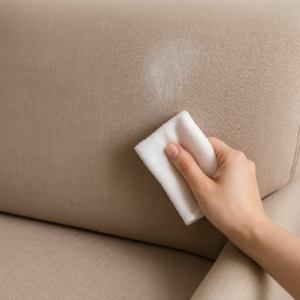
🧵 Why Deodorant Stains Are Hard to Remove from Upholstery
Many deodorants and antiperspirants contain aluminum salts that react with sweat and fabric fibers. These reactions can cause white chalky marks on dark upholstery or yellowish stains on light-colored fabrics.
Because deodorant residue often contains oils and waxes, techniques used for removing grease stains from a couch can also help prevent stubborn buildup on upholstery.
Over time, deodorant residue can harden and bond to couch fibers. Using harsh cleaners or excessive moisture may spread the stain or leave rings on the fabric.
According to dermatology and consumer safety resources, many antiperspirants contain aluminum compounds that can leave visible residue on fabrics.
🧰 What You’ll Need Before You Start
Before treating the stain, gather the following gentle supplies:
-
Clean white cloths or paper towels
-
Baking soda or cornstarch
-
Mild liquid dish soap (no bleach)
-
Cold water
-
Vacuum cleaner with upholstery attachment
Always test any cleaning method on a hidden area of the couch first.
🌀 Step-by-Step: How to Remove Deodorant Stains from a Couch
Step 1 – Remove Loose Residue
If the deodorant stain appears powdery or dry, gently vacuum the area using an upholstery attachment. This helps remove loose residue before applying moisture.
Avoid rubbing the stain, as this can push deodorant deeper into the fabric.
Step 2 – Absorb Oils and Residue
Sprinkle baking soda or cornstarch over the stained area. Let it sit for 15–20 minutes to absorb oils and deodorant buildup.
After the powder has done its job, gently vacuum or brush it away.
Step 3 – Clean with Mild Soap Solution
Mix a few drops of mild dish soap with cold water. Dampen a clean cloth and gently blot the stain from the outside inward.
Rinse the area by blotting with a cloth dampened in plain cold water.
Step 4 – Let the Fabric Air Dry
Allow the couch to air dry naturally at room temperature. Avoid heat or hair dryers, as heat can cause deodorant stains to set.
Once dry, lightly vacuum the area to restore fabric texture.
🧵 Fabric-Specific Considerations
Different couch materials respond differently to deodorant stain removal:
-
Fabric sofas usually respond well to gentle blotting and oil absorption
-
Microfiber couches require minimal moisture
-
Light-colored upholstery should always be spot-tested
-
Delicate fabrics may require professional care
❌ Common Mistakes to Avoid
-
Using hot water or steam
-
Scrubbing aggressively
-
Applying bleach or strong chemicals
-
Skipping the absorption step
These mistakes can make deodorant stains harder to remove.
Avoiding these errors is important, as many deodorant stains behave similarly to other common upholstery marks when cleaned improperly.
🛑 When to Call a Professional Upholstery Cleaner
If deodorant stains remain after multiple gentle attempts, or if the couch fabric is delicate or expensive, professional upholstery cleaning is recommended.
✅ Final Thoughts
Deodorant stains on a couch can look frustrating, but they are often manageable with patience and the right technique. By absorbing residue first, using gentle cleaners, and avoiding harsh methods, many deodorant stains can be reduced or removed without damaging upholstery.
If the deodorant stain lightens but does not fully disappear after the first cleaning attempt, allow the fabric to dry completely before repeating the process. Applying gentle treatments in stages is safer than over-saturating the couch in one session. Patience and light blotting often produce better long-term results than aggressive cleaning methods.