
Body oil stains on a couch are a very common issue, especially in homes where the sofa is used daily for relaxing, napping, or watching TV. Natural body oils transfer gradually from skin and hair onto upholstery, often leaving darkened or greasy areas that become more visible over time.
Knowing how to remove body oil stains from a couch helps prevent permanent discoloration and keeps upholstery looking clean and well-maintained. Because these stains build up slowly, they require a gentle but effective cleaning approach rather than harsh scrubbing.
This guide explains safe, fabric-friendly methods for removing body oil stains from a couch without damaging the upholstery.
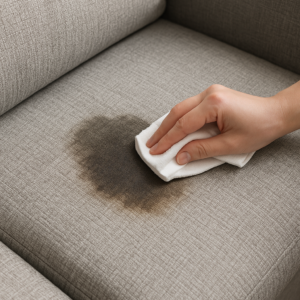
Why Body Oil Stains Are Hard to Remove from Upholstery ⚠️
Body oils contain natural fats that bond easily to fabric fibers. Over time, repeated contact causes these oils to accumulate, creating dark patches that attract dust and dirt.
Unlike fresh spills, body oil stains are often gradual and deeply absorbed. Using excessive water or strong cleaners can spread the oil further or leave permanent marks on the fabric.
Because body oils behave like other greasy residues, methods used for removing grease stains from a couch can also help lift oil buildup from upholstery fibers.
Textile care sources note that natural oils can bind strongly to fabric fibers, making gradual and absorbent cleaning methods more effective than harsh treatments.
What You’ll Need Before You Start 🧺
Before treating body oil stains, gather these gentle household items:
• Clean white cloths or paper towels
• Baking soda or cornstarch
• Mild liquid dish soap (grease-cutting, no bleach)
• Cold water
• Vacuum cleaner with upholstery attachment
Optional tool: A vacuum with an upholstery attachment can make it easier to remove baking soda and loosened residue from the fabric. (paid link)
Always test any cleaning solution on a hidden area of the couch first.
How to Remove Body Oil Stains from a Couch Safely 🛋️
Step 1: Absorb Excess Oil
Sprinkle baking soda or cornstarch generously over the stained area. Let it sit for at least 20–30 minutes so it can absorb oils trapped in the fabric.
Once the powder has absorbed the oil, gently vacuum it away using an upholstery attachment.
Step 2: Clean with Mild Soap Solution
Mix a few drops of mild dish soap with cold water. Dampen a clean cloth with the solution and gently blot the stained area, working from the outside inward.
Avoid rubbing, as this can push oil deeper into the upholstery fibers.
Step 3: Rinse Lightly and Blot Dry
Blot the area with a cloth dampened in plain cold water to remove soap residue. Press with a dry towel to absorb excess moisture.
Allow the couch to air-dry completely.
How to Treat Older or Set-In Body Oil Stains
For stains that have built up over time, repetition may be necessary.
If body oil buildup also causes lingering odors, gentle deodorizing techniques may help refresh the couch after stain removal.
Reapply baking soda or cornstarch and allow it to sit longer before vacuuming. Follow with gentle soap blotting, letting the fabric dry fully between attempts. Slow, repeated treatments are safer than aggressive cleaning.
Fabric-Specific Considerations 🧵
Different couch materials react differently to oil removal:
• Fabric sofas usually respond well to absorbent powders and mild soap
• Microfiber couches require minimal moisture and careful blotting
• Light-colored upholstery should always be spot-tested
• Delicate fabrics such as velvet or suede may require professional care
Always follow the manufacturer’s care label when available.
Common Mistakes to Avoid ❌
• Scrubbing aggressively
• Using hot water or steam
• Applying bleach or harsh degreasers
• Over-saturating the fabric
These mistakes often cause body oil stains to spread or become permanent.
When to Call a Professional Upholstery Cleaner 🧑🔧
If body oil stains remain after several gentle attempts, or if the couch fabric is delicate or expensive, professional upholstery cleaning is the safest option.
Professionals can remove deeply embedded oils without damaging upholstery fibers.
Body oil stains on a couch often build up gradually, which makes them harder to notice until dark marks appear. When you remove body oil stains from a couch using gentle absorption and fabric-safe cleaning methods, you protect the upholstery fibers while improving the couch’s appearance. Repeating the correct steps to remove body oil stains from a couch can help prevent permanent discoloration and extend the life of your furniture.
Final Thoughts 🛋️
Body oil stains on a couch can develop slowly, but they don’t have to be permanent. By absorbing oils first, using mild cleaners, and cleaning patiently, many body oil stains can be reduced or removed safely.
Regular maintenance and occasional spot cleaning help prevent body oil buildup and keep your couch looking fresh over time.