
Removing mold or mildew from a couch is not just an appearance issue.. It can cause unpleasant odors, fabric damage, and potential health concerns if left untreated. These problems usually develop in humid environments, after water exposure, or when a couch is placed in a poorly ventilated space.
Even after visible mold or mildew is removed, musty smells can remain, and learning how to remove odors from a couch naturally can help restore freshness.
Knowing how to remove mold or mildew from a couch safely helps protect both the upholstery and indoor air quality. The key is acting early and using fabric-safe methods that stop mold growth without spreading spores.
This guide explains how to remove mold or mildew from a couch safely at home while minimizing the risk of damage.
Why Mold and Mildew Form on Upholstery ⚠️
Mold and mildew thrive in moisture-rich environments. When a couch absorbs humidity, spills, or condensation and does not dry properly, spores can settle deep into the fabric.
Common causes include:
-
High indoor humidity
-
Water spills or leaks
-
Placing couches near damp walls or basements
-
Poor airflow or ventilation
Daily use combined with trapped moisture can worsen mildew problems, especially when body oils soak into upholstery fibers over time.
Unlike surface stains, mold can spread invisibly beneath fabric layers, which is why gentle but thorough cleaning is essential.
Health authorities note that indoor mold exposure may cause respiratory irritation if not handled properly.
What You’ll Need Before You Start 🧺
Prepare the following items before treating the couch:
-
Clean white cloths or paper towels
-
Vacuum cleaner with upholstery attachment
-
Baking soda
-
White vinegar or mild dish soap
-
Cold water
-
Soft brush (optional)
Always test any cleaning solution on a hidden area of the couch first.
Step-by-Step: How to Remove Mold or Mildew from a Couch 🛋️
Step 1: Vacuum the Affected Area
Use a vacuum with an upholstery attachment to gently remove surface mold spores. Vacuum slowly and avoid pressing too hard.
Dispose of the vacuum bag or clean the canister immediately after use.
Step 2: Absorb Moisture and Odor
Sprinkle baking soda generously over the affected area. Let it sit for at least 20–30 minutes to absorb moisture and neutralize odors.
Vacuum the baking soda thoroughly once finished.
Step 3: Clean with a Mild Solution
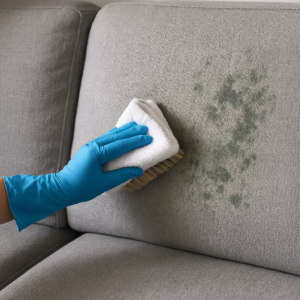
Mix cold water with a small amount of mild dish soap or white vinegar. Lightly dampen a clean cloth and blot the moldy area gently.
Do not over-saturate the fabric. Excess moisture can encourage further mold growth.
Step 4: Air Dry Completely
Allow the couch to dry fully in a well-ventilated area. Open windows or use a fan to improve airflow.
Never cover or sit on the couch until it is completely dry.
Fabric-Specific Considerations 🧵
Different materials react differently to mold removal:
-
Fabric sofas tolerate gentle blotting and mild cleaners
-
Microfiber couches require minimal moisture
-
Leather couches should not be cleaned with water-based solutions
-
Velvet or suede should be handled by professionals
Always follow the manufacturer’s care label when available.
Common Mistakes to Avoid ❌
-
Scrubbing aggressively
-
Using bleach on upholstery
-
Over-wetting the fabric
-
Skipping the drying step
-
Ignoring ventilation
These mistakes can spread mold or permanently damage the couch.
When to Call a Professional Upholstery Cleaner 🧑🔧
If mold covers a large area, keeps returning, or affects delicate fabrics, professional cleaning is the safest option. Professionals use specialized equipment to remove mold without spreading spores.
Final Thoughts 🦠🛋️
Mold or mildew on a couch should never be ignored. With careful vacuuming, moisture control, and gentle cleaning, many cases can be handled safely at home. Acting early and ensuring proper drying are the most important steps to prevent mold from returning.
Learning how to remove mold or mildew from a couch safely helps protect your furniture, your home, and your health.