
Introduction
A spill happens, and the instinct is immediate: grab whatever cleaning product is nearby and scrub until the stain disappears. This reaction feels productive, but it’s often the exact moment when a manageable stain becomes a permanent problem. The urgency to fix something quickly can override the caution needed to avoid making it worse. Many couch stains that look terrible after cleaning weren’t ruined by the original spill—they were ruined by the cleaning attempt itself. Slowing down and resisting the impulse to act immediately can be harder than it sounds, but it’s often the difference between a stain that fades and one that spreads, darkens, or sets permanently into the fabric. This is why couch stains often get worse after cleaning, even when the intention is good.
Understand the Material First
The single most overlooked step in stain removal is identifying what the couch is actually made of. Microfiber, cotton, polyester, velvet, linen, and leather all respond differently to water, solvents, and scrubbing pressure. What works safely on one fabric can cause another to watermark, shrink, or lose its texture entirely. Most couches have a cleaning code tag tucked under a cushion or along the frame—W means water-based cleaners are safe, S means solvent-only, WS means either can work, and X means vacuuming only, no liquids at all. Ignoring this tag, or assuming it doesn’t matter, is one of the most common reasons stains get worse instead of better. These upholstery cleaning codes are widely used across the furniture industry, but they’re often misunderstood by homeowners.
Different fabrics react very differently to moisture, friction, and cleaning agents, which is why a method that helps one couch can easily ruin another.
Even when the tag is found, there’s still room for hesitation. A W-rated fabric might tolerate water in general, but that doesn’t mean it can handle being soaked or scrubbed aggressively. Some fabrics look fine wet but develop rings or discoloration as they dry. If the cleaning code is missing, worn off, or unclear, it might be worth testing any cleaner on a hidden area first—or even reconsidering whether cleaning it at all is the right move at that moment.
Safe Methods That Often Work
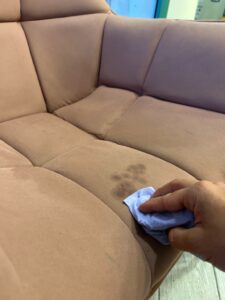
For water-safe fabrics, blotting with a clean, damp cloth is often the gentlest starting point. The goal is to lift the stain without pushing it deeper or spreading it outward. Light pressure, working from the outside of the stain toward the center, can sometimes remove fresh spills before they set. This method works better on new stains than old ones, and it tends to fail when the stain has already dried or when the liquid has soaked through multiple layers of fabric. Blotting also stops being helpful the moment it turns into rubbing—rubbing pushes the stain into the fibers and can damage the fabric’s surface, especially on microfiber or velvet.
Mild dish soap mixed with water is another approach that sometimes works without causing new problems. A few drops in a bowl of cool water, applied sparingly with a cloth, can break down grease or food-based stains. The challenge is knowing when to stop. Too much soap leaves a residue that attracts dirt, making the area look dingy even after the stain is gone. Rinsing with a clean, damp cloth can help, but over-wetting the fabric introduces its own risks—watermarks, mildew, or a stiff texture once it dries. If the stain isn’t responding after a few gentle passes, continuing the same method is unlikely to help and may just spread the problem.
For solvent-only fabrics, rubbing alcohol or a dry-cleaning solvent can sometimes lift stains without introducing water. These work best on ink, oil, or makeup, but they also evaporate quickly, which can make it hard to control how much is applied. Too much solvent can leave a halo around the stain or lighten the fabric in that spot permanently. There’s also the issue of ventilation—solvents smell strong and need airflow, which isn’t always practical depending on the room. If the stain is large or the fabric feels delicate, it might be worth pausing before using any solvent at all.
Common Mistakes to Avoid
Scrubbing feels like the logical response to a stubborn stain, but it’s one of the fastest ways to make things worse. Scrubbing damages the fabric’s texture, spreads the stain outward, and pushes it deeper into the cushion foam or batting underneath. Once a stain reaches the inner layers, it can wick back up to the surface even after the top layer looks clean. This is especially common with liquid stains like wine, coffee, or juice. The visible improvement from scrubbing is often temporary, and the stain reappears as the fabric dries. In many cases, scrubbing or over-cleaning is what causes stains to spread deeper instead of lifting out.
Using too much cleaner is another mistake that happens in the moment, driven by the hope that more product will work faster. Excess cleaner saturates the fabric, making it harder to rinse out completely. The leftover residue attracts dirt and can make the cleaned area look darker or dirtier than the surrounding fabric within days. This creates a new problem that’s sometimes harder to fix than the original stain. Hot water also seems like it should work better, but heat can set protein-based stains like blood, milk, or egg permanently. Once heat locks a stain in, it’s often impossible to remove without professional equipment.
Switching between multiple cleaning products without testing them first can cause chemical reactions that discolor the fabric or create new stains. Bleach and ammonia, for example, should never be mixed, but even combining gentler products can have unpredictable results. The urge to keep trying different solutions can feel productive, but each new product increases the risk of permanent damage. Sometimes the safer decision is to stop after the first method doesn’t work, rather than layering on more attempts.
When to Stop and Call a Professional
If a stain spreads wider after cleaning, darkens instead of lightening, or leaves a ring that wasn’t there before, continuing the same approach will almost certainly make it worse. These are signs that the fabric is reacting poorly to the cleaner, the water, or the technique being used. Stopping at this point and calling a professional upholstery cleaner can prevent the stain from becoming permanent. Professionals have access to equipment and solvents that aren’t available to consumers, and they can often reverse damage that looks irreversible. Professional upholstery cleaners use extraction equipment that removes moisture and cleaning agents from deep inside cushions, preventing stains from resurfacing as the fabric dries.
Large stains, old stains that have been sitting for weeks or months, or stains on expensive or delicate fabrics are also situations where professional help makes sense from the start. Trying to save money by handling it alone can end up costing more if the couch needs to be reupholstered or replaced. Stains that smell—like pet urine, vomit, or mildew—usually mean the problem has reached the padding or frame, which household cleaning can’t address. If there’s any doubt about whether a method is safe, or if the stain seems to be getting worse despite careful effort, stopping early is not giving up. It’s recognizing that some problems require tools and knowledge that go beyond what’s available at home.
Final Thoughts
There’s no universal cleaner or technique that works safely on every couch and every stain. What helps one fabric can ruin another, and what works on a fresh spill can fail completely on something that’s dried and set. The most important tool in stain removal isn’t a product—it’s the willingness to pause, assess the situation, and recognize when doing nothing is safer than doing something. Careful judgment about when to act, when to stop, and when to ask for help matters more than any single method ever could.