
The instinct to keep adding cleaner when a stain isn’t disappearing feels completely reasonable. The spot is still there, the bottle is in your hand, and logic suggests that more cleaning power should mean better results. This is exactly how most couch cleaning disasters begin—not from the original spill, but from the panicked overcorrection that follows. The stain that might have lifted with patience becomes a spreading, sticky residue that attracts dirt for months. What makes this particularly frustrating is that the damage happens gradually, and by the time you realize the couch feels wrong under your hand, reversing the problem often requires professional intervention that costs far more than the couch is worth. Many homeowners don’t realize that this reaction is often the first step toward long-term damage.
Understand the Material First
The difference between a couch that cleans successfully and one that develops a permanent dull patch often comes down to whether you identified the upholstery type before applying anything. Most upholstery falls into categories marked by cleaning codes—usually a tag tucked under a cushion—but these codes fade, get removed, or were never attached in the first place. A water-based cleaner on a fabric that requires solvent-based treatment can cause the stain to set permanently into the fibers, while solvent on a water-safe fabric might dissolve the backing or alter the color in ways that don’t appear until the area dries. Synthetic microfibers react differently than cotton blends, and both react differently than chenille or velvet. Before reaching for any product, there’s value in stopping to consider whether you actually know what you’re cleaning, because guessing wrong here often creates a problem that’s worse than the original stain. If the tag is missing and you’re not certain, testing on a hidden area might reveal issues, but even that test won’t tell you how the fabric will respond to repeated applications or saturation.
Safe Methods That Often Work
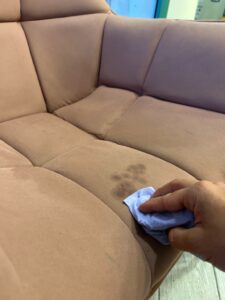
Blotting with plain water and a clean cloth works for many fresh spills, particularly on fabrics labeled “W” for water-safe. The method involves pressing the cloth gently against the stain without rubbing, allowing the liquid to transfer from the couch to the cloth. This often removes a surprising amount of the stain if you stop while the area is only slightly damp. The trouble starts when the stain doesn’t lift completely and you begin pressing harder or adding more water, which can push the stain deeper into the cushion’s foam or spread it outward into a larger, lighter ring. Water also takes time to dry fully inside cushions, and if you’ve saturated the area, mildew can develop in the interior padding where you’ll never see it until the smell becomes noticeable.
Mild dish soap mixed with water—just a few drops in a bowl—can help with greasy stains on durable fabrics, but the soap itself becomes the problem if you use too much or fail to rinse it out completely. Soap residue feels slightly sticky and attracts dirt from anyone who sits on that spot afterward. The area looks clean initially, then turns gray or brown over weeks as household dust adheres to the invisible film. Rinsing requires another cloth dampened with plain water, pressed repeatedly over the cleaned area, but knowing when you’ve rinsed enough is harder than it sounds. You can’t see the soap, and the fabric will feel slightly different when wet regardless. Some people rinse five times and still leave residue; others stop too soon and wonder weeks later why that one cushion looks dingy. In many cases, the fabric reacts to buildup before the stain itself becomes the real problem.
Rubbing alcohol on a cotton pad sometimes lifts ink or dye-based stains from synthetic fabrics without leaving the watermark that plain water creates. The alcohol evaporates quickly, which prevents deep saturation, but it also strips some types of fabric dye if you rub too long or press too hard. The color loss doesn’t always show immediately—it might look fine until it dries, then reveal a lighter patch that no amount of additional cleaning will fix. Testing on a hidden seam gives you some information, but the visible fabric might have faded differently from sun exposure, making the hidden area a poor predictor. If you decide to try alcohol, using it sparingly and stopping at the first sign of color transfer to your pad is safer than continuing and hoping the fabric will tolerate it.
Commercial upholstery cleaners vary wildly in concentration and chemical composition, and the instructions on the bottle rarely account for how much product actually stays in the fabric after you spray it. Many people spray, scrub, then stop without extracting the cleaner, which leaves the chemicals sitting in the fibers along with the dissolved stain particles. The area might look better briefly, but as the cleaner dries, it often leaves a stiff, sticky residue that shows dirt faster than the rest of the couch. Some cleaners also require specific extraction methods—blotting isn’t enough, and without a wet vacuum or extractor, you’re essentially coating the fabric rather than cleaning it. I’ve sometimes thought it would be better to leave the stain entirely than to commit to a cleaning product without understanding what’s required to actually remove it afterward.
Common Mistakes to Avoid
Scrubbing instead of blotting happens almost automatically when a stain resists the first few attempts. The circular rubbing motion feels productive, but it frays the fabric’s surface, spreads the stain into surrounding fibers, and pushes liquid deeper into the cushion. The damage to the fabric texture often matters more than the stain itself, leaving a worn-looking patch that catches light differently than the rest of the couch. This is especially common on microfiber, where scrubbing destroys the nap and creates a shiny, flattened area that never recovers.
Using hot water instead of cool or lukewarm accelerates many cleaning reactions, which sounds helpful until you realize it also sets protein-based stains like blood or milk permanently into fabric. Heat changes the structure of these stains at a molecular level, bonding them to fibers in a way that no subsequent cleaning will reverse. The instinct to use hot water comes from general cleaning wisdom about dishes or laundry, but upholstery doesn’t follow the same rules, and the mistake usually isn’t obvious until you’ve already made it.
Layering different products on top of each other—trying soap, then switching to a commercial cleaner when the soap doesn’t work, then adding rubbing alcohol—creates chemical interactions no one can predict. Some combinations foam excessively, others form sticky films, and a few react to produce residues that yellow or stiffen the fabric permanently. Once you’ve applied multiple products, diagnosing what went wrong becomes nearly impossible, and even professionals may not be able to reverse the damage without re-dyeing or replacing the fabric entirely. According to fabric care guidelines, residue left behind after cleaning is one of the main reasons stains return and fabrics darken over time.
When to Stop and Call a Professional
If the stain has spread beyond the original spill area after cleaning attempts, continuing will likely make it spread further. Professional cleaners have extraction equipment that removes both the stain and the cleaning products from deep in the cushion, something household methods can’t replicate. The cost of a professional visit often seems steep until you compare it to replacing the entire couch or living with a permanent discoloration in the center of your most-used furniture. This problem becomes more likely when cleaning sessions happen too close together.
Stains that have been present for days or weeks before treatment require different approaches than fresh spills, and attempting to treat an old stain with methods meant for fresh ones often just redistributes the stain or adds new layers of residue on top. If your first attempt didn’t improve things noticeably, a second attempt with more product rarely does either—it usually just complicates what a professional will need to address later.
Any situation where you’re uncertain about the fabric type, the stain’s origin, or whether previous cleaning attempts used products you can’t identify should prompt a pause. Guessing costs more than it saves, and professional cleaners can often identify fabric types and appropriate treatments faster than you can research them, with far less risk of permanent damage.
Final Thoughts
There’s no single product or method that works safely on every couch, every stain, and every fabric type. The same approach that saves one person’s sofa ruins another’s, and the difference often comes down to variables you can’t see or test without specialized knowledge. More cleaner, more scrubbing, more time spent working the stain—these instincts rarely improve outcomes and often create problems that wouldn’t have existed if you’d stopped sooner. Patience and restraint matter more than confidence in any particular method, and knowing when you’ve reached the limit of safe DIY attempts protects your furniture better than pushing forward with techniques that might work or might not.