
Most people don’t realize their couch is changing color until it’s already happened. You clean a stain, the spot dries lighter than the rest, and suddenly you’re looking at a permanent reminder of that one spill. The strange part is that the damage often isn’t from the stain itself—it’s from the cleaning. People treat couch cleaning like an emergency response, grabbing whatever cleaner is nearby and scrubbing hard, assuming that effort equals results. But upholstery doesn’t work that way. The fibers, dyes, and protective coatings that give your couch its color are fragile, and aggressive cleaning strips them away faster than most stains ever could. Sometimes the safest thing you can do is nothing at all, at least not right away. Many homeowners only notice the change after the damage has already started.
Understand the Material First
Before you spray, blot, or scrub anything, you need to know what your couch is made of. This sounds obvious, but most people skip it entirely. They see a stain, panic, and reach for a bottle. The problem is that what works on polyester can ruin cotton, and what’s safe for synthetic microfiber can strip the dye right out of linen. Even couches that look similar can have completely different cleaning tolerances depending on how the fabric was dyed, finished, or treated during manufacturing.
Most upholstery has a cleaning code tag tucked under the cushions or along the base—usually a single letter like W, S, WS, or X. W means water-based cleaners are generally safe. S means solvent-only, and using water can cause rings or discoloration. WS means either might work, but there’s still no guarantee. X means you’re not supposed to clean it with anything liquid at all. If your couch doesn’t have a tag, or if the tag has worn off, you’re essentially guessing. That’s when a lot of people make the mistake of assuming their couch can handle whatever they throw at it, and that’s exactly when color changes start to happen. If you’re not sure, it might be worth pausing and doing nothing until you can confirm what’s safe.
Safe Methods That Often Work
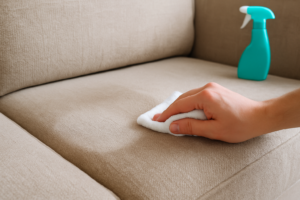
If your couch can tolerate water-based cleaning, a damp cloth with a tiny amount of mild dish soap is one of the least aggressive starting points. The idea is to lift the stain without soaking the fabric. You blot gently, working from the outside in, and you stop as soon as you see progress. This method works well for fresh spills on durable synthetic fabrics, but it’s easy to overdo it. If you keep blotting in the same spot, you’re not just lifting the stain—you’re also loosening the dye and wearing down any protective finish the fabric had. The area can start to look cleaner than the rest of the couch, which creates its own problem. At some point, you’re no longer cleaning a stain; you’re creating a contrast that won’t go away. In many cases, fading happens because the fabric reacts poorly to repeated cleaning.
For solvent-based fabrics, rubbing alcohol or a dry-cleaning solvent can sometimes remove stains without water damage. These work by dissolving oils and residues instead of soaking them out. The catch is that solvents can also dissolve dye if you’re not careful. A small test spot in a hidden area might show you whether the color holds, but even then, it’s not a perfect predictor. Some dyes fade gradually with repeated exposure, so a test that looks fine today might not tell you what happens after three or four cleanings. If the fabric feels delicate or if the color seems inconsistent across the couch, it might be safer to stop before you commit to a full cleaning.
Steam cleaning is another option people turn to, especially for deep-set stains. It can lift dirt that other methods miss, but steam also opens up fabric fibers and can pull dye out along with the grime. On older couches or fabrics with less stable dyes, steam can cause fading or blotchiness that spreads beyond the original stain. You also run the risk of over-wetting the padding underneath, which takes forever to dry and can lead to mildew or warping. If you’re using a rented or home steam cleaner, there’s often no way to control how much moisture is really going into the fabric. That uncertainty alone is reason enough to consider whether it’s worth the risk.
Common Mistakes to Avoid
One of the most common mistakes is using too much cleaner. People assume that more product means better results, so they spray generously and scrub hard. What actually happens is that the cleaner saturates the fabric, and when it dries, it leaves behind a residue that attracts dirt and changes the texture. That residue can also react with the dye, causing the color to shift or fade unevenly. The area you cleaned ends up looking dull or slightly off, even if the stain is gone. According to fabric care guidelines, repeated cleaning can gradually weaken dyes and finishes.
Another mistake is assuming that if a method works once, it’s safe to use repeatedly. Every time you clean a spot, you’re wearing down the fabric a little more. The dye fades, the fibers weaken, and the finish degrades. After a few rounds, the spot becomes noticeably lighter or rougher than the surrounding fabric. This is especially true with natural fibers like cotton or linen, which don’t bounce back the way synthetics do. People don’t usually notice the cumulative damage until it’s too late to reverse. This is especially common when cleaning sessions happen too frequently.
Scrubbing is another impulse that feels productive but usually causes harm. When you scrub, you’re grinding the cleaner deeper into the fibers and loosening the dye at the same time. It also distorts the texture, leaving the area matted or fuzzy. Blotting is almost always safer, but it requires patience and restraint, which are hard to summon when you’re staring at a fresh stain. The urge to do more, to work harder, to fix it right now—that’s usually when the real damage happens.
When to Stop and Call a Professional
If you’ve tried a gentle method and the stain isn’t budging, that’s a sign to stop, not to escalate. Trying stronger cleaners or scrubbing harder is how people end up with color loss that’s worse than the original stain. A professional upholstery cleaner has access to specialized products and tools that are calibrated for different fabrics. They can also assess whether the dye is stable enough to withstand cleaning at all, which isn’t something you can easily determine at home.
You should also consider calling someone if your couch is expensive, antique, or sentimental. Some fabrics—like silk, velvet, or anything with a hand-dyed or custom finish—are almost impossible to clean safely without training. Even small mistakes can lead to permanent discoloration or texture changes. Professionals aren’t just faster or more thorough; they’re less likely to make the kind of irreversible errors that come from not knowing what you’re working with. If you’re hesitating because you’re not sure whether the couch can handle what you’re about to do, that hesitation is worth listening to.
Final Thoughts
There’s no universal method that works on every couch, and pretending otherwise is how people end up with faded spots and uneven color. The fabric matters, the dye matters, the age of the couch matters, and your willingness to stop before things get worse matters most of all. Cleaning doesn’t always improve a situation, and sometimes the best decision is to leave a small stain alone rather than risk creating a larger, more obvious problem. What works for one person’s couch might ruin yours, and that’s not a failure of technique—it’s just the reality of working with materials that were never designed to be scrubbed. Careful judgment and a willingness to pause will always matter more than any bottle of cleaner.