
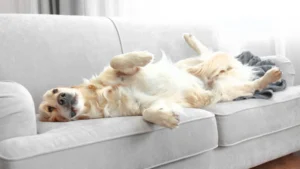
Wet dog odor comes from bacteria and oils on animal skin that transfer to fabric and intensify when moisture is present, and the smell embeds itself into upholstery far more quickly than most people realize. Waiting for the couch to dry on its own often allows the odor to set deeply into cushion padding, but adding liquids or cleaning products usually increases saturation and spreads the smell across a larger area. Many attempts to eliminate the odor end up trapping dampness where it cannot evaporate properly. Trapped moisture inside a couch is one of the main reasons odors persist.
What to Do Immediately
Improving airflow with fans or open windows helps moisture evaporate before odor-causing bacteria multiply, though this does nothing for oils already transferred into fabric. Blotting surface dampness gently with dry towels may absorb some moisture, but pressing firmly drives liquid deeper into foam and wooden frames where it will take days to dry. Avoid placing anything over the wet area, as covering damp upholstery creates conditions for mildew that smells far worse than wet dog. If the dog has been lying on the couch regularly, the odor problem likely extends beyond the visibly wet spots and involves accumulated oils that surface dampness has reactivated. Immediate action has limits when the underlying issue has been building over time.
A Careful Cleaning Approach
Allowing the couch to dry completely with maximum ventilation is more effective than most active cleaning methods, though the process can take several days depending on how saturated the cushions became. Vacuuming once everything is fully dry can remove loose hair and dander that trap odor, but this will not address oils or bacteria embedded in fabric weave. Baking soda can be sprinkled lightly on dry fabric to absorb surface oils, though it must be left for hours and vacuumed thoroughly or it becomes a permanent gritty residue in seams. Some fabrics develop water spots or stiffness after drying, which means further moisture-based cleaning will create more visible damage. Testing how the fabric responds to slight dampness on a hidden area reveals whether any wet cleaning is safe to attempt. Expecting complete odor removal when a dog uses the couch frequently is unrealistic regardless of method.
Common Mistakes That Feel Logical
Spraying the couch with water and vinegar or enzyme products while it is still damp adds more moisture to an already saturated situation and extends drying time significantly. Fabric deodorizers or pet odor sprays usually combine with wet dog smell rather than replacing it, creating a layered chemical odor that is often worse. This is why some couch odors seem worse after cleaning rather than better. Shampooing or steam cleaning feels thorough but saturates cushion interiors that may take a week or more to dry, and the extended dampness often produces mold or mildew. Using scented dryer sheets or placing them inside cushion covers masks nothing and leaves a waxy residue on some fabrics. Assuming the smell will disappear once the surface feels dry ignores moisture trapped in foam or batting that continues producing odor as it slowly evaporates.
When This Approach Is Not Enough
Dog oils and dander that have accumulated in upholstery over months create a baseline odor that cannot be fully removed through surface treatment. Some couch materials are naturally absorbent and retain animal smells regardless of how carefully they are cleaned. If the odor remains strong after the couch has been completely dry and well-aired for several days, the smell has saturated cushion interiors beyond what home methods can reach. Washable slipcovers help manage the problem but do not address what has already absorbed into foam beneath. Accepting that a couch used regularly by dogs will retain some smell—or that certain cushions may need replacing—is often the only practical reality. In situations like this, leaving the couch untreated can prevent further damage.
FAQ
What if the smell gets worse as the couch dries?
This often happens because evaporation releases odors trapped in deeper cushion layers. It does not mean the cleaning failed, but rather that the odor was more extensive than what was initially detectable. The smell may eventually lessen as drying completes, though it rarely disappears entirely.
Animal odors often intensify when moisture remains trapped in soft materials.
Does the dog’s breed or coat type affect how much smell transfers?
Yes. Dogs with oily coats or those that are not bathed regularly transfer more odor-causing substances to fabric. Double-coated breeds can also trap more moisture against the couch surface. However, all dogs contribute some level of smell to upholstery they use frequently.
Can the smell return even after it seems gone?
Humidity or new moisture can reactivate oils and bacteria that remain dormant in dry conditions. A couch that smells fine in winter may develop noticeable odor in summer when ambient moisture increases. This indicates the smell was never fully eliminated.
What if only one cushion smells but the whole couch feels damp?
Dogs often favor specific spots, so odor concentration varies even when moisture has spread more widely. The less-used areas may dry without retaining smell, while the favored cushion may be unsalvageable regardless of treatment. Dampness alone does not always equal odor if oils and bacteria are not present.