
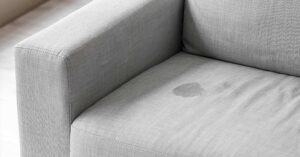
Body oil doesn’t announce itself the way a spill does. It accumulates slowly, often unnoticed until the fabric looks dull or feels different to the touch. By that point, the oil has usually saturated deeper than the visible discoloration suggests, and the common response—repeated light cleaning—can make the fabric look worse or wear out faster than the oil itself would have.
Why This Stain Is Difficult
Body oil transfers in small amounts with every use, building up in layers rather than arriving all at once. This gradual process means there’s no clear moment when the problem begins, and no obvious boundary between clean and oiled areas. The stain often appears as a general dinginess rather than a distinct mark, making it hard to know where to focus or when to stop. Oil also binds to fabric in a way that resists water-based cleaning, so the methods that work for dirt or food stains tend to either do nothing or spread the oil around without lifting it. Because the buildup happens over months or years, the fabric itself may have changed in ways that make cleaning riskier than it would have been earlier. Grease stains behave in a similar way, often penetrating fabric gradually and resisting surface-level cleaning.
Understanding the Fabric First
Some fabrics show body oil buildup quickly, while others hide it until the saturation is extensive. Materials with tight weaves or synthetic finishes might look clean on the surface while oil collects underneath, trapped between the coating and the fiber. Looser weaves can absorb oil immediately, but they also release it more easily under the right conditions—or spread it further under the wrong ones. Fabrics that have been treated with stain repellents can develop a slick, darkened layer where oil sits on top of the treatment without penetrating, but also without wiping away cleanly. If the couch is more than a few years old, the fabric may have weakened in the oiled areas, making it more vulnerable to damage from scrubbing or moisture. Without knowing how the fabric was constructed or what it’s been through, it’s difficult to predict how it will respond to cleaning.
Why Body Oil Accumulates Invisibly
Skin naturally produces oils that transfer to any surface it contacts, but the amounts are small enough that they don’t register as spills. Over time, these small deposits layer on top of each other, and the fabric gradually becomes saturated without ever feeling wet or greasy in an obvious way. The oil fills the spaces between fibers, and once those spaces are full, it begins to darken the material or create a shine that wasn’t there originally. Because this happens slowly, it’s easy to miss the transition from clean to oiled until the fabric looks noticeably different from other areas of the couch. Headrests, armrests, and seat edges are usually the first places buildup becomes visible, but the oil may extend several inches beyond the darkened zone.
Body oil, also known as sebum, is produced continuously by the skin and transfers gradually through repeated contact.
Surface Appearance Versus Internal Saturation
A couch that looks only slightly discolored may have absorbed far more oil than the surface suggests. The visible darkening is often just the outermost layer where oil has concentrated enough to change the fabric’s appearance, but the cushion foam or batting underneath can be saturated without showing through. This hidden depth is why cleaning the surface sometimes makes the stain reappear—it temporarily lifts the top layer of oil, but what’s underneath migrates back up as the fabric dries. Some fabrics also develop a permanent shadow even after the oil is removed, because the prolonged contact has altered the dye or finish. If the buildup has been present for years, the fabric in that area may feel thinner or rougher than surrounding material, a sign that the fibers have degraded under the constant exposure.
Why Repeated Light Cleaning Makes It Worse
The instinct with gradual buildup is to clean it lightly and often, assuming that small efforts will keep the problem manageable. This approach can actually accelerate fabric wear without removing much oil. Each cleaning session introduces moisture, friction, or cleaning agents that stress the fibers, and if the oil isn’t fully lifted, the fabric goes through this stress repeatedly without recovering. Over time, the cleaned areas may start to pill, fade, or feel rough compared to the rest of the couch. The oil itself can also emulsify partially during cleaning and then resettle in a wider area, making the stain look larger or more diffuse than it was before. If the fabric has a nap or texture, repeated cleaning can flatten it in the oiled zones, creating a permanent visual difference even if the oil is eventually removed. It’s worth considering whether leaving the buildup alone might preserve the fabric better than ongoing attempts to address it.
Misleading Progress and Reappearing Stains
Body oil buildup often seems to improve during cleaning, only to return as the fabric dries. This happens because moisture temporarily darkens the entire area, masking the oil stain, or because the cleaning process moves oil around without extracting it. When the fabric dries, the oil that wasn’t removed reappears—sometimes in the same spot, sometimes spread slightly wider. This cycle can repeat several times, with each attempt looking successful at first and then failing once the moisture evaporates. In some cases, fabric damage doesn’t become visible until weeks after repeated cleaning attempts. If a stain keeps coming back after cleaning, it usually means the oil is deeper than the cleaning method can reach, or that the fabric is holding onto moisture in a way that keeps redistributing the oil. Pausing after one attempt and observing how the fabric looks after several days of drying can reveal whether progress was real or temporary.
Fabric Types That Require Extra Caution
Microfiber can darken dramatically from body oil and often shows watermarks or streaks if cleaned unevenly, making it easy to create new visual problems while addressing the original buildup. Velvet and fabrics with a pile can lose their texture in oiled areas, and cleaning can flatten these zones further, leaving permanent dull spots even if the oil is gone. Natural fibers like cotton and linen absorb body oil deeply and quickly, but they also tend to weaken over time in areas of heavy contact, meaning the fabric might tear or thin during cleaning. Any fabric with a sheen or satin finish can lose its luster permanently if cleaned too aggressively, and body oil often accumulates on these materials in ways that are difficult to reverse without professional tools. Before attempting anything, consider whether the fabric’s structure or appearance might be more fragile than the oil buildup itself.
When Stopping Is the Safer Choice
Not all body oil buildup needs to be removed, and not all of it can be without damaging the fabric. If the affected areas are in high-contact zones like headrests or armrests, the buildup will likely return quickly even after successful cleaning, making the effort temporary at best. If the fabric has already started to show wear, thinning, or texture changes in the oiled areas, further cleaning might cause visible damage that’s harder to accept than the discoloration. Some couches are simply not designed to withstand the moisture or agitation required to remove deep oil saturation, and pushing forward can result in watermarks, shrinkage, or separation of layered materials. If there’s uncertainty about how the fabric will respond, or if the buildup is old enough that the fabric itself may have weakened, leaving it alone is often more sensible than risking irreversible damage. It’s also acceptable to focus on preventing further buildup rather than trying to undo years of accumulated oil.
FAQ
How can I tell if body oil has soaked into the cushion foam?
If the fabric feels different in texture or thickness compared to unused areas, or if stains reappear after cleaning, the foam underneath is likely affected. Pressing gently on the area might reveal whether the cushion feels denser or retains moisture differently.
Why does the stain look worse after I clean it?
Cleaning can spread oil into surrounding areas, or it can remove surface discoloration while leaving deeper oil that migrates back up as the fabric dries. Moisture can also temporarily darken the fabric, making the stain less visible during cleaning but obvious again once dry.
Can I prevent body oil buildup without cleaning the couch?
Using removable covers, throws, or pillows in high-contact areas can reduce direct oil transfer to the couch fabric. This doesn’t address existing buildup, but it can slow or stop further accumulation.
Is it safe to clean body oil buildup on an old couch?
Older couches may have fabric that has weakened over time, especially in areas with heavy oil contact. Cleaning might cause tearing, color loss, or texture changes that weren’t visible before. Testing on a hidden area can help, but it won’t always predict how the most saturated zones will react.
How long does it take for body oil buildup to become permanent?
There’s no fixed timeline, but oil that has been present for years is more likely to have caused lasting changes to the fabric’s dye or structure. Even if the oil is removed, the fabric may retain a shadow or feel different in those areas.
Should I try to clean body oil buildup multiple times if it doesn’t work the first time?
Repeated attempts can stress the fabric without necessarily removing more oil. If the first cleaning doesn’t show lasting improvement after the fabric has fully dried, additional efforts are more likely to damage the material than succeed.