
Food stains on upholstery present challenges that differ significantly from the same stains on clothing or hard surfaces. A spill that would wash out of a shirt in a single laundry cycle may become a permanent mark on a couch because upholstery cannot be submerged, agitated, or thoroughly rinsed. The fabric remains fixed to foam padding, which absorbs liquids and holds contamination that surface-level cleaning cannot reach.
People often assume food stains are easy to remove because they deal with food spills on other surfaces regularly. However, food is rarely a single substance—it is a mixture of oils, proteins, sugars, acids, colorants, and particulates, each requiring a different treatment approach. A pasta sauce stain, for example, may include tomato acids, olive oil, protein from cheese or meat, sugars, and artificial coloring. Treating only one component often leaves others behind, creating a stain that appears lighter but never fully disappears.
Timing further complicates the issue. Fresh food spills are easier to address because the components have not yet bonded to fibers, oxidized, or been set by heat or pressure. Once a stain dries, is sat on, or is exposed to warmth, removal becomes dramatically more difficult. Many people delay cleaning food spills, assuming they can deal with them later, only to find the stain has become stubborn or permanent by the time they attempt treatment. This is why some food stains seem to disappear during cleaning but return once the couch dries
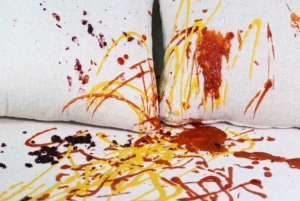
Why Food Stains Behave Differently on Couches Compared to Clothes or Hard Surfaces
Upholstery fabric is permanently attached to multiple layers—backing fabric, foam padding, and often a wooden or metal frame. When food spills onto a couch, liquid components do not remain on the surface as they would on a plate or countertop. They quickly soak through the top fabric, migrate into the backing, and often reach the foam within seconds. Once contamination reaches these layers, it becomes inaccessible to surface cleaning methods.
Clothing can be laundered with full water immersion, mechanical agitation, and thorough rinsing—all impossible with upholstery. A shirt can be soaked, scrubbed, and run through multiple wash cycles. A couch cushion cannot undergo similar treatment without risking water damage, mold growth, or structural breakdown. Upholstery cleaning must therefore succeed with minimal moisture and no agitation, significantly reducing effectiveness.
Hard surfaces are non-porous and allow residue to be wiped away completely. Fabric, by contrast, has texture and porosity that trap food particles in the weave. Oils migrate along fibers, sugars crystallize in crevices, and colorants chemically bond to fabric dyes. A surface that looks clean may still contain contamination embedded deep in the textile.
Pressure also plays a role. Sitting on a spill compresses fabric against foam, forcing liquids deeper into inaccessible layers. A spill blotted immediately may remain near the surface; the same spill left unattended and sat on can reach the foam core within minutes.
Different upholstery fabrics respond differently as well. Microfiber resists initial penetration but shows marks clearly. Cotton and linen absorb liquids rapidly and hold stains stubbornly. Velvet and pile fabrics trap particles in their texture and show color shifts prominently. Stain-resistant finishes provide limited protection and degrade over time, especially with repeated exposure to oils and food residue.
How Food Composition Affects Upholstery
Food stains are rarely uniform. They combine multiple substances that behave differently on fabric:
Oils and fats penetrate fibers and do not dissolve in water. They darken fabric, spread outward through capillary action, and attract dirt over time.
Proteins coagulate as they dry or when exposed to heat, bonding tightly to fibers and becoming increasingly difficult to remove.
Sugars dissolve when fresh but crystallize as they dry, attracting moisture and dirt and often causing sticky or darkened areas long after the spill.
Acids can alter fabric dyes permanently, particularly on natural fibers, sometimes causing lightened or bleached areas rather than dark stains.
Colorants, both natural and artificial, chemically bind to fabric dyes and often remain visible even after other components are removed.
Particulates like crumbs and spices embed in fabric texture, especially when mixed with oils or sugars.
Because most food spills include several of these components, single-method cleaning rarely works.
Why Food Stains Darken, Spread, or Reappear After Drying
Food stains often change behavior during and after cleaning:
-
Darkening occurs as oils oxidize and sugars degrade.
-
Spreading happens when excess liquid mobilizes contamination and deposits it outward.
-
Reappearing stains result from wicking—contamination in foam or backing migrating back to the surface as moisture evaporates.
-
Heat-set stains form when warm food, body heat, hot water, or steam coagulates proteins and bonds colorants.
These behaviors explain why food stains worsen over time and why immediate, controlled action matters.
Home Remedies for Food Stains (and Their Limits)
Home remedies include dish soap, baking soda, vinegar, hydrogen peroxide, and club soda.
-
Dish soap can lift fresh oils but leaves residue if not thoroughly rinsed, which is difficult on upholstery.
-
Baking soda absorbs surface moisture but does not chemically break down oils or proteins.
-
Vinegar may help with odors or light residues but risks dye damage and is ineffective against oils.
-
Hydrogen peroxide can lighten pigments but acts as a bleach and often damages fabric color.
-
Club soda dilutes some water-soluble components but offers little advantage over plain water.
These methods often address only one part of a complex stain and frequently cause spreading or residue buildup.
How Commercial Upholstery Cleaners Address Food Contamination
Commercial cleaners are formulated for upholstery constraints:
-
Multi-purpose upholstery cleaners combine surfactants, solvents, and sometimes enzymes to address mixed stains.
-
Enzyme cleaners break down proteins and starches but require dwell time and moisture control.
-
Solvent-based cleaners dissolve oils without water and are necessary for solvent-only fabrics.
-
Colorant removers target specific pigments but carry high risk and require caution.
-
Foaming shampoos clean larger areas evenly with reduced saturation risk.
These products outperform home remedies when matched correctly to fabric type and stain composition, though none guarantee full removal.
Direct Comparison: Home Remedies vs Commercial Cleaners
(הטבלה שלך מצוינת ונשארה ללא שינוי)
When Home Remedies Are Acceptable
Home remedies make sense for:
-
Immediate treatment of fresh, simple spills
-
Single-component stains
-
Low-value furniture
-
Temporary damage control
They should be avoided on complex, colorant-heavy, set-in, or delicate fabric stains.
When Commercial Cleaners Are the Better Option
Commercial cleaners are safer or more effective for:
-
Mixed-component food stains
-
Dried or heat-set stains
-
Natural fibers
-
Solvent-only fabrics
-
High-value furniture
-
Failed home-remedy attempts
Common Mistakes to Avoid
-
Scrubbing instead of blotting
-
Using hot water
-
Over-wetting fabric
-
Skipping fabric testing
-
Mixing products
-
Applying heat
-
Ignoring cleaning codes
-
Treating only visible edges
-
Expecting full restoration on severe stains
Realistic Conclusion
No method guarantees complete removal of food stains from upholstery. Home remedies offer accessibility but inconsistent results. Commercial cleaners provide better performance and control but still face limits. Prevention, fast response, minimal moisture, and realistic expectations matter more than any specific product.
Some food stains—especially those involving heavy pigments, heat exposure, or long delays—may never disappear fully. In those cases, reducing visibility without damaging fabric is often the most reasonable outcome.