What to Check Before Re-Cleaning a Couch Stain That Looks Darker
It’s a familiar situation: a couch stain looks lighter after cleaning, the fabric feels acceptable while still damp, and it seems like the problem is on its way to being resolved. Then the couch dries—and the stain looks darker, larger, or more noticeable than before. This change often feels confusing and discouraging, especially when effort was already invested in careful cleaning.
What’s important to understand is that this effect is not unusual, and it doesn’t automatically mean the cleaning “failed.” Drying can change the way a mark looks, but appearance alone cannot tell you whether residue remains, the fabric has changed, or the cleaning method affected the finish. Before treating the area again, compare it with an unaffected section under the same lighting and follow the upholstery manufacturer’s care instructions. Slowing down at this stage can prevent further damage caused by reacting too quickly to what looks like a worsening stain.
For the possible causes of a returning mark, including residue movement and changes in the appearance of damp fabric, see why couch stains can look worse after drying. This guide focuses on what to check before attempting another treatment.
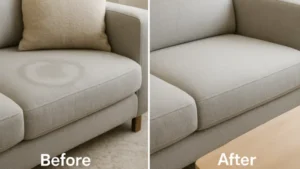
Why This Stain Is Difficult
Stains that appear worse after drying are often deceptive. While wet, fabric behaves differently: moisture changes how fibers reflect light, temporarily masking discoloration. As water evaporates, whatever residue was dissolved or moved during cleaning becomes visible again.
A stain that becomes visible again after drying may reflect leftover cleaning solution, soil, or a change in the fabric’s appearance. A visible ring alone cannot identify which explanation applies. Before adding more liquid, check the upholstery care label, let the area dry fully, and compare it with an unaffected area in the same lighting.
A darker mark after drying does not establish that contamination is deeper in the cushion. First compare the area in consistent lighting, check the upholstery care code, and avoid adding water until the material is fully dry. Recognizing this helps reduce the urge to immediately re-clean, which often makes the situation worse.
Learn how moisture trapped in a couch can contribute to odors.
Understanding the Fabric First
Not all couch fabrics respond to moisture in the same way. Some materials absorb liquid quickly, while others resist moisture on the surface but trap it underneath. When fabric dries unevenly, it can leave behind visible edges, shadows, or rings that weren’t noticeable before.
The upholstery care label matters more than assumptions about fiber type. Before trying another cleaner, identify the manufacturer’s cleaning code (such as W, S, WS, or X) and check any specific care instructions. A visible ring can have several causes, including leftover solution, soil, or a change in the fabric’s appearance; the fiber alone does not identify the cause. If the label is missing or the material is delicate, ask a qualified upholstery cleaner before applying more liquid.
Pausing to consider the fabric before acting again can prevent repeated cycles of wetting and drying that gradually change the fabric’s appearance.
Uneven drying can leave visible rings or outlines even when the original stain was mild.
A Conservative Cleaning Method
When a stain looks worse after drying, the instinct is often to re-wet the area and try again. This reaction is understandable, but it carries risk. Each additional cleaning attempt introduces more moisture and increases the chance of residue being pushed deeper or spread wider.
A conservative approach focuses less on immediate improvement and more on avoiding escalation. Before treating the mark again, check the upholstery care code, allow the affected area to dry without direct high heat, and compare the mark with a photo taken before cleaning. If the cushion still feels damp or unusually cool, see our couch drying guide for the difference between surface and internal drying. Any additional treatment should be minimal, controlled, and limited to testing rather than full re-cleaning.
Resisting the urge to “fix it now” gives the fabric time to show whether the stain is truly worsening or simply becoming more visible as conditions normalize.
Fabric Types That Require Extra Caution
Some couch materials are particularly prone to looking worse after drying:
-
Natural fibers may darken unevenly as residue settles
-
Microfiber can show shading or texture changes after moisture exposure
-
Blended fabrics may dry at different rates within the same area
-
Older upholstery often reacts unpredictably due to prior wear or residue
With these materials, repeated cleaning can permanently alter color or texture. Recognizing when extra caution is needed helps prevent small visual issues from becoming long-term damage.
When Stopping Is the Safer Choice
A stain that looks worse after drying doesn’t always need immediate correction. In some cases, stopping allows moisture to fully dissipate and residue to stabilize, making the stain easier to evaluate later.
Continuing to clean while reacting to appearance changes can create a cycle where the fabric never fully recovers between attempts. This often leads to larger discolored areas, stiffness, or visible wear patterns.
See also our guide to stains reappearing after drying before attempting another treatment. Waiting before another cleaning attempt protects the couch from additional moisture and gives you time to check the fabric care label, assess the remaining stain, and decide whether a professional upholstery cleaner is needed. Sometimes the safest decision is to wait, reassess, and avoid adding new variables.
FAQ
Does a stain getting darker after drying mean it’s permanent?
Not necessarily. Drying can reveal residue that was already present. Acting too quickly can make removal harder.
Why did the stain look better when wet?
Moisture temporarily changes how fabric reflects light, which can hide discoloration until drying is complete.
Should the area be cleaned again immediately?
Immediate re-cleaning often increases spreading. Waiting can reduce the risk of further damage.
Can drying cause stains to move?
Sometimes. Moisture and dissolved residue can redistribute during drying, but a larger-looking mark may also reflect changes in fabric shading or leftover cleaning solution. The appearance alone cannot establish the cause.
Is uneven drying a problem?
Uneven drying is a common cause of rings and shadows. Avoiding repeated wetting helps limit this effect.
When should cleaning stop altogether?
When repeated attempts change fabric texture, color, or stiffness, stopping is usually the safer choice.