
A couch can smell fresh immediately after cleaning, only for an unpleasant odor to return days later without any new spill or incident. This delayed odor is one of the most confusing and frustrating problems homeowners face. The surface looks clean, the fabric feels dry, and yet the smell slowly creeps back as if the cleaning never worked. In reality, this is rarely a failure of effort—it is usually a misunderstanding of where odors actually live inside a couch.
Most couch odors do not originate on the fabric surface. They develop inside the internal layers, where moisture, oils, bacteria, and residues interact over time. Cleaning the visible area may temporarily mask the problem, but if the deeper source remains untouched, the odor almost always returns.
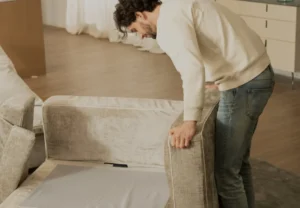
Odors Often Come From Inside the Cushion, Not the Fabric
Couches are layered structures. Beneath the upholstery fabric sits batting, foam padding, and sometimes webbing or internal liners. When liquids, sweat, or humidity penetrate past the surface, they settle into these inner layers. Foam, in particular, absorbs moisture easily and dries slowly, creating an ideal environment for odor-causing bacteria.
Surface cleaning methods—sprays, wipes, or light shampooing—rarely reach deep enough to remove what is trapped inside the cushion. As the couch dries, moisture migrates outward, carrying odor compounds with it. This is why the smell often becomes noticeable only after a few days, once evaporation is complete. Trapped moisture inside the couch creates conditions where odors can slowly develop and resurface. In many cases, internal padding can stay damp far longer than people expect.
Moisture Can Reactivate Old Odors
Even if the original odor seemed to disappear months or years ago, cleaning can bring it back. When water or cleaning solution is introduced, dried residues inside the cushion can dissolve again. Body oils, pet dander, food particles, or previous spills that were never fully removed can become active once more.
This reactivation process explains why a couch that “never smelled before” suddenly develops an odor after cleaning. The smell is not new—it was dormant. Moisture simply gave it a way to resurface.
Residue From Cleaners Can Cause Odors to Return
Some cleaning products leave behind residues that attract moisture and dirt. Soap-based cleaners and heavily scented solutions are common culprits. While they may smell pleasant at first, residue trapped in fabric fibers or foam can begin to break down over time.
As air humidity changes, these residues absorb moisture from the air, creating a slightly damp environment even when the couch feels dry. Bacteria feed on this residue, producing odors that gradually intensify days after cleaning rather than immediately. Residue problems often show up alongside other changes in the fabric after cleaning.
Incomplete Drying Is a Major Factor
A couch that feels dry on the surface may still be damp internally. Foam can retain moisture for days, especially in thick cushions or areas with limited airflow. During this slow drying phase, bacteria and mold spores have time to multiply.
Once drying is complete, the odor becomes more noticeable because there is no longer moisture masking it. This is why smells often appear stronger several days later, rather than right after cleaning. This is why some couches seem odor-free while damp, only to smell worse once drying is complete.
Heat and Humidity Make the Problem Worse
Environmental conditions play a significant role in odor return. Warm temperatures and high humidity accelerate bacterial growth and slow evaporation. A couch cleaned in a humid environment may never fully dry internally, even if it feels dry to the touch.
Later, when humidity rises again, trapped moisture can reactivate odor-causing compounds, making the smell seem unpredictable and recurring. Scientific research shows that moisture supports the persistence of odor-causing microorganisms in indoor environments.
Why Masking the Smell Rarely Works
Air fresheners, fabric sprays, and scented powders do not remove odor sources. They simply add fragrance on top of them. Once the fragrance fades, the underlying smell remains unchanged.
In some cases, added fragrance can even worsen the problem by mixing with existing odors or adding more residue to the fabric. This leads to a cycle where the couch smells better briefly, then worse than before.
When Odor Return Signals a Deeper Issue
If a couch repeatedly develops odors after cleaning, it may indicate long-term saturation of the padding. Foam that has absorbed years of sweat, spills, or pet contact can reach a point where surface cleaning is no longer effective.
In these cases, professional extraction, cushion replacement, or targeted internal treatment may be required. Continuing to clean only the surface often leads to repeated frustration without lasting results.