What Changes as a Couch Stain Dries
A couch stain can look lighter or even disappear while the fabric is still wet, only to reappear darker, larger, or more defined once everything dries. This delayed change is one of the most frustrating outcomes of cleaning, especially because it gives the impression that the cleaning itself caused the problem. A stain that looks worse after drying does not always mean the cleaning caused new damage. Changes in how damp fabric reflects light, residue left behind, or material carried toward the surface as moisture evaporates may all affect its appearance. Check the upholstery care code before trying another cleaning product, and test any permitted method in an inconspicuous area first.
Timing alone cannot tell you what caused a mark to return. Damp upholstery can reflect light differently, while residual cleaner or soil may also become more visible after drying. Look for a ring, a change in texture, or a sticky feel, and compare the area with nearby unaffected fabric in the same lighting. Those clues can guide the next question, but none proves that residue moved from deep inside the cushion. Before re-cleaning, check the upholstery care code and let the area dry completely.
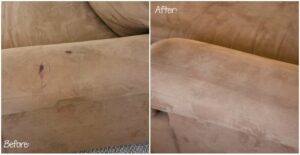
Wet Fabric Can Temporarily Hide Stains
When fabric is damp, fibers swell slightly and reflect light differently. This can blur stain edges, reduce contrast, and make discoloration appear less noticeable. Water itself can temporarily dilute residue at the surface, creating the illusion that the stain is gone.
As the couch dries, fibers shrink back to their original state. Any residue left behind becomes concentrated again, often appearing darker or more sharply defined than before. Sometimes the discoloration was masked while wet; in other cases, dissolved residue can spread or move toward the surface as the fabric dries. This effect is one reason stains often appear to worsen only after the couch has fully dried.
Moisture Pulls Residue Toward the Surface
Cleaning introduces liquid into the couch, and that liquid does not stay in one place. As moisture moves upward during evaporation, it carries dissolved particles with it. Oils, sugars, dyes, and dirt that were sitting deeper in the fabric or padding can migrate toward the surface.
Once drying is complete, those particles are left behind in a smaller, more visible area. This process—sometimes called wicking—explains why a stain can reappear even after thorough surface cleaning. The same moisture movement that affects stains can also transport odor-causing residue inside a couch.
Incomplete Removal Creates Concentrated Stains
Many cleaning attempts loosen residue without fully extracting it. Blotting, light rinsing, or surface wiping may lift some material while leaving the rest behind. When moisture evaporates, whatever remains becomes more concentrated.
A darker mark after drying does not establish that residue moved from the padding. Compare the mark under consistent lighting, check whether the fabric is fully dry, and consult the upholstery care code before attempting another treatment; if the mark repeatedly returns, a professional cleaner may be able to assess whether residue remains below the surface.
Padding Can Be the Real Source of the Stain
In some cases, the visible stain is not coming from the fabric at all. Cushion padding can absorb spills and cleaning solution, holding dissolved material below the surface. As the couch dries, that material is pulled upward through the fabric.
This is especially common with thick cushions, absorbent foam, or older padding that has lost its ability to release moisture evenly. In some cases, the visible mark may come from residue migrating out of deeper layers as the cushion dries. If the cushion still feels damp, consult our guide to couch drying times and signs of trapped moisture before adding more cleaning liquid. Internal padding can retain moisture far longer than most people expect.
Heat and Airflow Affect How Stains Reappear
Drying conditions influence how residue moves. Gentle airflow usually supports drying; avoid direct high heat, which can damage some upholstery fabrics. Gentle airflow and suitable room humidity can support drying, but they cannot guarantee that a visible ring or stain will disappear; the mark may reflect residue, dye change, or fabric texture rather than remaining moisture.
This is why aggressive drying methods can unintentionally make stains look sharper or more defined, even when the cleaning method itself was gentle.
Why Re-cleaning the Surface Often Makes It Worse
If a stain reappears after drying, first compare it with a photo taken before cleaning and check whether the area is completely dry. A ring at the edge can suggest uneven wetting or residue movement; a persistent odor or damp cushion may indicate moisture deeper inside. Check the manufacturer’s upholstery care code (for example, W, S, WS, or X) before any further treatment, and test an approved method in a hidden area. Avoid soaking the cushion again to chase a stain that has not been identified.
Without addressing what’s happening beneath the surface, each attempt can deepen the stain’s appearance rather than remove it. This leads to the false conclusion that the couch fabric is “impossible” to clean, when the real issue lies in moisture control and extraction depth.
When a Reappearing Stain Signals a Deeper Problem
If a stain consistently looks worse after drying, it may indicate long-term saturation inside the cushion or padding. Old spills, cleaning residue, or degraded foam can all contribute to repeated wicking.
If a stain repeatedly returns despite complete drying and appropriate spot treatment, residue in the padding is one possibility, not a certain diagnosis. Consider a qualified upholstery cleaner, especially for delicate fabric or a cushion that remains damp or smells musty.