
Cleaning a couch at home often feels like the responsible and practical choice. Many minor messes do improve with gentle care, which can make DIY cleaning feel broadly safe. Still, there are situations where continuing on your own carries more risk than benefit. Recognizing when to pause — and when professional cleaning may be safer — can prevent damage that is difficult to reverse.
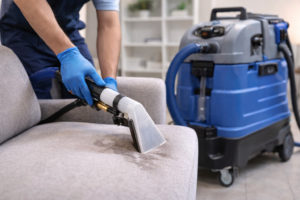
Warning Signs to Pause or Stop
Certain signals suggest that continuing DIY cleaning may not be the safest option:
-
The fabric darkens unevenly or develops water marks
-
The surface stiffens or feels rough as it dries
-
New discoloration appears where none existed before
-
Moisture lingers longer than expected or feels trapped
When these changes appear, hesitation is reasonable. Stopping early is often safer than pushing forward without clarity.
These moments are often a clear signal, as discussed in When Pausing Mid-Cleaning Is Safer Than Continuing.
Why DIY Cleaning Can Make Things Worse
Home cleaning usually involves repeated contact with fabric and cushions. This risk is closely tied to Why Over-Wetting a Couch Causes Long-Term Damage, where excess moisture leads to deeper problems. On sensitive or layered materials, this can move moisture, residue, or odors deeper instead of removing them. What looks like progress on the surface may quietly stress the structure underneath.
DIY efforts also tend to focus on visible improvement. When results are slow, it is common to add pressure, moisture, or repetition. Pausing instead of escalating can prevent a small issue from becoming long-term damage.
Situations Where Professional Cleaning Is the Safer Choice
Some couches are less forgiving than they appear. Delicate fabrics, complex weaves, and soft finishes often respond unpredictably to home methods. Even careful attempts can alter texture or color.
Another situation involves stains or odors that return after cleaning. This usually means the issue extends beyond the surface. Continuing DIY cleaning may push it further into cushions or padding. Choosing to stop at that point can protect the couch from deeper problems.
Why Experience and Equipment Matter
Professional cleaning is not just about stronger tools. It often involves controlled moisture use, material-specific handling, and careful drying. This reduces stress on the couch during cleaning. This emphasis on controlled handling reflects broader principles of preventive care for upholstered objects and layered materials.
Equally important is restraint. Knowing when not to continue is part of safer intervention. Choosing professional help — or choosing to pause — can reduce the risk of irreversible changes.
The Risk of Repeated DIY Attempts
When the first attempt does not work, the instinct is often to try again with more effort. Each attempt can slightly weaken the fabric or padding. Over time, this reduces the couch’s tolerance to cleaning.
Stopping early preserves options. Continuing out of frustration can quietly remove them.
When Cost Concerns Can Be Misleading
DIY cleaning is often chosen to avoid expense, which is understandable. However, damage caused by over-cleaning may shorten a couch’s usable life or change how it feels and looks.
In some cases, pausing and considering professional cleaning can prevent higher costs later. Taking time to reassess is a cautious and reasonable choice.
Why Doing Nothing Can Be Better Than Choosing Wrong
Sometimes neither immediate DIY cleaning nor professional intervention is necessary. If the couch appears stressed or the situation is unclear, doing nothing for a while can be the safest option.
Allowing materials to dry and stabilize can reveal whether the problem is improving on its own. Choosing not to act right away is often a thoughtful decision, not a failure.
FAQ
Does choosing professional cleaning mean DIY cleaning is unsafe?
No. Many situations are suitable for careful DIY cleaning. Professional cleaning is safer mainly when warning signs appear or materials react unpredictably.
How can someone tell they have reached a stopping point?
When progress stalls, fabric behavior changes, or uncertainty increases, those are strong signals to pause.
Is professional cleaning always effective?
No method is guaranteed. The value is often in reducing risk rather than promising perfect results.
Is it okay to wait before deciding on professional help?
Yes. Waiting can reduce pressure-driven decisions and help avoid unnecessary damage.