
Protective finishes are designed to shield floors from daily wear, moisture, and minor abrasion. When they’re intact, floors often tolerate normal use without visible damage. Problems arise when cleaning becomes frequent enough to quietly undermine that protection. Repeated floor cleaning doesn’t usually cause sudden failure. Instead, it gradually weakens finishes until the floor underneath becomes exposed and vulnerable.
Understanding how this breakdown happens helps explain why floors can deteriorate even when they’re cleaned with good intentions.
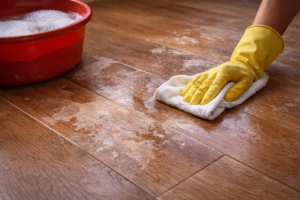
Protective Finishes Are Not Permanent Barriers
Floor finishes are often treated as if they are permanent shields. In reality, they are thin, sacrificial layers meant to absorb stress so the underlying material doesn’t have to. Each cleaning introduces some level of friction, moisture, or chemical interaction. On its own, that stress may be minimal.
Over time, however, finishes respond to accumulation rather than single events. Even gentle cleaning methods slowly wear away protective layers. Recognizing that finishes are designed to degrade gradually—not indefinitely—can help temper how often they’re challenged.
Why Floors Look Fine While Protection Weakens
One reason repeated cleaning goes unnoticed is that finishes can continue to look intact while losing effectiveness. Shine and uniform color often remain even as microscopic thinning occurs. Floors may still repel spills at first, reinforcing the sense that protection is holding.
This creates a false sense of security. By the time visible changes appear, the finish may already be compromised. This is similar to why hardwood floors can look fine after cleaning and then fail months later. Slowing down when a floor still looks “good enough” can prevent pushing the finish past a recovery point.
Friction Adds Up Faster Than Expected
Many cleaning routines involve some degree of friction, whether from cloths, pads, brushes, or foot traffic during drying. While each pass feels harmless, friction accumulates. Finishes are designed to handle occasional contact, not constant abrasion.
Repeated motion in the same areas—such as entryways or walk paths—can thin finishes unevenly. These high-contact zones often fail first, even though the rest of the floor still appears stable. Paying attention to where cleaning is most concentrated can reveal early warning signs.
Moisture Cycles Stress Finishes Quietly
Moisture doesn’t need to soak a floor to cause problems. Light, repeated dampness can slowly interfere with how finishes bond and protect. Each cleaning introduces a moisture cycle: wetting, partial absorption, and drying. Over time, these cycles weaken the finish’s ability to seal the surface.
Because drying usually appears quick, it’s easy to underestimate the cumulative effect. Pausing between cleanings allows finishes to stabilize instead of constantly reacting to moisture exposure.
Chemical Interaction Isn’t Always Obvious
Even cleaners labeled as mild can interact with finishes over repeated use. This is also how vinegar on floors can become a long-term problem instead of a gentle solution. Some chemicals slowly dull surfaces, others soften finishes temporarily, and some leave residues that attract more dirt. None of this usually happens all at once.
Because changes are subtle, cleaning may increase in frequency to restore appearance, accelerating the problem. Recognizing that more cleaning can sometimes signal weakening protection—not dirt buildup—can change how the situation is handled.
Repetition Changes How Finishes Age
Finishes are meant to age gradually under normal use. Repeated cleaning alters that aging process. Instead of wearing evenly over years, finishes may thin rapidly in short periods. This uneven aging makes floors more sensitive to everyday stressors like spills or furniture movement.
Once finishes lose uniformity, maintenance becomes more complicated. At that stage, restraint often preserves remaining protection better than trying to “clean back” the original look.
Why Damage Appears After the Finish Fails
Most visible floor damage doesn’t begin until finishes are already compromised. Scratches deepen more easily, moisture penetrates faster, and stains set more quickly. The damage seems sudden, but the weakening process started long before.
This delay makes it easy to misattribute the cause. Cleaning habits may feel unrelated because the floor looked fine for so long. Understanding that finish failure precedes visible damage helps explain why outcomes feel disconnected from earlier actions.
Environmental Factors Accelerate Breakdown
Cleaning doesn’t occur in isolation. This mirrors why no single method works for every couch when conditions vary. Temperature changes, humidity shifts, and daily use all influence how finishes respond. In certain conditions, finishes recover slowly between cleanings. When recovery time is shortened, breakdown accelerates.
A routine that seems harmless in one environment may be too aggressive in another. When conditions fluctuate, doing less can be safer than maintaining the same frequency out of habit.
The Role of Over-Maintenance
Floors are often cleaned more frequently than necessary in pursuit of consistent appearance. Ironically, this over-maintenance can shorten the lifespan of the very protection meant to keep floors looking good.
Allowing some variation in appearance—rather than correcting every minor change—can reduce stress on finishes. Accepting that floors don’t need constant intervention often preserves them longer.
Knowing When to Pause
One of the most effective ways to protect finishes is recognizing when to stop. This reflects why couch cleaning is more about restraint than technique when surfaces show stress. If floors begin to dull faster, feel different underfoot, or react more strongly to moisture, those are signs that protection may be thinning.
Continuing to clean aggressively at that point can accelerate breakdown. Pausing allows finishes to stabilize and reveals whether changes are temporary or structural. Often, restraint provides more clarity than additional effort.
Shifting Focus From Cleanliness to Protection
Repeated floor cleaning usually aims to maintain cleanliness, but longevity depends on protection. When cleaning decisions prioritize preservation over appearance, finishes tend to last longer.
This shift doesn’t mean neglecting floors. It means choosing timing, frequency, and methods with an awareness of cumulative impact. Floors benefit more from thoughtful intervals than from constant attention.
FAQ
How does repeated cleaning damage floor finishes?
Through cumulative friction, moisture cycles, and chemical interaction that gradually thin protective layers.
Why don’t floors show damage right away?
Because finishes can look intact while losing effectiveness beneath the surface.
Are gentle cleaners safe to use frequently?
Even gentle products can contribute to breakdown when used repeatedly over time.
What are early signs that finishes are weakening?
Faster dulling, uneven sheen, increased sensitivity to moisture, and changes in texture.
What’s the safest response when these signs appear?
Reducing cleaning frequency and allowing time for observation often helps prevent further damage.