
It’s common to expect consistency from identical materials. Two hardwood floors of the same species, or two tile floors installed at the same time, are often assumed to behave the same way when cleaned. In real homes, that expectation frequently breaks down. One floor tolerates a method without visible issues, while another begins to dull, warp, or deteriorate. Understanding why this happens helps explain why identical floor materials can react very differently to the same cleaning approach.
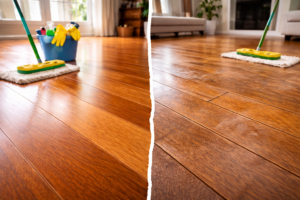
“Identical” Rarely Means Identical in Practice
Flooring materials are labeled and sold by category, but their real-world conditions are rarely the same. Even boards cut from the same batch of wood can vary in grain density, moisture content, and internal structure. Manufactured materials also show variation across production runs.
These differences are usually invisible once the floor is installed. Because they’re hidden, it’s easy to assume uniform behavior. Slowing down to acknowledge that materials carry subtle differences can prevent overconfidence in any single cleaning method.
Installation Creates Early Divergence
How a floor is installed has a lasting influence on how it reacts to cleaning. Subfloor condition, adhesive choice, spacing, and acclimation time all affect how materials move and respond to stress. Two identical floors installed in different rooms may already be on different paths before the first cleaning ever happens.
These installation-related differences don’t announce themselves immediately. They show up later, when cleaning introduces moisture, friction, or heat. Pausing to consider installation history can explain why outcomes diverge even when materials match.
Environmental Exposure Changes Material Behavior
Floors exist within environments that are constantly shifting. Sunlight, humidity, temperature changes, and airflow vary from room to room and home to home. A floor near windows may dry faster. A floor over a crawl space may retain moisture longer. Over time, these factors alter how materials respond.
Cleaning interacts with these conditions rather than acting alone. A method that seems harmless in one environment may stress materials in another. It’s often safer to wait and observe how a floor behaves across seasons before assuming consistency.
Wear Patterns Create Uneven Tolerance
Even when materials start out similar, daily use quickly creates differences. Foot traffic, furniture placement, and cleaning frequency wear finishes unevenly. High-traffic areas may have thinner protection than low-use zones.
When cleaning is applied evenly across the entire floor, it affects areas with very different tolerance levels. Some sections handle the stress without issue, while others begin to show deterioration. Recognizing uneven wear can help explain why reactions aren’t uniform and why restraint in vulnerable areas matters.
Finishes Age at Different Rates
Protective finishes don’t age uniformly, even on the same floor. This is often how repeated floor cleaning breaks down protective finishes at different speeds. Variations in exposure, application thickness, and early wear change how finishes respond to cleaning. A finish that still looks intact in one area may be significantly thinner in another.
Because finishes can mask early weakening, it’s easy to assume they’re still offering equal protection everywhere. Taking a moment to question that assumption can prevent pushing already-weakened areas past a recovery point.
Moisture Pathways Are Not the Same
Moisture doesn’t move through all floors the same way. Micro-gaps, seams, and edges differ slightly from board to board. Some areas allow moisture to evaporate quickly, while others trap it longer.
When the same cleaning method is used repeatedly, these differences become more important. One floor dries without consequence, while another accumulates stress below the surface. Allowing time between cleanings helps reveal these patterns instead of masking them.
Cleaning History Shapes Current Response
A floor’s past matters. Previous cleanings, spills, or refinishing work influence how materials behave today. Two identical floors cleaned differently over the years may respond very differently now, even if current routines are the same.
Because this history isn’t always remembered or visible, reactions can seem unpredictable. Slowing down and reconsidering what a floor has already been through can clarify why results aren’t matching expectations.
Small Differences Compound Over Time
None of these factors usually cause immediate failure. The real divergence happens through accumulation. Small differences in material, environment, and use compound with each cleaning cycle. Over months or years, those differences become significant. This helps explain why floors sometimes feel clean but start deteriorating afterward despite similar care.
This compounding effect explains why one floor appears unaffected while another deteriorates. It also explains why copying a method that “worked somewhere else” doesn’t always translate safely. Doing less can reduce the speed at which those differences escalate.
Why Comparisons Create False Confidence
Seeing a cleaning method succeed on one floor often creates confidence that it’s universally safe. That confidence can override caution, especially when materials look identical. In reality, the successful example may simply have higher tolerance at that moment.
Comparisons can be misleading because they ignore hidden variables. This is similar to why hardwood floors can look fine after cleaning and then fail months later. Taking a step back instead of relying on comparisons can prevent repeating mistakes across floors that aren’t as resilient.
When Identical Materials Reach Different Limits
Every floor has a threshold beyond which it begins to deteriorate. Identical materials may reach that threshold at different times due to all the factors above. One floor crosses it quietly and early; another does so much later.
Because the limit isn’t visible, restraint becomes a practical strategy. Stopping or spacing out cleaning before signs appear can preserve floors that haven’t yet reached their breaking point.
Rethinking Consistency in Floor Care
Consistency in cleaning doesn’t always produce consistent outcomes. Floors benefit more from responsive care than from rigid routines. Observing how each floor reacts and adjusting accordingly often preserves materials longer than applying the same method everywhere.
Accepting that identical materials can behave differently reduces frustration and encourages more cautious decisions. It shifts the goal from enforcing uniformity to protecting longevity.
FAQ
Why do identical floors react differently to the same cleaning method?
Because of differences in installation, environment, wear, finish condition, and cleaning history.
Does this mean one floor is defective?
Not necessarily. Different reactions usually reflect tolerance differences, not defects.
Can environmental changes cause sudden differences?
Yes. Seasonal humidity or temperature shifts can reveal stress that wasn’t visible before.
Is it safer to use the mildest method everywhere?
Often, but even mild methods can cause issues if repeated too frequently. Observation still matters.
What’s the safest approach when outcomes differ?
Reducing frequency and watching how each floor responds over time helps prevent unnecessary damage.