
Regular cleaning is often seen as a form of protection. In high-traffic homes, floors are cleaned frequently with the intention of preserving appearance and extending lifespan. Yet these same homes often experience faster floor deterioration than quieter spaces. This outcome can feel confusing, especially when effort and consistency are already in place. Understanding why traffic changes how floors respond helps explain why cleanliness alone doesn’t prevent failure—and why more cleaning isn’t always the solution.
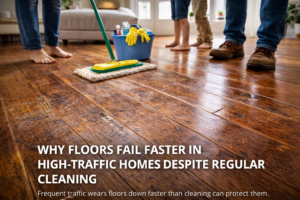
Traffic Changes the Type of Stress Floors Experience
High-traffic areas don’t just experience more use; they experience different use. Repeated footsteps concentrate pressure, friction, and micro-impact in predictable paths. Entryways, hallways, and kitchen work zones absorb far more stress than other parts of the home.
Cleaning addresses surface residue, but it doesn’t reverse compression, abrasion, or material fatigue. In fact, these areas are already under constant strain. Pausing to recognize that traffic creates structural stress—not just dirt—can prevent expecting cleaning to solve a problem it can’t.
Why Clean Floors Can Still Be Vulnerable
A freshly cleaned floor often looks and feels improved. That feedback can be reassuring, especially in busy homes. However, visual cleanliness doesn’t reflect how much protection remains in high-use zones. Finishes in these areas tend to thin faster, even if they still appear intact.
Because the floor looks acceptable, cleaning continues at the same or greater frequency. This can quietly accelerate wear in places that are already compromised. Slowing down to question whether “clean” also means “protected” can help avoid pushing vulnerable areas too far. This helps explain why floors sometimes feel clean but start deteriorating afterward in busy homes.
Friction Multiplies in High-Traffic Homes
Every step introduces friction. Shoes, bare feet, pet paws, and furniture movement all contribute. In high-traffic homes, that friction occurs thousands of times in the same spots. Cleaning often adds another layer of friction through wiping, scrubbing, or pad contact.
Individually, these actions seem mild. Together, they compound quickly. Floors don’t usually fail because of one aggressive action, but because of repeated mild stress layered on top of constant use.
This is often when repeated floor cleaning breaks down protective finishes in high-traffic areas. Choosing to ease up, even slightly, can reduce that accumulation.
Moisture Cycles Become More Frequent
Cleaning almost always introduces some level of moisture, even when floors dry quickly. In busy households, cleaning often happens more often to keep up with visible dirt. This creates frequent moisture cycles in the same areas that already experience the most wear.
High-traffic zones also tend to dry unevenly due to airflow patterns or obstructions. Over time, repeated moisture exposure can weaken finishes or affect seams. Waiting longer between cleanings allows materials to stabilize instead of constantly reacting.
Wear Patterns Create Uneven Protection
Traffic doesn’t distribute itself evenly, and neither does wear. High-use paths lose protective finish faster than surrounding areas. When cleaning is applied uniformly across the floor, it treats weakened and stronger areas the same way.
This mismatch matters. What’s tolerable for a low-traffic section may be stressful for a worn one. Being willing to do less in high-use zones—or to observe them separately—can help preserve remaining protection instead of stripping it away evenly.
Cleaning Can Mask Early Warning Signs
In high-traffic homes, cleaning can temporarily improve appearance enough to hide early deterioration. Dullness, micro-scratches, or finish thinning may be corrected visually, even as the underlying issue worsens.
Because the floor continues to “bounce back” after cleaning, it’s easy to assume everything is fine. Taking time to notice how quickly changes return—or whether new signs appear—can reveal whether cleaning is masking rather than preventing damage.
Traffic Amplifies Small Differences
Minor differences in installation, finish thickness, or material density matter more under heavy use. High-traffic environments amplify these variations. One area may tolerate stress longer, while another fails sooner under identical care.
This can create the impression that floors are unpredictable. In reality, traffic exposes limits faster. Reducing reliance on rigid routines and allowing room for adjustment can help manage those differences instead of fighting them.
Why More Cleaning Isn’t the Answer
When floors in busy homes begin to deteriorate, the instinct is often to clean more often. The logic is understandable: if wear is visible, increase maintenance. Unfortunately, this can accelerate failure by adding stress to already stressed surfaces. This reflects how floor age changes what “safe cleaning” really means in busy households.
At some point, restraint becomes protective. Accepting minor cosmetic changes instead of correcting them immediately can slow the rate of decline. Choosing not to intervene can sometimes preserve floors longer than constant correction.
The Role of Recovery Time
Floors need recovery time just like materials under load. In high-traffic homes, floors are rarely given a break from use. Adding frequent cleaning to constant traffic shortens recovery even further.
Spacing out cleaning allows finishes and materials to settle instead of staying in a constant state of reaction. Even short pauses can make a meaningful difference over time. Waiting doesn’t mean neglect; it means allowing recovery.
When Failure Feels Sudden but Isn’t
Many high-traffic floor failures seem abrupt. A finish suddenly gives way, boards react to moisture, or wear becomes obvious. In reality, these outcomes are usually the result of long-term accumulation.
Because cleaning was consistent and visible damage was delayed, the connection can feel unclear. Understanding that traffic accelerates invisible processes helps explain why failure arrives despite good intentions.
Adjusting Expectations in Busy Homes
High-traffic homes demand different expectations. Floors in these environments rarely age the same way as those in quieter spaces. Longevity depends less on perfect cleanliness and more on how stress is managed.
Adjusting routines to reflect traffic realities—cleaning less often, being gentler in worn areas, and tolerating small imperfections—often preserves floors better than strict maintenance schedules.
FAQ
Why do floors in busy homes wear out faster even when cleaned regularly?
Because traffic adds constant friction and pressure that cleaning cannot reverse and may intensify.
Is frequent cleaning harmful in high-traffic areas?
It can be when it adds friction and moisture to areas that are already under stress.
Should high-traffic areas be cleaned differently?
Often yes. Doing less or spacing cleaning out can reduce cumulative wear.
Why does damage seem to appear suddenly?
Because deterioration builds quietly over time and only becomes visible after thresholds are crossed.
What’s the safest mindset for high-traffic homes?
Prioritizing restraint and recovery over constant correction usually leads to better long-term outcomes.