
Introduction
Laminate floors are often marketed as durable and easy to maintain, which can make water-based cleaning feel harmless. This is one reason why floors sometimes feel clean but start deteriorating afterward, especially when moisture damage develops beneath the surface. The problem is that laminate reacts to moisture in ways that are not always visible right away. It is worth slowing down early, because once water damage sets in, it usually cannot be reversed.
Many floor issues begin with routine cleaning that seems reasonable at the time. Pausing before adding more water can prevent damage that quietly worsens later.
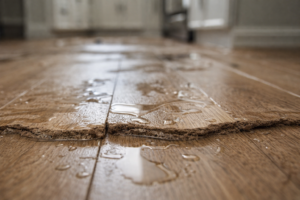
Warning Signs to Pause or Stop
One of the earliest warning signs is swelling along plank edges or seams, even if it looks subtle at first. Laminate is layered, and moisture can cause those layers to separate long before the surface looks “ruined.” When changes appear uneven or patchy, continuing to clean often makes the situation worse rather than better.
A floor that feels slightly soft underfoot, or sounds different when walked on, may already be reacting to trapped moisture. These signs are easy to dismiss, but ignoring them can push the floor past a point where it can recover. At that moment, stopping is often safer than trying to correct the issue.
Discoloration that appears days after cleaning is another reason to pause. Delayed changes suggest moisture has moved beneath the surface, where normal drying cannot reach. Slowing down instead of repeating the cleaning can limit how far that moisture spreads.
Why DIY Cleaning Can Make Things Worse
Laminate floors are not sealed the same way as solid wood or tile. Water can slip into joints, edges, and microscopic gaps, where it stays longer than expected. Once inside, moisture causes the core material to expand, which permanently alters the floor’s shape.
Repeated cleaning attempts often compound the problem. This pattern is common when repeated floor cleaning breaks down protective finishes, leaving laminate more vulnerable to moisture each time. Each pass adds more moisture, even if the surface looks dry quickly. This layered exposure can turn a small, localized issue into widespread damage. It is often better to accept an imperfect appearance than to keep adding water in hopes of improvement.
Drying methods can also backfire. Uneven drying may leave some sections shrinking while others remain swollen, leading to buckling or gaps. When outcomes feel unpredictable, that uncertainty is a sign to stop rather than push forward.
Safer Alternatives to Consider
In some cases, leaving the floor alone for a while is the least risky option. Allowing time for moisture to dissipate naturally can prevent further swelling, even if it does not fix existing damage. Doing less may feel counterintuitive, but restraint often protects what remains intact.
If action feels necessary, focusing on dry maintenance rather than wet cleaning can reduce risk. Removing loose debris without introducing moisture avoids adding stress to the floor. It is reasonable to pause and reassess instead of reacting immediately.
Seeking professional evaluation may also be safer when signs of water damage appear. An assessment can clarify whether the issue is surface-level or structural, without experimenting on the floor. Choosing not to act right away can be a responsible decision rather than avoidance.
Why Doing Nothing Can Sometimes Be the Smartest Choice
Laminate floors do not respond well to correction once water damage begins. Unlike some materials, they cannot be sanded or refinished to remove swelling. Attempting fixes can turn a limited problem into one that affects entire rooms.
Doing nothing preserves the current condition, even if it is imperfect. This can be important when replacement or repair decisions depend on how far damage spreads. Waiting allows for clearer judgment, rather than decisions made under pressure.
Accepting visible flaws can be difficult, but restraint reduces the chance of accelerating damage. Sometimes the safest choice is to stop, observe, and avoid adding new risks.
FAQ
Can a laminate floor look fine after cleaning but still be damaged?
Yes, damage often develops beneath the surface first. If there is uncertainty, slowing down and avoiding further cleaning is usually safer.
Is a small amount of water always harmful to laminate?
Not every exposure causes damage, but repeated or trapped moisture increases risk. When outcomes feel unclear, stopping early helps limit potential harm.
Why does damage sometimes appear days later?
Moisture can migrate slowly within the floor layers. Delayed changes suggest the issue is deeper, which is a reason to pause rather than keep cleaning.
Should stains or dirt be removed even if water caused earlier problems?
Addressing appearance issues can wait. Preserving the floor structure is often more important than immediate cosmetic improvement, and waiting can prevent further damage.