
Introduction
Floor cleaning is usually meant to remove dirt, not move moisture deeper into the home. Yet some cleaning methods do the opposite, spreading water into seams, edges, and layers that were previously dry. This shift often happens quietly, without immediate signs that anything went wrong.
The risk is easy to underestimate because the floor may look cleaner at first. This is one reason why floors sometimes feel clean but start deteriorating afterward, even when the surface appears improved. Slowing down before repeating the process matters, since moisture that spreads instead of lifting dirt can create damage that does not show up right away.
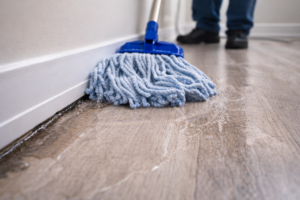
Warning Signs to Pause or Stop
One warning sign is when the floor looks clean but takes longer than expected to dry. Lingering dampness suggests that moisture has gone somewhere it cannot easily escape. When drying time stretches out, stopping further cleaning is often safer than assuming it will resolve on its own.
Another sign is moisture appearing in places that were not directly cleaned. Darkened seams, edges, or transitions can indicate that water is being pushed sideways rather than lifted away. When moisture shows up beyond the original cleaning area, it is reasonable to pause before continuing.
Changes that appear later are also important. Warping, haze, or subtle texture changes that develop hours or days afterward often point to moisture movement below the surface. When effects are delayed, repeating the same cleaning method can spread the problem further.
Why DIY Cleaning Can Make Things Worse
Many DIY cleaning methods rely on adding moisture and then wiping or vacuuming it away. The problem is that floors are not perfectly sealed systems. Water can be pushed into joints, under planks, or into padding faster than it can be removed.
Pressure plays a role as well. Scrubbing, heavy mopping, or repeated passes can force moisture deeper instead of lifting dirt out. Each pass may feel productive, but it can increase how far water travels beneath the surface. When effort increases without clearer results, restraint becomes important.
Extraction limits also matter. Home equipment often cannot pull moisture out as effectively as expected, especially once it moves beyond the surface layer. When removal cannot keep up with application, cleaning stops being corrective and starts spreading risk.
How Moisture Spreading Creates Long-Term Problems
Once moisture moves into hidden areas, it changes how the floor behaves. Materials may swell, adhesives can weaken, and layers that were meant to stay dry may remain damp for extended periods. These changes rarely reverse on their own.
Moisture that spreads unevenly can also create unpredictable outcomes. One section of the floor may appear stable while another deteriorates. This uneven response makes it harder to judge what is actually happening, which is a reason to slow down rather than experiment further.
In some cases, the dirt remains while the moisture stays behind. When that happens, cleaning has failed at its original goal while introducing a new issue. Recognizing this pattern early can prevent more serious damage later.
Safer Alternatives to Consider
Doing less can be a safer alternative when moisture behavior is unclear. Allowing the floor to dry fully before any further action helps limit how far moisture travels. Waiting may feel unproductive, but it avoids adding new variables.
Dry maintenance is another lower-risk option. Removing loose debris without water reduces the chance of pushing moisture into hidden areas. Even then, stopping early rather than aiming for perfection can protect sensitive floors.
If action feels necessary, observation should come first. Watching how the floor responds over time can clarify whether changes are stabilizing or worsening. Gathering that information before acting again often leads to better decisions.
Why Doing Nothing Can Sometimes Be the Smartest Choice
When cleaning begins to spread moisture instead of removing dirt, intervention can do more harm than good. Continuing the same approach rarely corrects the underlying issue and often expands it. This is why, in some cases, when doing nothing is safer than cleaning a floor again, stopping prevents moisture from spreading further. Accepting temporary imperfection can preserve long-term condition.
Doing nothing also prevents moisture from being redistributed again. Each new cleaning attempt risks pushing water into new areas. Stopping breaks that cycle and gives the floor a chance to reach equilibrium.
Choosing not to clean further is not neglect in this context. It is a deliberate decision to limit damage when outcomes are uncertain. In many cases, restraint prevents a manageable situation from becoming permanent.
FAQ
How can cleaning spread moisture instead of removing dirt?
When water is applied faster than it can be removed, it can be pushed into seams or layers rather than lifted away with dirt.
Is this problem visible right away?
Not always. Moisture-related changes often appear hours or days later, which is why pausing after early signs is important.
Does wiping harder help remove trapped moisture?
In many cases, increased pressure pushes moisture deeper. When results are unclear, stopping is safer than scrubbing more.
Is it better to leave some dirt than risk spreading moisture?
Often, yes. Preserving the floor’s structure can be more important than achieving a perfectly clean appearance when moisture behavior is unpredictable.