
Introduction
DIY carpet cleaning is often marketed as a practical way to refresh a carpet without professional help. Rental machines, sprays, and home remedies promise visible improvement with minimal effort. What is less obvious is how these methods interact with the layered structure of a carpet and why some stains seem to worsen over time instead of disappearing.
Understanding what happens below the surface matters. Carpets are not just fibers on top; they are systems made of layers that respond differently to moisture, pressure, and residue. Slowing down to understand those layers can prevent well-intended cleaning from creating deeper, longer-lasting problems.
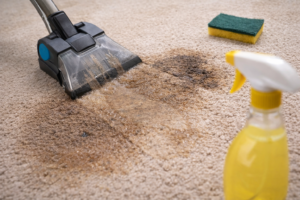
How Carpet Layers Actually Work
A carpet typically consists of surface fibers, a backing, and padding underneath. Stains rarely stop at the surface layer. Liquids move downward, spreading through fibers and into the backing or pad, where they are harder to reach.
When cleaning focuses only on what can be seen, it may miss where the problem actually resides. Moisture introduced during DIY cleaning often travels further down than expected. This is similar to how moisture travels inside a couch after cleaning, moving into layers that are slow and difficult to dry. Pausing to recognize that stains may live below the visible layer can change how safe a cleaning attempt really is.
Once moisture reaches the lower layers, drying becomes uneven. Surface fibers may dry quickly, while the backing or padding remains damp. This imbalance sets the stage for stains to resurface later, even if the carpet initially looks improved.
Why Some DIY Methods Push Stains Deeper
Many DIY methods rely on adding liquid to loosen stains and then extracting it. The challenge is that home equipment often lacks the ability to remove moisture as effectively as it is applied. As a result, cleaning can push diluted stains downward instead of lifting them out. This mirrors why over-wetting a couch causes long-term damage, where moisture is added faster than it can be removed.
Pressure plays a role as well. Scrubbing or repeated passes can force stain particles deeper into the carpet structure. What feels like thorough cleaning at the surface can actually embed the problem further below.
Residue is another factor. Some cleaning products leave behind soap or chemical traces that attract dirt over time. When residue settles into lower layers, stains can return darker or larger than before. Slowing down rather than repeating the same method can prevent this cycle.
Why Stains Sometimes Reappear Days Later
A common frustration with DIY carpet cleaning is delayed stain return. This pattern is similar to why couch stains sometimes look worse after drying, as moisture movement pulls residue back toward the surface. The carpet may look clean immediately after drying, only for spots to reappear days later. This often happens because moisture carried the stain deeper, and as lower layers dry, material is drawn back upward.
This movement is subtle and easy to overlook. The delay can make it seem like the stain “came back on its own,” when in reality it never left. Recognizing this pattern early can help avoid repeated cleaning that compounds the issue.
When stains resurface multiple times, it is a signal to pause. Continuing to add moisture in response often locks the stain deeper rather than solving it.
The Role of Carpet Padding in Locked-In Stains
Padding beneath the carpet is designed to absorb impact, not repeated moisture. When stains reach the padding, DIY cleaning becomes especially risky. Home equipment rarely reaches or dries this layer effectively.
Once padding absorbs stained moisture, it can act like a reservoir. Each time the carpet is cleaned or humidity rises, that moisture can migrate back into the fibers. At this stage, surface cleaning has limited effect.
Recognizing when a stain may have reached the padding is important. Hesitating before further DIY attempts can prevent spreading the problem across a wider area.
When DIY Cleaning May Still Be Reasonable
Not every DIY cleaning attempt causes harm. Light surface soil, recent spills, or dry debris can sometimes be addressed with minimal moisture. The key is restraint.
Using less liquid, stopping early, and allowing full drying time can reduce risk. Even then, it helps to watch how the carpet responds rather than assuming improvement will last.
If uncertainty exists about how deep a stain goes, pausing before acting is often safer than experimenting. Doing less can preserve options for later intervention if needed.
When DIY Cleaning Stops Being Worth It
DIY carpet cleaning becomes less worthwhile when stains repeatedly return, drying times increase, or texture changes appear. These signs suggest that cleaning is affecting deeper layers.
At this point, continued DIY efforts may cost more in time and materials without delivering lasting results. More importantly, they can make future solutions harder by locking stains deeper into the carpet system.
Accepting that a method is no longer effective can be difficult. However, stopping before further damage occurs can protect the remaining condition of the carpet.
Why Understanding Matters More Than Effort
Effort alone does not determine success in carpet cleaning. Understanding how moisture, pressure, and layers interact matters more than how hard someone tries. Many problems arise not from neglect, but from reasonable actions taken without full awareness of the structure involved.
Taking time to understand these mechanisms can prevent repeated frustration. It can also reduce the impulse to “try one more time” when the pattern suggests that further effort will not change the outcome.
Sometimes the most effective step is to pause, observe, and reassess rather than continue cleaning.
FAQ
Does DIY carpet cleaning always push stains deeper?
Not always, but the risk increases when moisture and pressure exceed what can be properly extracted. When results are unclear, slowing down is safer.
Why do stains look worse after cleaning?
Stains can be diluted and spread into lower layers, then drawn back up as the carpet dries. This delayed effect often makes stains appear larger or darker.
Can repeated cleaning eventually remove deep stains?
Repeated attempts often increase moisture in the carpet system and make stains harder to remove. Stopping early can prevent deeper lock-in.
Is it better to leave a stain than risk DIY cleaning?
In some cases, yes. Preserving the carpet’s structure can be more important than short-term appearance, especially when the stain’s depth is unknown.