
Introduction
Carpet odors are often treated as a surface problem. The focus usually falls on visible stains, spills, or fibers that seem to hold smells. What is less obvious is that many persistent odors do not originate on the surface at all. This is closely related to questions like whether DIY carpet cleaning is worth it — or does it lock stains deeper, since both issues involve what happens below the visible layer. Instead, they come from the padding beneath the carpet, where moisture and residue can linger unnoticed.
Understanding this difference matters. When cleaning targets only what can be seen, it may miss the source entirely. Slowing down before applying stronger cleaners can prevent spreading odors deeper into the carpet system rather than resolving them.
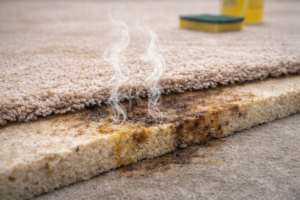
How Carpet Padding Works Beneath the Surface
Carpet padding sits between the carpet and the subfloor. Its role is to absorb impact, improve comfort, and provide insulation. Unlike surface fibers, padding is designed to compress and recover, not to handle repeated moisture exposure.
When liquids reach the padding, they tend to spread outward rather than evaporate quickly. This creates a larger affected area below the carpet than what appears above it. Pausing to recognize that odors can originate from this hidden layer helps explain why surface cleaning often falls short.
Because padding is not visible, changes happen quietly. Odors can develop gradually, even when the carpet surface looks clean. This hidden progression is a reason to move carefully rather than assume more cleaning is the answer.
How Odors Move From Padding to the Surface
Odors from padding do not stay contained. As temperature and humidity change, trapped moisture and residue can migrate upward. This movement mirrors how moisture travels inside a couch after cleaning, where hidden layers slowly release odors back to the surface. This movement allows smells to pass back through the carpet fibers, especially after cleaning or during warm conditions.
Surface cleaning can unintentionally accelerate this process. Moisture added from above can reactivate what is already in the padding, drawing odors upward as the carpet dries. When smells seem stronger after cleaning, it is often a sign that the source lies below.
Recognizing this pattern early can prevent repeated attempts that worsen the situation. When odors return despite thorough surface work, stopping to reassess can reduce further spread.
Why Surface Cleaning Often Makes Odors Worse
Many carpet cleaning methods introduce water or cleaning agents intended to lift dirt and smells. The problem arises when those substances penetrate past the fibers into the padding. This is one reason why steam cleaning a carpet makes damage permanent when moisture reaches layers that cannot dry properly. Home equipment often lacks the ability to extract moisture from that depth.
As a result, odors may become diluted and spread rather than removed. Each cleaning pass can increase the area of affected padding, even if the carpet initially smells fresher. When improvement does not last, restraint becomes important.
There is also the issue of residue. Some cleaning products leave behind compounds that settle into the padding and break down over time. These residues can contribute to ongoing odor problems that surface cleaning cannot address. In these cases, doing less may protect the carpet system from further contamination.
Common Situations Where Padding Becomes the Odor Source
Spills that soak through the carpet are a common trigger. Even small incidents can reach the padding if not addressed quickly. Once there, liquids can spread far beyond the visible stain.
Repeated cleaning attempts can also contribute. Over time, moisture accumulation in the padding creates conditions where odors develop without a single obvious cause. When smells seem to appear without a clear spill, this gradual buildup is often involved.
Pets, humidity, and slow drying environments can further complicate matters. These factors allow moisture to remain trapped longer, increasing the chance that odors originate below the surface. In such situations, slowing down and avoiding repeated wet cleaning can limit additional impact.
Signs the Odor Is Not on the Surface
One sign is when odors return shortly after cleaning. If the carpet smells acceptable while wet but worsens as it dries, the source is likely below the fibers. This pattern suggests that cleaning is interacting with the padding rather than resolving the issue.
Another sign is uneven odor distribution. Smells may be strongest in areas that were heavily cleaned or that dry slowly. This inconsistency often reflects how moisture moved through the padding.
A lack of visible staining can also be misleading. Carpets can appear clean while padding remains affected. When appearance and smell do not align, pausing before further surface treatment is often safer.
When DIY Cleaning Stops Being Effective
DIY cleaning loses effectiveness when it cannot reach the source of the odor. At that point, additional surface work tends to repeat the same cycle without improvement. Each attempt adds moisture that the padding cannot easily release.
This is where effort and outcome diverge. More cleaning does not necessarily mean better results. Recognizing this limit can prevent frustration and prevent the odor problem from expanding.
Stopping DIY efforts does not mean giving up. It means acknowledging that the issue may be structural rather than superficial. Restraint here can preserve options rather than exhaust them.
Safer Alternatives to Consider
Observation can be a useful first step. Allowing the carpet to dry completely and monitoring odor changes over time can clarify whether the problem is stabilizing or persisting. Waiting can feel counterproductive, but it avoids adding new variables.
Dry maintenance is another lower-risk option. Removing loose debris without moisture reduces the chance of reactivating odors in the padding. Even then, stopping early rather than aiming for complete freshness can prevent deeper issues.
Gathering information before acting is also valuable. Understanding how long the odor has been present and how the carpet has been cleaned in the past can guide decisions. Taking time to assess reduces the impulse to keep cleaning without results.
Why Doing Nothing Can Sometimes Be the Smartest Choice
When odors originate from the padding, repeated surface cleaning rarely fixes the issue. Continuing may spread the problem or make it harder to address later. Accepting temporary discomfort can protect the carpet system from further damage.
Doing nothing preserves the current condition. It prevents additional moisture from entering the padding while decisions are considered. This pause can make next steps clearer, whether that involves targeted intervention or eventual replacement.
Choosing not to clean further is not neglect. It can be a deliberate choice to avoid worsening a hidden problem. In many cases, restraint prevents a manageable odor issue from becoming a larger one.
FAQ
Why does my carpet smell even though it looks clean?
Odors often come from the padding beneath the carpet, where moisture and residue are hidden from view.
Why do odors get worse after cleaning?
Cleaning can add moisture that reactivates odors in the padding and draws them back to the surface as the carpet dries.
Can surface cleaners remove padding odors?
Surface cleaners usually cannot reach the padding effectively. Repeated use may spread the odor instead of removing it.
Is it better to stop cleaning if odors keep returning?
Often, yes. Pausing can prevent additional moisture from worsening the problem and allow for better assessment of the source.