
Introduction
Few things are more frustrating than a carpet stain that seems to disappear after cleaning, only to come back later. Extra care, better products, and repeated effort often feel like they should solve the problem. Yet some stains return no matter how carefully the surface is treated. This question closely mirrors whether DIY carpet cleaning is worth it — or does it lock stains deeper, especially when effort increases without lasting results.
This is usually not a failure of effort. It is often the result of how carpets are built and how stains behave within their layered structure. Slowing down to understand why stains reappear can prevent repeated cleaning that quietly makes the problem harder to resolve.
How Stains Move Below the Surface
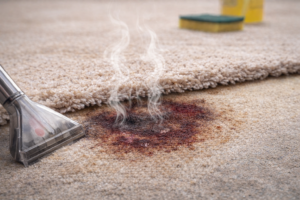
Carpet stains rarely stay where they first appear. Liquids tend to move downward through the fibers, spreading into the backing and sometimes the padding. Even when the surface looks clean, material can remain below.
When cleaning focuses on the visible area, it may only address the top layer. Moisture added during cleaning can travel deeper than expected, carrying stain residue with it. Pausing to consider where the stain actually is helps explain why surface-level success can be misleading.
As the carpet dries, moisture movement can reverse direction. This behavior is similar to how moisture travels inside a couch after cleaning, where residue migrates back toward the surface over time. Residue that settled below can migrate back upward, making the stain visible again. This cycle often happens quietly and over time.
Why Careful Cleaning Can Still Lock Stains In
Being careful does not always mean being effective. Gentle methods can still introduce enough moisture to move stains into lower layers. Home cleaning equipment often struggles to extract liquid once it passes beyond the surface fibers.
Repeated passes are a common issue. Each careful attempt adds more moisture, even when done slowly. Over time, this can push stain material further into the carpet system rather than remove it.
Cleaning products can also contribute. Some leave behind residues that bind with stain particles. These residues can settle deeper and become reactivated later, making stains seem permanent even though they were initially light.
The Role of Carpet Padding in Stain Return
Padding plays a major role in stains that reappear. Once a stain reaches the padding, it becomes difficult to address with surface cleaning alone. This is similar to situations where carpet odors come from the padding, not the surface, because the source remains hidden below. Padding absorbs liquid and releases it slowly.
As conditions change, moisture and residue in the padding can move back into the carpet fibers. This often explains why stains return days or even weeks after cleaning. Recognizing this process can prevent repeated attempts that spread the problem wider.
When stains originate or settle in the padding, hesitation is important. Additional cleaning often affects a larger area of padding without actually removing the source.
Why Stains Often Look Worse After Drying
Many people notice that stains seem faint while the carpet is damp, then darker once it dries. This happens because moisture masks residue temporarily. As drying completes, particles are left behind and become more visible.
Airflow, heat, and humidity all influence this process. Uneven drying can concentrate residue in certain spots, making stains appear sharper than before. This delayed change can make it seem like cleaning caused the stain to worsen.
When this pattern repeats, stopping further cleaning can prevent more residue from being redistributed into the same area.
When Repeated Cleaning Stops Helping
A key sign is consistency. If the same stain returns after multiple careful attempts, the issue is likely no longer on the surface. At that point, additional effort rarely changes the outcome.
Another sign is expanding edges. Stains that grow slightly larger after each cleaning often indicate that moisture is spreading residue outward. This gradual change is easy to miss unless the process is paused.
Recognizing these signals early can save time and prevent the stain from becoming more deeply embedded.
Safer Alternatives to Consider
Observation can be more useful than action. Allowing the carpet to dry fully and watching how the stain behaves over time provides information without adding risk. Waiting can feel unproductive, but it avoids pushing residue deeper.
Dry maintenance is another low-impact option. Removing loose debris without moisture prevents further movement of stains. Even then, stopping early is often safer than trying to achieve complete removal.
Understanding the carpet’s history can also help. Knowing whether stains have been cleaned repeatedly in the past can explain why current efforts are ineffective. Taking time to assess reduces the urge to keep cleaning out of frustration.
Why Doing Nothing Can Sometimes Be the Smartest Choice
When stains repeatedly return, continued cleaning often reinforces the cycle rather than breaking it. Each attempt may feel careful, but the underlying mechanism remains unchanged. Accepting temporary imperfection can prevent long-term damage.
Doing nothing allows the carpet to stabilize. It prevents additional moisture from interacting with hidden residue while decisions are made. This pause can keep the stain from spreading further.
Choosing to stop is not giving up. It can be a deliberate decision to avoid turning a stubborn stain into a permanent one.
FAQ
Why does a stain come back even after careful cleaning?
Because residue often remains below the surface and migrates back upward as the carpet dries.
Does cleaning gently reduce the risk of stain return?
Gentle methods reduce risk but do not eliminate it, especially if moisture reaches deeper layers.
Why do stains sometimes appear larger after cleaning?
Moisture can spread residue outward, increasing the affected area over time.
Is it better to stop cleaning if stains keep returning?
Often, yes. Pausing can prevent deeper lock-in and provide clarity about the stain’s true source.