
A washing machine that works most of the time can be harder to assess than one that fails outright. When problems appear briefly and then disappear, they are often dismissed as flukes. This uncertainty can delay careful evaluation, even though intermittent behavior may signal deeper issues developing beneath the surface.
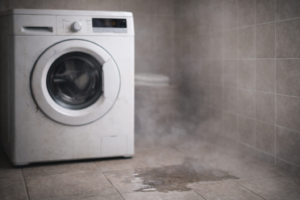
Why Intermittent Issues Are Easy to Ignore
Problems that do not repeat consistently are easy to rationalize. If a machine runs normally after a brief issue, it can feel reasonable to assume the problem resolved itself. A machine that still appears to work can carry risks that are not immediately obvious.
This pattern encourages waiting rather than pausing, especially when daily routines depend on the appliance.
However, inconsistency does not equal harmlessness. When symptoms come and go, it becomes harder to tell whether conditions are improving or quietly worsening. Slowing down instead of assuming stability can prevent missed warning signs.
How Temporary Symptoms Can Mask Ongoing Damage
Intermittent issues often occur when components are under stress but not yet fully failed. A part may work within limits during some cycles and struggle during others. This partial function can hide wear that only becomes visible under specific conditions. Leaks that appear briefly and disappear can follow the same misleading pattern.
Because the machine appears normal much of the time, underlying damage can progress without drawing attention. Recognizing that “sometimes” problems still count as problems can help reframe how serious they may be.
Why Consistency Matters More Than Frequency
A single, consistent failure is often easier to diagnose than a problem that appears randomly. Consistency creates a clear pattern, while intermittent behavior creates doubt. That doubt can delay decisions and extend exposure to risk. Over time, repeated uncertainty can become part of a larger cost and reliability problem.
Even infrequent issues deserve attention if they disrupt normal operation unpredictably. Choosing to pause when patterns feel unclear is often safer than waiting for certainty that may never arrive.
The Risk of Repeated Normal Cycles
When a washing machine resumes normal operation after a problem, it can feel reassuring. Yet repeated cycles can place additional strain on components that are already compromised. Each cycle may contribute to gradual deterioration, even if no immediate failure occurs.
This kind of risk builds quietly. It rarely announces itself with a clear breaking point. Reducing use while uncertainty exists can limit how much stress accumulates before the issue is understood.
Why “It Went Away” Is Not Always a Good Sign
Problems that disappear temporarily can suggest borderline conditions rather than resolution. Environmental factors, load differences, or timing may influence whether symptoms appear. When conditions shift back, the issue may return without warning.
Assuming a problem is gone because it is not currently visible can close off safer options. Treating disappearance as a reason to pause rather than proceed can help prevent escalation.
When Intermittent Problems Point to Internal Wear
Components that are nearing failure often behave unpredictably. Connections may loosen, seals may weaken, or controls may respond inconsistently. These changes rarely follow a straight line from working to broken.
Intermittent behavior can be a signal that internal systems are no longer stable. While this does not guarantee immediate failure, it does suggest that continued operation carries more uncertainty than it appears.
When Slowing Down Is the Smarter Response
Unpredictable problems create pressure to “wait and see.” In many cases, waiting while continuing normal use adds more variables rather than clarity. Slowing down can reduce stress on the machine and provide space to notice patterns more clearly. In many home situations, restraint creates more clarity than continued action.
Choosing restraint does not mean assuming the worst. Pausing can be a deliberate way to reduce uncertainty rather than ignore it.
It means acknowledging uncertainty and responding in a way that limits potential consequences.
FAQ
Are intermittent washing machine problems always serious?
Not always. Some issues are minor, but inconsistency still deserves attention rather than automatic dismissal.
Is it safe to keep using a machine if the problem stopped?
Temporary improvement does not always mean resolution. Pausing use can reduce uncertainty when patterns are unclear.
Why do intermittent issues feel harder to deal with than constant ones?
They create doubt and mixed signals, making it harder to decide when to stop or reassess.
Should problems be ignored if they only happen occasionally?
Occasional issues can still signal developing wear. Slowing down and observing patterns is often a more cautious choice.