
Small appliance issues are easy to overlook. A faint noise, a minor leak, a control that occasionally hesitates, or a performance change that seems easy to work around rarely feels urgent. Because daily routines continue uninterrupted, these signals are often treated as background noise rather than information. Over time, ignoring small issues becomes one of the most common forms of maintenance failure—not because the signs were dramatic, but because they were subtle.
Why Small Problems Feel Safe to Ignore
Small issues do not usually stop an appliance from working. The machine turns on, completes its cycle, and delivers acceptable results. This creates a sense that the problem is cosmetic, temporary, or not worth attention.
That sense of safety is reinforced by familiarity. When an appliance has worked reliably for years, a minor change can feel insignificant. Slowing down to question why a small issue appeared in the first place can feel unnecessary, even disruptive, but it is often the point where awareness matters most.
The Difference Between Minor and Early
Many issues labeled “minor” are actually early. They appear small not because they are harmless, but because they are at the beginning of a process. Wear, imbalance, moisture intrusion, or heat stress often start quietly.
Early-stage problems tend to be flexible. Intermittent behavior is often an early signal rather than a harmless glitch.
They fluctuate, improve temporarily, or seem to disappear. This variability makes them easy to dismiss. Pausing to recognize that early does not mean trivial can prevent a pattern of neglect from forming.
How Small Issues Become Normalized
Normalization happens gradually. A sound that was once noticeable becomes expected. A workaround becomes routine. An adjustment becomes part of how the appliance is used.
Each adaptation reduces the sense that something is wrong. Over time, the appliance feels “normal” again, even though conditions have changed. Choosing restraint instead of adaptation can interrupt this process before it becomes invisible.
Why Maintenance Often Focuses on Failure, Not Change
Maintenance is commonly reactive. Action is taken when something breaks, not when it changes. As long as the appliance continues to function, change is tolerated.
This mindset overlooks the fact that many failures are preceded by long periods of change. Small issues are signals that conditions are shifting. Treating change itself as information, rather than waiting for failure, reframes what maintenance actually means.
The Hidden Cost of Delayed Attention
Ignoring small issues does not usually cause immediate damage. The cost shows up later, when multiple systems are affected or when a simple fix is no longer possible.
By the time a clear failure occurs, the appliance may be under more stress than it appears. What feels like a sudden breakdown is often the result of long-term accumulation. Doing less, rather than pushing the appliance through repeated cycles, can slow that accumulation. Temporary fixes can allow small issues to quietly worsen over time.
Why “It Hasn’t Gotten Worse” Can Be Misleading
Stability is often used as reassurance. If a small issue has not worsened, it can feel safe to continue ignoring it. However, lack of visible progression does not always mean lack of internal change.
Some forms of wear plateau temporarily before accelerating. Others spread to areas that are harder to observe. Slowing down instead of relying on visible change can prevent false confidence.
The Role of Convenience in Maintenance Failure
Convenience plays a major role in why small issues are ignored. Addressing them takes time, disrupts routines, and introduces uncertainty. Continuing as usual feels easier.
This convenience bias quietly shapes decisions. Continued use becomes the default, not because it is evaluated, but because it is comfortable. Recognizing this bias can help separate what feels easy from what is reasonable.
When Small Issues Affect More Than the Appliance
Small problems can extend beyond the appliance itself. Early appliance issues often cause damage beyond the unit before it is noticed.
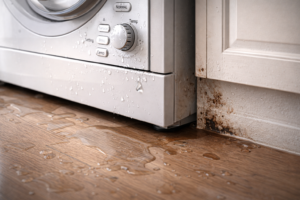
Minor leaks can affect flooring. Subtle vibration can loosen surrounding structures. Inconsistent heat can stress nearby materials.
These effects are often invisible at first. By the time external damage is noticeable, the original “small issue” may no longer be small. Reducing use when uncertainty appears can limit how far the impact spreads.
Why Pausing Is an Underused Maintenance Tool
Maintenance is often associated with action—fixing, adjusting, replacing. Pausing is rarely considered a valid response. Yet pausing can be one of the most effective ways to prevent escalation.
A pause reduces stress on the system and creates space to observe patterns. It does not require a decision or a solution. It simply prevents continued exposure while understanding improves.
Small Issues as Decision Signals, Not Problems to Solve
Not every small issue requires immediate repair. What it does require is recognition. Small issues are signals that conditions have changed, not instructions to act or ignore.
Treating these signals as prompts to slow down, observe, and reassess can prevent maintenance from becoming reactive and delayed. This approach values awareness over urgency.
FAQ
Are small appliance issues always serious?
No. Many remain minor. The risk comes from assuming all small issues are harmless without observing patterns.
Why do small issues often lead to bigger problems later?
Because they reflect early-stage wear or instability that continues developing when ignored.
Is it overreacting to pay attention to minor changes?
No. Attention does not require action. It simply prevents blind spots.
How can small issues be handled calmly?
By slowing down, avoiding normalization, and allowing pauses instead of defaulting to continued use.