Check the Appliance and Its Surroundings
A dishwasher that leaks only while draining, a washer that shakes after being moved, and several appliances losing power together require different first checks. Before replacing another part, record when the symptom occurs, which devices are affected, and what changed in the home. A repeated fault can originate in the appliance, its installation, or a shared supply or drainage system; the pattern is a reason to investigate, not proof of a hidden building defect.
Make a short, safe checklist: note the appliance model and error code, whether the issue occurs during filling, draining, heating, or startup, and whether nearby floors are damp or ventilation openings are blocked. Do not open electrical panels or disconnect gas fittings to investigate. Stop using the equipment and seek qualified help if you notice a burning smell, exposed wiring, repeated breaker trips, water near electrical connections, or a suspected gas leak.
Why Appliances Are Often Treated as the Problem
Begin by separating a single-machine fault from a possible shared home-system issue. If only the refrigerator is warm, first check that its door seals and closes properly and that the manufacturer’s ventilation clearance is unobstructed; if it still cannot maintain a safe temperature, arrange appliance service. If several appliances lose power together or a breaker repeatedly trips, stop resetting it and contact a qualified electrician. If water appears around more than one appliance, photograph the locations, avoid electrical hazards, and ask a plumber to check the supply and drainage connections. These observations help direct the first service call; they do not diagnose the cause.
For the service visit, prepare a short timeline: the first date of the fault, any error codes, whether the problem is constant or intermittent, and what changed in the home just beforehand. Ask the technician to explain what was tested and what evidence points to an appliance component versus its power, water, drain, or ventilation supply. If a second trade is needed, request that recommendation in writing so the next professional can assess the same observations without repeating unsafe trial-and-error.
How Appliances Reflect Their Environment
Appliances do not operate in isolation. They rely on stable floors, consistent power, controlled moisture, and predictable airflow. Changes in these surrounding conditions can influence how an appliance behaves. For a more specific example, see how washing-machine symptoms can originate outside the machine; that possibility still needs to be checked rather than assumed.
Look for a change you can verify without dismantling equipment. If a washer starts shaking after being moved, note whether the floor looks uneven and whether the load is unbalanced; do not move a connected machine where water or electrical hazards are present. If a refrigerator struggles after being placed in a tight alcove, check its manual for required ventilation clearance. Neither observation proves the appliance is sound, but both help a technician test a plausible cause.
When Problems Appear Unrelated but Share a Pattern
Compare the timing before assuming two failures share a cause. If several appliances lose power at the same moment, record which outlets or circuits were affected and ask a qualified electrician to investigate; do not repeatedly reset a tripping breaker. If a dishwasher and a washing machine leak on different days, record each leak location and whether it occurs during filling or draining. A plumber or appliance technician can then check the appropriate connections. Similar symptoms alone do not establish a common defect.
A shared pattern is a reason to investigate surrounding conditions, not proof that the appliances themselves are sound.
Why Fixes Feel Temporarily Effective
If a fault returns after a repair, compare the original service invoice with the new symptom before assuming the repair failed. Note whether the same error code or operating cycle is involved, and ask the technician which measurements confirmed the original diagnosis. A recurring symptom may have several causes; it does not by itself show that the building has a wider defect. This cycle reflects why isolated appliance fixes fail when damage has already spread beyond the original fault.
How Environmental Stress Shows Up as Appliance Trouble
Different symptoms point to different checks: repeated breaker trips call for a qualified electrician, slow drainage shared by multiple fixtures may call for a plumber, and vibration after a washer is moved may be an installation or appliance issue. Note which symptoms occur together, but do not assume they share a cause or open electrical, gas, or mechanical components to investigate. If a leak or repeated malfunction has affected nearby walls or floors, see when appliance damage may warrant a structural assessment; visible marks alone are not a diagnosis.
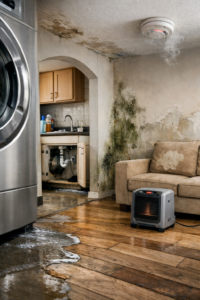
A damp cabinet beside a dishwasher, discoloration along a nearby baseboard, or a soft patch of flooring is a reason to investigate water damage even if the dishwasher still runs. Photograph the affected area, stop using the appliance if water is near electrical connections, and arrange a qualified assessment of the leak source and surrounding materials. Visible moisture does not establish structural damage; avoid making that diagnosis without an inspection.
Appliance behavior is not, by itself, proof of a building-wide problem. Compare observable conditions and seek a qualified assessment when safety concerns arise.
Why Attention Often Stays Narrow Too Long
Before booking a repeat service visit, compare the previous repair notes with the current symptom. Did the technician test the part that was replaced, and is the same fault now recurring under the same conditions? Ask what evidence would justify checking the appliance’s supply, drain, installation, or ventilation instead. Keep receipts and photographs so the next professional can avoid duplicating tests, but do not delay help when there is a burning smell, gas concern, or water near electricity.
If the same fault returns after a repair, request the technician’s test findings and compare them with the new symptoms before authorizing further work. A change in symptoms may call for a different specialist, but it does not establish a hidden building defect.
When Appliance Behavior Becomes Inconsistent
Inconsistent behavior is another signal that broader attention may be needed. An appliance may work well under some conditions and poorly under others, without a clear mechanical explanation.
Inconsistent performance can come from an internal fault or from changes in power, load, ventilation, or water supply. Record the error code, time of day, recent maintenance, and operating conditions. Share the pattern with a qualified repair professional instead of assuming a home-wide cause.
Intermittent behavior does not, by itself, identify the source. A failing component, an unstable supply, incorrect installation, or changing loads can all cause similar symptoms. Use the recorded pattern to guide a qualified inspection rather than repeatedly resetting or dismantling the appliance.
A Safe Observation Checklist Before Paying for Another Repair
Do not open panels, test live electrical parts, or bypass safety devices. Start with information you can collect without dismantling anything:
- Write down the exact symptom: the appliance model, error code, sound, leak location, and when the issue started.
- Check the surroundings: look for water on the floor, damp cabinet walls, blocked external ventilation, an unstable surface, or signs of a damaged power cord.
- Compare the timing: did the problem start after plumbing work, a power outage, a move, or a change in room ventilation?
- Note whether other appliances are affected: repeated breaker trips or flickering lights across several devices warrant an electrician’s assessment, not repeated resets.
- Share observations with a qualified technician: ask which findings point to an internal appliance fault and which suggest a supply, drainage, installation, or building issue.
Match the Symptom to the Right Next Step
- Washer vibrating excessively: check for an uneven load and visible instability without moving a connected machine. Persistent shaking needs an appliance technician; water damage around the floor may also require a plumber.
- Dryer taking longer than usual: clean the accessible lint filter according to the manual and check that exterior ventilation is not visibly blocked. Overheating, a burning smell, or repeated shutdowns require stopping use and professional inspection.
- Refrigerator not cooling well: check that the door closes and that manufacturer-required ventilation clearance is maintained. A persistent temperature problem needs an appliance technician; repeated electrical interruptions may require an electrician.
- Moisture around multiple appliances: document where and when water appears. A plumber or qualified water-damage professional can assess whether supply lines, drains, or surrounding materials are involved.
Safety Signs That Change the Decision
Stop using an appliance if you notice smoke, a burning smell, exposed wiring, water near an electrical outlet, or repeated breaker trips. Do not keep resetting the breaker to see whether the fault returns. If you suspect a gas leak, leave the area and contact the gas utility or emergency services from a safe location; do not operate electrical switches.
What a Useful Repair Visit Should Establish
Ask the professional to identify the most likely fault, the evidence supporting that diagnosis, and whether the installation or surrounding home systems need separate inspection. Keep a brief record of the finding and any recommended follow-up. A recurring symptom does not prove a hidden structural problem; it means the previous diagnosis should be reassessed rather than assumed correct.
FAQ
How can appliance problems indicate broader home issues?
Check for observable changes in ventilation, drainage, floor stability, and electrical supply. If two appliances show related symptoms, document the timing and seek appropriate professional diagnosis; the pattern alone does not establish a shared cause.
Does this mean appliance repairs are useless?
No. Repairs may still be necessary. The issue arises when repairs are treated as complete solutions despite recurring patterns.
Why do problems feel inconsistent in these cases?
An intermittent fault can come from a failing part, changing electrical supply, load, ventilation, or water pressure. Note when the problem occurs and give the pattern to a qualified technician; the symptom alone cannot identify the cause.
What’s the safest response when unsure?
If there is smoke, a burning smell, exposed wiring, water near electrical connections, or a suspected gas leak, stop using the equipment and seek qualified or emergency help. Otherwise, record the symptoms and consult the appliance manual or a qualified technician before attempting repairs.