
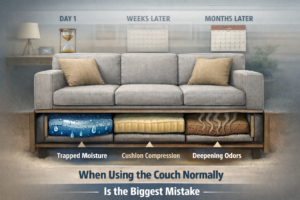
Using a couch normally feels like the safest possible behavior. Sitting, leaning back, changing positions—these actions are routine and expected. When a couch looks clean and feels usable, normal use seems harmless. In many gray-zone situations, however, this assumption becomes the biggest mistake. The couch may still be internally unstable, even though nothing on the surface suggests caution. Understanding how “normal use” can quietly cause damage explains why problems often appear without any clear error.
Why Normal Use Feels Automatically Safe
Normal use carries no warning signals. It does not involve tools, cleaning products, or deliberate force. Because these actions are everyday habits, they bypass conscious decision-making.
This automatic trust is powerful. If a couch looks fine, using it feels like the default, not a choice. The absence of friction makes it easy to overlook whether conditions have actually returned to normal.
The Gray Zone Between Clean and Stable
After cleaning, drying, or a minor moisture event, a couch often enters a gray zone. Using a couch too soon can turn this gray zone into a source of long-term damage. It may no longer feel wet, but internal materials may still be adjusting. This stage has no clear label and no visible boundary.
Normal use during this phase feels justified because the couch appears functional. Pausing use feels unnecessary and inconvenient. This is where decision failures quietly begin.
How Pressure Changes Internal Conditions
Sitting applies pressure, even when done gently. Cushions compress, layers shift, and internal airflow changes. When internal moisture or softness is still present, pressure can redirect moisture or lock materials into altered shapes.
Because pressure is gradual and familiar, its effect goes unnoticed. The damage does not occur in a single moment. It develops incrementally through repeated, ordinary use.
Why Body Heat Matters More Than Expected
Normal use introduces body heat into cushions. Heat affects moisture behavior, material flexibility, and internal movement. When conditions are still stabilizing, heat can increase internal activity instead of allowing calm drying.
This does not create immediate discomfort. The couch still feels fine. The effect is delayed, which makes normal use an unlikely suspect later on.
The False Signal of Comfort
Comfort is often mistaken for readiness. A couch that feels comfortable seems safe to use. Softness, warmth, and support are interpreted as positive signs.
In reality, comfort can mask vulnerability. Materials may feel soft because they are still damp or not fully set. Trusting comfort alone can allow internal issues to deepen.
Why Damage Appears to Come From Nowhere
When normal use contributes to damage, it rarely feels connected. Early fresh water spills that seemed resolved can combine with normal use to create damage later. There was no spill, no accident, no obvious mistake. Problems appear later as odors, sagging, or texture changes.
Because use never stopped, there is no clear moment to point to. This makes damage feel mysterious and unavoidable, even though it was shaped by repeated everyday actions.
How Repetition Turns Small Stress Into Lasting Change
One instance of normal use rarely causes noticeable harm. Repetition does. Each sitting session applies similar stress to the same areas.Waiting while continuing normal use can quietly lock this stress into the couch. When internal conditions are not fully stable, this repetition reinforces changes instead of allowing recovery.
Over time, the couch adapts to this stressed state. What began as temporary becomes persistent.
Why Avoiding Use Feels Excessive
Not using a couch feels impractical. Furniture exists to be used. Avoiding it feels like overthinking or unnecessary caution, especially when there are no visible problems.
This discomfort pushes people back into normal use quickly. The social and practical pressure to resume normal life outweighs invisible risk.
Situations Where Normal Use Is Riskier
Normal use is more likely to cause problems after deep cleaning, in humid homes, in rooms with limited airflow, or with dense cushions that recover slowly. In these cases, internal stability lags behind surface appearance.
Because these conditions are not always obvious, normal use feels equally safe everywhere. This false consistency increases the chance of quiet damage.
When Normal Use Replaces Observation
Once normal use resumes, observation often stops. Attention shifts away from the couch. Subtle changes are missed because the furniture has returned to background status.
This loss of awareness delays recognition of problems until they are more advanced. Normal use does not just apply stress—it also reduces monitoring.
Understanding That “Normal” Is Context-Dependent
Normal behavior is not inherently safe in every context. The same action can be harmless in one situation and harmful in another, depending on internal conditions.
Recognizing that normal use is not neutral—but conditional—changes how responsibility is understood. The mistake is not using the couch, but assuming timing does not matter.
Accepting That the Biggest Mistakes Feel Ordinary
The most damaging choices often feel the least dramatic. They blend into routine and avoid attention. Normal use fits this pattern perfectly.
Understanding this helps explain why couch problems so often feel undeserved. The actions that contributed to them never felt like decisions at all.
FAQ
Is normal use always risky after cleaning?
No. It becomes risky when internal conditions have not fully stabilized.
Why didn’t the couch warn me?
Couches do not signal internal instability clearly. Surface comfort is not a reliable indicator.
Is avoiding use the only solution?
Not necessarily. Awareness and timing matter more than permanent avoidance.
Why does damage show up later instead of right away?
Because normal use compounds internal stress gradually rather than causing immediate failure.