
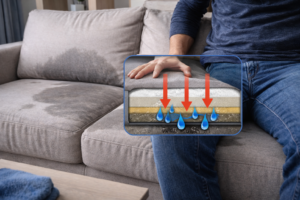
After a couch has been exposed to moisture, it is common for the surface to feel dry while deeper layers are still adjusting. Repeated sitting during this period can quietly change how that remaining moisture behaves. Related discussions often focus on whether sitting itself slows internal drying rather than how it redistributes moisture. What feels like normal use may influence where moisture settles and how long it stays trapped.
Rather than assuming the couch will simply finish drying on its own, it is worth slowing down and considering how repeated pressure affects what cannot be seen.
What to Do Immediately
The most cautious first step is to limit repeated sitting, especially in the same area. Every time weight is applied, internal layers compress and release, which can move moisture in ways that are hard to predict. Reducing use gives the couch a chance to stabilize without added stress. Questions about sitting too soon often focus on timing, but repeated pressure adds another layer of risk.
It can feel unnecessary to hold back when nothing feels damp. Still, choosing to pause instead of testing the couch repeatedly often prevents moisture from being pushed deeper than it already is.
A Careful Use Approach
Repeated sitting does more than flatten cushions temporarily. Pressure can encourage moisture to migrate inward or spread sideways into areas that were previously dry. Over time, this can make drying less even and harder to reverse.
A careful approach focuses on minimizing repetition rather than eliminating all contact. Occasional, light use tends to interfere less than frequent sitting in one spot. If there is uncertainty, waiting longer before returning to regular use is often the calmer choice.
Paying attention to subtle changes also matters. If cushions feel different, smell stronger, or recover more slowly after sitting, those are signs to stop rather than continue.
Common Mistakes That Feel Logical
One common mistake is believing that cushions need to be “worked” to dry properly. In reality, repeated compression usually pushes moisture inward instead of releasing it. What feels like helping can quietly slow internal recovery.
Another mistake is rotating sitting positions while still using the couch often. While this may spread wear evenly, it can also spread moisture into a larger area. It is understandable to want to use the couch normally again, but normal use is not always neutral during this stage.
Slowing down can feel passive, yet it is often the least disruptive option.
When This Approach Is Not Enough
If repeated sitting leads to stronger odors, uneven firmness, or lingering changes in how cushions respond, moisture may already be settling deeper inside. At that point, continuing to sit is unlikely to improve the situation.
There are times when doing less is the only realistic option left. Trying to force comfort or dryness through use can lock moisture into areas that are difficult to address later. Choosing to stop and reassess, even if inconvenient, often limits long-term issues.
Accepting that a couch may need more time than expected can be frustrating, but pushing past that frustration rarely helps.
FAQ
Can sitting really push moisture deeper?
It can. Pressure from sitting compresses internal materials, which can encourage moisture to move inward rather than escape. When unsure, reducing repetition is usually safer.
Is occasional sitting different from repeated sitting?
Occasional, light use tends to have less impact than frequent sitting in the same spot. Repetition is what most often changes internal moisture patterns.
If the couch feels dry, why worry about depth?
Surface dryness does not reflect internal conditions. Moisture can remain deeper inside long after the fabric feels normal. Pausing use helps avoid pushing it further in.
What signs suggest repeated sitting is a problem?
Changes in smell, firmness, or cushion recovery after sitting are common indicators. When these appear, stopping early is often easier than trying to undo them later.
Moisture movement inside a couch is rarely obvious. When repeated sitting is the main variable, choosing restraint over reassurance often protects the cushions from deeper, harder-to-resolve issues.