
After a couch has been cleaned or exposed to moisture, attention usually focuses on drying time and airflow. What often goes unnoticed is how weight and pressure from normal use can quietly influence how moisture moves inside the padding. A couch is not just fabric on top; it is a layered structure where internal materials respond to compression and release.
Understanding this process requires viewing the couch as a system rather than a surface. Moisture does not remain fixed in place. It shifts in response to physical forces. Slowing down expectations about how drying “should” work can make these shifts easier to recognize.
Padding Is Responsive, Not Static
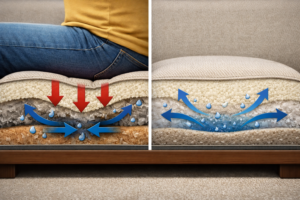
Couch padding—whether foam, fiberfill, or layered batting—compresses under weight and expands when pressure is removed. When moisture is present, even in small amounts, this compression changes internal pathways.
Under pressure, air is pushed out and materials become denser. Moisture within those materials may be forced deeper or sideways. When pressure lifts, the padding expands again, but moisture does not always return to its previous position. It may remain in newly compacted zones.
Allowing time without added weight can reduce how often these internal pathways are reshaped.
How Compression Redirects Moisture
Weight applied during sitting concentrates force in specific areas. Repeated compression patterns are often linked to moisture being pushed deeper into cushion layers. This can create temporary channels within padding where moisture moves more easily. Over repeated cycles, these channels may become preferred paths.
Instead of evaporating evenly, moisture may collect in areas with less airflow or slower recovery. These shifts are gradual and often invisible. Odors or texture changes may be the first noticeable signs.
Pausing use, even briefly, can help determine whether moisture is still redistributing or beginning to stabilize.
The Difference Between Light and Sustained Pressure
Not all pressure affects padding equally. Light, brief contact allows materials to recover quickly. Sustained weight compresses padding longer, increasing the likelihood that moisture will relocate.
When compression lasts longer, internal air circulation decreases. Body heat combined with sustained pressure can further influence how moisture behaves inside padding. Reduced airflow can slow evaporation and make certain areas feel cooler or denser afterward. This does not automatically signal damage, but it does suggest that internal balance is still shifting.
Reducing duration rather than eliminating use entirely can sometimes limit these effects. Doing less, rather than forcing normal use, often preserves more consistency.
Why Pressure Patterns Matter
Repeated use in similar positions creates predictable pressure patterns. Sitting in the same spot repeatedly can contribute to uneven internal drying over time. Over time, these patterns influence where moisture tends to settle. Even small variations in posture or cushion choice can change how padding responds.
If one area receives consistent weight, it may dry differently from adjacent areas. This unevenness may not be obvious at first. Slowing repetition rather than trying to correct it afterward often leads to more even outcomes.
Restraint at this stage can feel unnecessary, yet it usually reduces variability inside the couch.
The Role of Release and Recovery
The moment weight is removed is just as important as when it is applied. As padding expands, it draws air back into its structure. If moisture is still active, that expansion can redistribute it again.
Frequent cycles of compression and release keep internal materials in motion. Longer rest periods allow the system to settle. Stillness, in this context, is not neglect—it is stabilization.
Observing how padding feels after resting for an extended period can provide clearer signals than judging it immediately after use.
Why Changes Often Appear Later
Moisture movement influenced by pressure does not always show immediate results. Odors, uneven firmness, or slower cushion recovery often become noticeable after repeated cycles rather than after a single event.
This delay can create the impression that something new has gone wrong. In many cases, it reflects gradual redistribution shaped by daily weight and pressure. Recognizing this pattern can prevent unnecessary reaction.
Waiting before taking further action often clarifies whether conditions are improving or continuing to shift.
Common Assumptions That Complicate Drying
A common belief is that using a couch helps it “air out.” In reality, pressure often reduces internal airflow during compression. Another assumption is that padding returns to its original state immediately after standing up. While shape may recover quickly, internal moisture pathways may not.
Expecting padding to behave uniformly can make normal system responses feel like problems. Accepting that internal adjustments take time can reduce frustration.
Choosing patience over correction often supports steadier results.
When Weight Becomes a Clear Factor
There are signs that weight and pressure are influencing moisture movement more than expected. Persistent cool spots, uneven firmness, lingering odors, or areas that feel heavier after sitting are common indicators.
When these appear, continued use usually adds more variability. Reducing weight on the affected areas and allowing longer rest can help reveal whether moisture is settling or still migrating.
It is reasonable to step back rather than intensify interaction.
Seeing Pressure as Part of the System
Weight and pressure are not separate from drying—they are part of the system shaping it. Every interaction influences how padding responds internally.
Viewing the couch as a responsive structure helps explain why moisture behavior changes over time. Rather than focusing only on surface dryness, it can be more useful to consider how daily forces continue to shape internal conditions.
Sometimes the most effective support for drying is simple restraint. Allowing padding to recover without repeated compression often gives moisture fewer reasons to move.
FAQ
Does sitting always push moisture deeper into padding?
Not always, but it can influence movement, especially if moisture remains active. Limiting repetition usually interferes less.
Is lighter weight less of a concern?
Lighter weight typically compresses padding less, but repetition still matters. Duration and frequency often have more impact than force alone.
Why do cushions feel cooler after sitting?
Compression reduces airflow temporarily, which can make certain areas feel denser or cooler as moisture redistributes. Allowing rest can help clarify whether this stabilizes.
Should the couch be avoided completely while drying?
Not in every case, but longer rest periods usually allow padding to settle more predictably than frequent compression.
Weight and pressure are subtle but consistent influences on how moisture behaves inside couch padding. Recognizing their role makes delayed changes feel less unexpected and helps guide more measured responses.