
After cleaning or moisture exposure, a couch can feel dry to the touch within a short time. The fabric may no longer feel cool or damp, and surface airflow may seem to have done its job. Yet internal wooden or structural frame components can remain damp long after the upholstery appears finished drying.
This mismatch between surface dryness and internal moisture is common. It becomes clearer when the couch is viewed as a layered system rather than a single material. Slowing down expectations about what “dry” means can prevent confusion later.
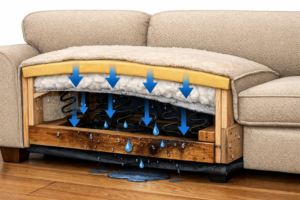
Fabric Dries Faster Than Structure
Fabric is exposed. It benefits from airflow, light, and temperature changes in the room. Frames, on the other hand, are enclosed inside layers of padding, batting, and upholstery. Air reaches them slowly, if at all.
When moisture moves downward or inward during cleaning, it can settle against structural elements. Once there, evaporation slows dramatically. Even when cushions feel normal, the frame may still be adjusting internally.
Assuming the entire couch is dry based only on touch often leads to surprises later.
How Moisture Reaches the Frame
Moisture does not need to soak through visibly to reach internal supports. During cleaning, gravity, pressure, and repeated compression can encourage moisture to migrate downward. As it travels, it may encounter wooden or composite frame components.
Frames tend to absorb moisture more slowly but also release it more slowly. Once damp, they may retain that moisture quietly. There may be no visible sign from the outside.
Pausing before resuming full use can reduce additional pressure that might push more moisture inward.
Why Damp Frames Go Unnoticed
Unlike fabric, frames do not signal dampness through touch. There is no easy way to feel internal structural moisture without dismantling the couch. Instead, the first signs are often indirect—subtle odors, slight changes in sound when sitting, or shifts in cushion firmness.
Because these signals appear gradually, they are often misattributed to surface issues. Reacting too quickly at the surface level can introduce more moisture rather than addressing the internal state.
Allowing time without added disturbance can help determine whether the system is stabilizing.
The Role of Airflow Limitations
Internal frames sit in areas with limited airflow. Even if a room is well ventilated, air does not easily circulate through dense foam and batting. This makes evaporation slower and less predictable.
Once external airflow returns to normal after cleaning, internal drying may continue at a reduced pace. The frame may still be releasing moisture long after the surface seems settled.
Recognizing this lag can prevent the urge to assume something new has gone wrong.
Why Normal Use Can Prolong Dampness
Weight and pressure from daily use can influence how moisture behaves near the frame. Compression may temporarily trap moisture against structural components, reducing the limited airflow that does exist.
Repeated sitting can also redirect moisture toward the lowest structural points. Over time, this can keep certain areas damp longer than expected.
Reducing sustained pressure during this phase often interferes less with the natural drying process.
Delayed Odors and Subtle Changes
When frames remain damp, odors may develop slowly. These smells can appear days after cleaning and may not be localized to the original cleaned area. Because frames sit beneath multiple layers, odors can emerge in unexpected places. This system-wide movement explains why odors sometimes appear in areas that were never directly cleaned.
Other changes, such as slight creaking or differences in cushion recovery, may reflect shifting internal conditions rather than new damage. Slowing down before reacting helps clarify whether moisture is still dissipating.
Patience during this stage is often more informative than immediate intervention.
Why Frames Dry on a Different Timeline
Structural materials have different densities and absorption characteristics than upholstery fabric. They respond to moisture gradually and may require longer periods of stillness to release it.
Expecting the entire couch to dry at the same pace as the fabric sets unrealistic timelines. Recognizing that internal components follow their own schedule can reduce unnecessary concern.
Sometimes doing less—allowing longer rest and minimizing disturbance—is the most supportive approach.
When Damp Frames Become a Broader Issue
If odors intensify, spread, or persist without stabilizing, internal moisture may still be active. Continued normal use rarely speeds this up. Instead, it may prolong uneven conditions.
Reducing interaction and allowing extended rest can help determine whether the frame is drying or remaining damp. Observing gradual change is often more reliable than attempting repeated surface treatments.
Acknowledging the limits of what can be felt from the outside prevents chasing symptoms instead of understanding causes.
Seeing the Frame as Part of the System
A couch frame is not separate from the fabric—it is part of a connected internal system. Moisture that moves inward affects structural elements differently than it affects surface materials. Understanding how moisture travels inside a couch clarifies why structural components dry on a different timeline.
Understanding this layered reality explains why dryness can feel complete while internal dampness remains. Viewing the couch as a system rather than a surface helps set more realistic expectations.
When uncertainty appears after cleaning, slowing down and allowing the internal structure time to adjust often leads to clearer outcomes than immediate action.
FAQ
Why does the couch feel dry if the frame is still damp?
Fabric dries first because it is exposed to airflow. Internal frames are enclosed and release moisture more slowly.
Can damp frames cause odors days later?
Yes. As internal moisture shifts or stabilizes, odors can become noticeable even after the surface feels dry.
Does sitting help the frame dry faster?
Usually not. Pressure can limit airflow around structural elements and prolong internal dampness.
How long should you wait before worrying?
There is no fixed timeline. Watching whether odors or changes stabilize over time often provides clearer guidance than reacting immediately.
Fabric dryness does not always reflect structural dryness. Recognizing that frames follow a slower internal timeline helps reduce confusion and encourages more measured responses after cleaning.
For a complete breakdown of how couch moisture moves, dries, and sometimes causes delayed odors, see our couch moisture and drying guide.