
After a couch has been cleaned or exposed to moisture, there is often a cautious period where use is limited. Once the surface feels dry and odors seem reduced, the couch typically returns to normal daily activity. What is less visible is how internal moisture continues to respond when regular use resumes.
Moisture does not simply disappear when the couch feels ready again. It may still be redistributing within foam, batting, and structural layers. Returning to normal use can quietly reshape where that moisture settles. Slowing down expectations about what “back to normal” means can reduce confusion later.
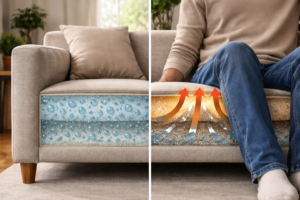
The Transition From Rest to Activity
During limited use, internal layers often begin to stabilize. Airflow, gravity, and stillness allow moisture to move gradually toward equilibrium. When normal sitting resumes, pressure and heat are reintroduced into that system. Normal daily use continues shaping how moisture redistributes inside the couch long after surface dryness appears complete.
This transition can reactivate internal movement. Areas that were slowly drying may experience renewed compression. Moisture that had begun to settle may shift again.
Allowing a gradual return to use, rather than immediate full activity, can sometimes reduce how abruptly internal conditions change.
Pressure Reopens Internal Pathways
Foam and padding contain tiny air channels that respond to compression. When someone sits, these pathways narrow or close temporarily. As weight lifts, they reopen—but not always in the exact same configuration.
If moisture remains in the cushion, these compression cycles can redirect it toward denser or lower-ventilated areas. Over repeated use, these redirected pathways may become more established.
Reducing repetition early in the return-to-use phase often interferes less with stabilization.
Heat and Moisture Mobility
Normal sitting introduces warmth. Even moderate body heat can soften internal materials slightly. Softer materials allow moisture to move more freely during compression.
This does not necessarily cause harm, but it does increase mobility. Moisture that was nearly stable may begin shifting again. Once the couch cools, that moisture may remain in a new location.
Shorter sitting periods during this phase can limit how much heat accumulates and how far moisture travels.
Why Odors Sometimes Return
When moisture shifts after normal use resumes, odors may reappear or change location. This often creates the impression that something new has gone wrong.
In many cases, the odor reflects moisture movement rather than fresh contamination. As internal layers warm and compress, dormant smells can become noticeable again.
Pausing use briefly when odors return can clarify whether the system is still adjusting or whether moisture remains active more broadly.
Uneven Cushion Feel After Resuming Use
It is common to notice slight differences in firmness or recovery between cushions after normal use resumes. One cushion may feel softer or slower to rebound.
These differences often reflect how moisture redistributed during renewed activity. The cushion receiving the most pressure may dry differently than others.
Rather than trying to correct this immediately through rotation or additional cleaning, allowing more rest can help determine whether the unevenness stabilizes.
How Structural Areas Respond
Internal frames and support components may also react to renewed pressure. Structural components may remain damp longer than fabric suggests, especially within enclosed frame areas. If moisture had settled near structural elements, repeated sitting can compress padding against those areas.
This can temporarily limit airflow and extend drying in localized zones. Subtle creaks or shifts may appear during this phase, even if the couch seemed stable earlier.
Reducing sustained pressure on the same area often allows internal layers to settle more evenly.
The Illusion of Full Recovery
When a couch returns to normal use without obvious issues, it is easy to assume the internal process is complete. However, moisture-related adjustments can continue quietly for days.
Full recovery is not always a single point in time. It is often the result of gradual stabilization across layers. Recognizing this can prevent overreaction to minor, delayed changes.
Choosing observation over intervention during this stage often leads to clearer outcomes.
When Shifts Indicate Ongoing Moisture
If odors intensify, cushions remain persistently cool, or firmness continues to change after several days of normal use, moisture may still be active internally.
In such cases, continued heavy or repetitive use rarely resolves the issue. Reducing interaction and allowing extended rest can reveal whether conditions are improving.
It is reasonable to slow down again rather than push forward.
Viewing “Normal Use” as Part of the Drying Process
Returning to normal use does not mark the end of moisture-related changes. It becomes part of the process itself. Each interaction influences how internal moisture behaves.
Understanding this perspective reframes delayed shifts as system responses rather than sudden failures. Instead of assuming something new happened, it may be more accurate to see ongoing adjustment.
Sometimes the most balanced approach is to resume use gradually and remain attentive to subtle signals.
FAQ
Why does moisture shift again after the couch feels dry?
Internal layers may still contain small amounts of moisture. Pressure and heat from normal use can reactivate redistribution.
Is it wrong to use the couch once it feels dry?
Not necessarily. However, gradual reintroduction often allows internal layers to stabilize more predictably than immediate heavy use.
Why do odors come back after normal use resumes?
Heat and compression can release previously muted smells as moisture shifts internally.
How long should adjustments continue?
There is no fixed timeline. Observing whether changes stabilize over time offers more clarity than reacting immediately.
Internal moisture does not stop responding once a couch feels dry. When normal use resumes, it becomes another factor shaping how remaining moisture settles. Slowing the return to full activity often supports steadier outcomes than assuming the process is already complete.