
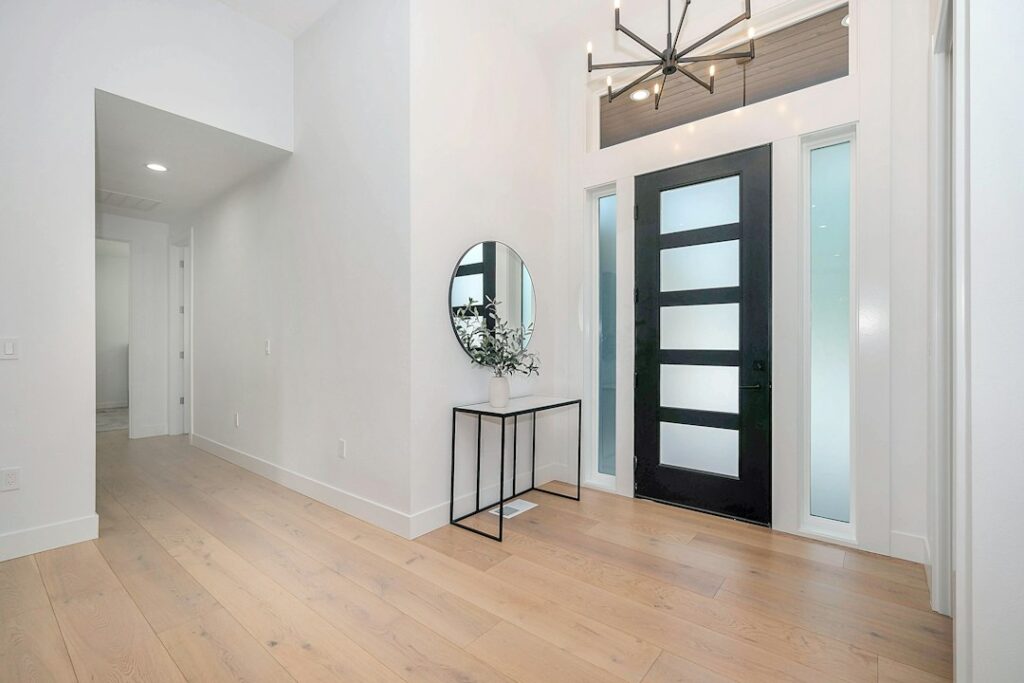
An interior door that slowly swings open or drifts closed on its own can feel mysterious, but the cause is usually mechanical. Gravity is acting on a door that is not hanging perfectly plumb, often because the frame shifted slightly, hinge screws loosened, or the hinges are no longer aligned.
Before replacing the latch, hinges, or entire door, check how the door sits in the opening. Small alignment changes can create surprisingly noticeable movement.
Why a door moves by itself
A correctly hung door should stay roughly where you leave it. If the hinge line leans, the weight of the door naturally pulls it toward the lower side. That can make the door swing open or swing closed even when nobody touches it.
Common causes
Loose hinge screws
Screws can loosen over time, allowing a hinge leaf to move slightly. Open the door and check the screws on both the door and frame sides of every hinge. Tighten loose screws carefully without stripping the holes.
The frame is slightly out of plumb
Homes move over time. Seasonal movement, settling, or an imperfect original installation can leave the hinge jamb slightly tilted. Even a small lean can be enough for gravity to move the door.
Hinges are misaligned or worn
A bent hinge, loose hinge pin, or poorly seated hinge leaf can change the door’s position. Look for unusual gaps, metal wear, or a hinge that does not sit flat.
How to diagnose the problem
- Open the door halfway and release it. Note which direction it moves.
- Check and gently tighten every hinge screw.
- Look at the gaps around the top and sides of the door. Uneven gaps can reveal alignment problems.
- Use a level against the hinge-side jamb if you have one. A jamb that is not vertical helps confirm why gravity is moving the door.
- Check whether the latch and strike plate line up normally. Misalignment there can be another sign the door has shifted.
Start with the least invasive fix
Loose screws should be corrected before you adjust or replace hardware. If a screw spins without tightening, the hole may no longer be holding the screw properly and will need an appropriate repair. If the hinges are damaged or visibly bent, replacement may be more sensible than forcing them back into position.
When the frame is the real problem
If the jamb is noticeably out of plumb, repeatedly adjusting a hinge may only hide the symptom. A badly shifted frame, door that suddenly begins binding, or new cracks around the opening can justify a closer look at the frame and surrounding structure.
Do you need a new door?
Usually not. A door that swings by itself can still be perfectly usable. Unless the slab is warped or damaged, correcting loose hardware or alignment is generally more targeted than replacing the entire door.
Bottom line
If an interior door will not stay where you leave it, check the hinges and hinge-side jamb first. The movement is usually a clue that the door is hanging slightly off vertical, not that the latch or door slab has suddenly failed.