
Appliance maintenance is usually framed as a way to keep machines running. Filters are cleaned, parts are checked, and small adjustments are made to avoid breakdowns. In this view, maintenance feels optional or deferrable. It is often worth slowing down here, because in some situations appliance maintenance stops being about the appliance itself and starts affecting the condition of the home around it.
This article explores the gray zone where maintaining an appliance is no longer just about performance or convenience, but about preventing broader, less visible impacts on the home. The shift is subtle and easy to miss.
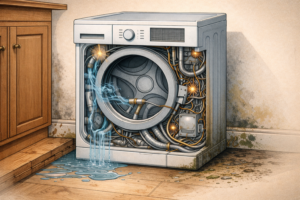
Why Maintenance Is Seen as an Appliance-Only Task
Appliances are discrete objects with clear functions. When maintenance is discussed, it is usually tied to efficiency, lifespan, or avoiding repairs. The home is treated as a neutral backdrop.
This framing makes sense early on. Problems appear localized, and maintenance actions feel contained. Pausing becomes important when the effects of neglect begin reaching beyond the appliance itself.
Boundaries feel clear until they quietly dissolve.
How Appliances Interact With the Home Over Time
Appliances sit within floors, walls, cabinets, and utility systems. They release heat, moisture, vibration, and airflow into their surroundings. Over time, these outputs shape nearby materials. This interaction explains how repeated appliance moisture leads to hidden structural issues rather than remaining a surface concern.
When maintenance lapses, these interactions often intensify. Small changes in operation can alter how stress is transferred to the home. Slowing down to consider the appliance as part of a larger system can reveal why its upkeep matters more than expected.
The appliance does not operate in isolation.
When Wear Extends Beyond the Machine
Unmaintained appliances often compensate in subtle ways. They may run longer, vibrate differently, or manage moisture less effectively. These changes can affect flooring, cabinetry, walls, or structural supports nearby.
At this stage, the cost of neglect is no longer limited to the appliance. This broader impact mirrors why appliance water damage often spreads beyond the immediate area over time. Pausing to recognize when wear is spreading outward can help reframe maintenance as protective rather than optional.
Wear travels along connections.
Why Damage Often Appears Indirect
Home impacts linked to appliance maintenance rarely show up where people expect. Instead of obvious appliance failure, signs may appear as warped materials, lingering odors, or changes in surrounding finishes.
Because these signs do not point directly back to the appliance, the connection is often missed. Slowing down to ask what ongoing appliance conditions might influence these changes can help bridge the gap.
Indirect effects are easy to misattribute.
How Maintenance Shifts From Efficiency to Protection
Early maintenance is often about optimization. Later, it becomes about limiting harm. The focus moves from “keeping things running well” to “preventing wider consequences.”
This shift can feel uncomfortable, because it challenges familiar motivations. Pausing to acknowledge that the purpose of maintenance has changed can clarify why old decision rules no longer fit.
The goal evolves as conditions evolve.
When Delaying Maintenance Changes the Stakes
Delaying maintenance may seem harmless when nothing is visibly wrong. Over time, delay allows small inefficiencies to compound into broader stresses on the home.
Once these stresses exist, maintenance decisions carry higher stakes. Slowing down to reassess the situation can help avoid treating a preservation issue as a routine task.
Delay does not freeze conditions; it reshapes them.
Why This Transition Is Hard to Recognize
There is rarely a clear moment when appliance maintenance becomes a home preservation issue. The transition happens gradually, without obvious thresholds.
Because of this, people often continue applying appliance-only logic longer than it fits. Pausing to reflect on patterns rather than single events can make the transition more visible.
Gradual shifts resist clear labels.
When Doing Less Can Increase Risk
In gray zones, reducing attention to maintenance can feel like a reasonable way to avoid overreacting. However, when home impacts are already developing, doing less may allow conditions to worsen unnoticed.
This does not mean constant action is required. Slowing down to understand whether restraint is still protective or has become risky can help guide decisions.
Not all restraint has the same effect.
Why Preservation Framing Changes Decisions
When maintenance is understood as part of home preservation, priorities shift. Decisions are no longer judged only by appliance performance or short-term cost. This shift reflects when appliance damage has moved beyond a single repair decision and begins influencing broader priorities.
This broader framing can feel heavier, but it also aligns choices with longer-term stability. Pausing to adopt this lens can make tradeoffs clearer, even if answers remain uncertain.
Framing shapes outcomes.
When Maintenance Stops Being Optional
Maintenance becomes non-optional when its absence threatens conditions beyond the appliance. At this point, ignoring upkeep is no longer neutral.
Recognizing this does not require immediate action. It requires awareness that the situation has crossed into a different category. Slowing down to acknowledge that shift can prevent underestimating its importance.
Categories matter more than labels.
FAQ
How can appliance maintenance affect the home itself?
Through moisture, heat, vibration, and stress transferred to surrounding materials. Pausing to consider these pathways helps explain the connection.
When does maintenance become a preservation issue?
When neglect begins affecting areas beyond the appliance. This transition is gradual and easy to miss.
Is this about preventing damage or improving performance?
At this stage, it is more about limiting broader impact. Performance becomes secondary to protection.
What’s the safest response when unsure?
Restraint paired with observation. Doing less while reassessing scope can help avoid misjudging what’s at stake.