
Couches accumulate dirt, spills, and body oils faster than most people expect, and the natural response is to clean them regularly to keep them looking fresh. The problem is that frequent cleaning, especially when done with the wrong products or too much force, can wear down fabric fibers, strip protective treatments, and leave residues that actually attract more dirt. What starts as an effort to maintain your furniture can quietly turn into the reason it looks worn out years earlier than it should. The impulse to clean more often when a couch looks dingy can become a cycle that damages the upholstery faster than normal use ever would. Over time, this pattern explains why some couch stains get worse after cleaning instead of improving.
Understand the Material First
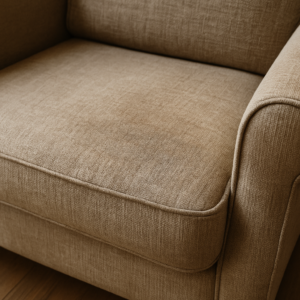
Most upholstery fabrics are designed to withstand years of sitting, but they’re not necessarily built to handle repeated exposure to water, scrubbing, or chemical cleaners. Natural fibers like cotton and linen can shrink, lose their texture, or develop watermarks if they’re cleaned too frequently with wet methods. Synthetic fabrics such as polyester or microfiber are generally more forgiving, but even these can pill, fade, or lose their stain-resistant coating when cleaned aggressively or too often. Before deciding on any cleaning routine, you need to locate the manufacturer’s tag, usually hidden under the cushions or along the bottom edge, which contains a cleaning code that tells you what’s safe and what isn’t. This happens because different couch fabrics react differently to cleaners, especially with repeated exposure.
The cleaning code is usually a single letter: W means water-based cleaners are acceptable, S means solvent-based cleaners only, WS means either is fine, and X means no liquid cleaners at all, only vacuuming or professional cleaning. Ignoring this code is one of the most common ways people permanently damage their furniture, because methods that work perfectly on one fabric can ruin another in a single cleaning session. If the tag is missing or unreadable, it’s worth pausing and considering whether you should proceed at all without knowing what you’re working with. These upholstery cleaning codes are defined by industry standards but are often misunderstood by homeowners.
Safe Methods That Often Work
Vacuuming is the least risky form of regular maintenance and works well for removing surface dust, crumbs, and pet hair without introducing any moisture or chemicals. Using the upholstery attachment once a week or every two weeks helps prevent dirt from grinding into the fibers, which is actually what causes most visible wear over time. The risk with vacuuming comes when people use too much suction or scrub the fabric with the attachment, which can pull threads loose or create a worn appearance in high-traffic areas. If the fabric starts to look fuzzy or pilled after vacuuming, it’s usually a sign that the method is too aggressive for that particular material.
Spot cleaning with a damp cloth and mild soap works for many fresh spills, but the key is using as little water as possible and blotting rather than rubbing. When you apply too much liquid, it can soak into the cushion foam underneath, which takes days to fully dry and can lead to mildew or permanent odors. Rubbing spreads the stain outward and pushes it deeper into the fibers, which is why a stain that seemed manageable at first can turn into a large, faded blotch after someone tries too hard to remove it. If you’re not seeing improvement after a few gentle blotting attempts, continuing the same motion usually makes things worse rather than better.
Steam cleaning or renting an upholstery cleaning machine can refresh a couch that looks dull or has deep-set odors, but these methods introduce a significant amount of moisture that not all fabrics handle well. Some couches dry unevenly and develop water rings or stiff patches where the cleaner was applied. Fabrics treated with stain-resistant coatings can lose that protection entirely after a steam cleaning, leaving the couch more vulnerable to future stains than it was before. There’s also a tendency to over-wet the fabric because the machine makes it easy to keep spraying and scrubbing, and by the time you realize the cushions are soaked through, the damage is already done.
Common Mistakes to Avoid
One of the most frequent mistakes is using all-purpose household cleaners that weren’t formulated for upholstery, often because they’re already sitting under the sink and seem strong enough to tackle any stain. These cleaners can contain bleach, ammonia, or other harsh chemicals that break down fabric dyes, weaken fibers, or leave behind residues that feel sticky or attract dirt faster than before. People usually reach for these products when they’re frustrated that gentler methods didn’t work, but the urgency to fix a stain quickly often leads to choosing something that causes more permanent harm than the original spill ever would have. In many cases, the real issue is permanent damage caused by cleaning, not the original stain.
Cleaning the same spot over and over because it still looks slightly discolored is another common trap. Each pass with a cleaner or scrubbing motion wears down the fibers a little more, and eventually the spot becomes visibly thinner or lighter than the surrounding fabric, even if the stain itself is gone. What started as a barely noticeable mark turns into an obvious patch of damage that can’t be reversed. The instinct is to keep working until the stain disappears completely, but sometimes accepting a faint shadow is better than creating a permanent discolored area that stands out even more.
Not allowing enough drying time between cleanings can create a buildup of moisture and cleaning agents that never fully evaporates. When you clean a couch every week or even every few weeks with any wet method, the fabric and foam don’t have time to dry completely, especially in humid climates or rooms without good airflow. This trapped moisture weakens the fabric backing, encourages mold growth, and leaves the couch feeling damp or smelling musty no matter how much you clean it.
When to Stop and Call a Professional
If a stain isn’t lifting after two or three cautious attempts, continuing with home methods is more likely to set the stain permanently or damage the surrounding fabric than it is to solve the problem. Professional upholstery cleaners have access to specialized equipment and pH-balanced solutions that are designed for specific fabric types, and they know how to extract moisture properly so that the couch dries evenly without water damage. Calling a professional after you’ve already tried multiple products or scrubbed too hard may limit what they can do, so stopping early often gives them a better chance of restoring the fabric without visible damage.
Delicate or expensive upholstery—such as silk, velvet, vintage fabrics, or anything with intricate patterns or embellishments—usually warrants professional cleaning from the start rather than experimenting at home. These materials are especially vulnerable to color bleeding, texture changes, and permanent watermarks, and the cost of professional cleaning is almost always less than replacing a ruined piece of furniture. If you’re uncertain about the fabric type or the cleaning code is missing, that uncertainty alone is a reasonable reason to avoid home cleaning methods and get an expert opinion before proceeding.
Final Thoughts
There’s no universal cleaning schedule that works for every couch, and the idea that more frequent cleaning automatically leads to better-looking furniture is often the opposite of what happens in practice. Some fabrics hold up well to regular maintenance, while others begin to show damage after just a few cleaning sessions, and the difference isn’t always obvious until the harm is already done. Paying attention to how the fabric responds after each cleaning—whether it feels stiffer, looks duller, or starts to pill—gives you more useful information than following any predetermined routine. The safest approach usually involves cleaning only when necessary, using the gentlest method that works, and being willing to stop before you think the job is fully done.