
Coffee spills happen fast, and the instinct to fix them immediately can be overwhelming. But acting too quickly—or too aggressively—often pushes the stain deeper into fabric or damages the upholstery in ways that become permanent. The goal isn’t to erase the problem in one attempt, but to avoid making it worse.
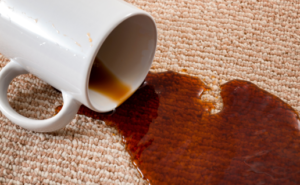
What to Do Immediately
If the spill just happened, the priority is containment, not cleaning. Blotting gently from the outside edges inward can help, but pressing hard or rubbing will likely spread the liquid further into the cushion. Many people instinctively grab whatever’s nearby—hot water, dish soap, scrub brushes—but these can set the stain or weaken fabric fibers before you’ve even assessed what you’re working with.
Don’t pour water directly onto the stain. Don’t use heat. Don’t assume that because something worked on clothing, it’s safe for upholstery. Couches are layered differently, and what seems like surface cleaning can soak through to padding that won’t dry properly.
A Careful Cleaning Approach
Once you’ve blotted away what you can, the next step is observation, not action. Look at the fabric type, check for any care tags, and consider whether the material is delicate or treated. Some upholstery will darken or stiffen when exposed to moisture, and you won’t know until it’s too late.
If you decide to proceed, work with minimal moisture and test in a hidden area first. Blotting with a lightly dampened cloth—not soaked—may lift some residue, but only if the fabric tolerates it. After any contact with liquid, airflow matters more than scrubbing. Let the area dry completely before deciding if further attempts are worth the risk. It’s often unclear how much repeated handling a fabric can tolerate, and each additional attempt increases the chance of visible damage.
Common Mistakes That Feel Logical
Scrubbing feels productive, but it usually just grinds the stain in and frays the fabric. Repeated scrubbing can permanently change how couch fabric reacts to cleaning. Using too much water seems like it would dilute the coffee, but it often spreads it wider and deeper, creating a larger problem that takes much longer to dry—or doesn’t dry evenly.
Trying multiple products in quick succession is another common reaction when the first attempt doesn’t work. But layering different substances can cause chemical reactions, discoloration, or residue buildup that’s harder to remove than the original stain.
When This Approach Is Not Enough
If the stain doesn’t lift after a cautious first attempt, it may be in the padding, not just the surface fabric. At that point, home methods lose effectiveness quickly. Some stains simply bond with certain materials, and no amount of repetition will change that. In these situations, stopping early often prevents additional damage.
It’s also possible the fabric itself isn’t meant to handle moisture-based cleaning. Stopping early and accepting a faint mark is often better than creating a large, stiff, or discolored section. Not every problem has a home solution, and that’s not a failure—it’s just a limit. Coffee contains compounds that can bind to fabric fibers and become harder to lift once absorbed.
FAQ
Can I use vinegar or baking soda on coffee stains?
Both are common suggestions, but they can alter fabric texture, leave residue, or react unpredictably with certain materials. If you use anything beyond water, test it first and use very little.
What if the stain is already dry?
Dried stains are more stubborn, but they’re also less urgent. Rewetting them can sometimes help, but it also risks spreading the stain again or soaking into padding. Proceed carefully, or consider leaving it alone.
Will the stain come back after it dries?
Sometimes. If moisture wasn’t fully removed or if residue remains in the fabric, the stain can reappear or darken as it dries. This doesn’t always mean something was done wrong—it may just mean the stain is deeper than surface cleaning can reach.
Is it safe to use a hairdryer to speed up drying?
Heat can set stains and damage certain fabrics. Air drying is slower, but it’s far less likely to cause permanent problems. Patience here is more important than speed.