
Couch problems rarely announce themselves right away. After cleaning, drying, or a minor spill, everything can seem normal for days or even weeks. The fabric looks fine, the couch feels comfortable, and there are no obvious signs of trouble. Then, unexpectedly, odors appear, cushions feel different, or damage becomes noticeable. This delay often feels confusing, but it is usually the result of slow internal processes rather than a sudden new problem. Slowing down to understand these delays can make later issues feel less mysterious.
Why “Everything Seems Fine” Feels Convincing
When a couch looks and feels normal, it is natural to trust that impression. Visual cues and surface comfort strongly influence judgment. Once these signals are positive, attention shifts elsewhere, and the couch fades back into the background of daily life.
However, surface conditions are only part of the story. Pausing to remember that couches have internal layers can help explain why appearances are sometimes misleading.
Internal Changes Take Longer Than Surface Changes
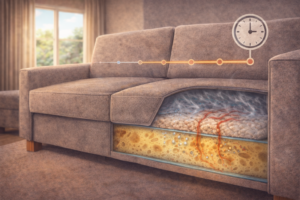
Fabric surfaces respond quickly to air, light, and touch. Internal cushions, padding, and support layers respond much more slowly. Moisture inside couch cushions can remain long after the surface appears stable. Moisture, pressure effects, or residue may still be adjusting internally long after the surface appears stable.
Because these internal changes are hidden, there is no clear signal that something is still happening. Accepting that internal timelines are longer can reduce surprise when problems emerge later.
Moisture Does Not Act on a Schedule
Moisture inside a couch does not leave in a straight, predictable line. It can move, pause, redistribute, or become trapped depending on conditions. Internal moisture can spread to other areas of a couch before becoming noticeable. Temperature changes, humidity shifts, and normal use all influence this process over time.
This means a couch can feel fine one day and different the next without any new event. Allowing time before concluding that moisture is “gone” can prevent false confidence.
Pressure and Use Reveal What Was Already There
Normal use often brings hidden issues to the surface. Sitting, leaning, and daily movement apply pressure that interacts with internal conditions. This pressure can expose moisture, change cushion shape, or release odors that were previously contained.
Because use feels ordinary, it is rarely blamed. Recognizing that normal use can reveal existing issues—not create new ones—helps explain delayed problems.
Temperature and Airflow Change Quietly
Room conditions rarely stay the same. Heating cycles, cooling systems, open or closed windows, and seasonal changes all alter temperature and airflow over time. These shifts can activate processes that were dormant before.
A couch that seemed stable under one set of conditions may behave differently under another. Waiting through these changes before drawing conclusions can reveal whether a problem is temporary or persistent.
Why Odors Are Often the First Sign
Odors are especially likely to appear late. Smell is sensitive to small changes in moisture and temperature. A couch may hold odor-causing compounds quietly until conditions allow them to release into the air.
Because the couch smelled fine earlier, the return of odor can feel sudden and unexplained. Understanding odor as a delayed signal rather than a new failure can reduce frustration.
Fabric and Cushion Stress Accumulates Slowly
Wear and stress rarely cause immediate visible damage. Instead, they accumulate gradually. After cleaning, fabrics and cushions may be slightly more vulnerable. Normal use during this period can add stress incrementally.
By the time changes are noticeable, the actions that contributed to them feel long past. Accepting that damage often develops slowly helps reconnect cause and effect.
Why Immediate Fixes Often Miss the Point
When a problem finally appears, the instinct is to fix it right away. This can lead to repeated cleaning, adjustments, or interventions. However, if the issue is the result of long-term internal changes, quick fixes may not address the cause.
Sometimes the safer response is to pause and observe rather than act immediately. Allowing conditions to stabilize can prevent making the situation more complicated.
Time as a Diagnostic Tool
Time itself can clarify what is happening. If a problem worsens, fades, or changes with conditions, that pattern offers clues. Acting too quickly can interrupt these signals.
Using time intentionally—by waiting and watching—can provide more information than immediate action. Doing less can sometimes reveal more.
Accepting Delayed Feedback as Normal
Delayed couch problems are not unusual. They reflect how layered materials respond to moisture, pressure, and environment over time. Accepting this delay as normal can reduce the sense that something went “wrong.”
Understanding that couches respond slowly allows for calmer, more measured decisions. Not every delayed issue requires an immediate solution.
FAQ
Why didn’t I notice any problem right after cleaning?
Surface conditions change quickly, while internal conditions change slowly. Early signs are often hidden.
Does delayed damage mean the cleaning was done incorrectly?
Not necessarily. Delayed problems often result from normal internal processes rather than mistakes.
Why do problems seem to appear all at once?
They often develop gradually and become noticeable only after crossing a threshold.
Is it better to wait before reacting to a new issue?
Often, yes. Waiting can help determine whether the problem is stabilizing or truly worsening.