
After cleaning a couch, a faint or “slight” smell can be easy to dismiss. The fabric may look clean, feel dry, and seem ready to use, with only a mild odor lingering in the background. Because the smell is not strong, it often feels harmless. Still, pausing before normal use can help reveal what that early smell might be signaling.
Why a Slight Smell Is Easy to Ignore
A mild odor after cleaning is often explained away as leftover cleaner, damp fabric, or “normal drying.” Compared to strong or unpleasant smells, it does not trigger urgency. This makes it tempting to assume the couch just needs more time or regular use to settle. Slowing down here can prevent overlooking an early warning.
Smells are not always proportional to the size of a problem. A small change can sometimes point to conditions that are still developing rather than resolved.
What a Mild Odor Can Indicate
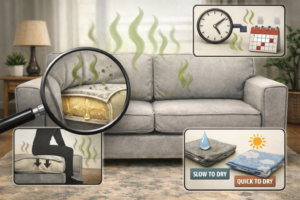
A slight smell can indicate that moisture is still present inside the couch, even if the surface feels dry. Internal padding and cushion layers can hold dampness longer than fabric. This is one reason couch cushions tend to hold odors longer than outer fabric surfaces. As that moisture interacts with air, materials, or residue from cleaning, subtle odors can form.
Because the smell is faint, it is easy to think it will disappear on its own. It can be safer to assume the odor is a signal to pause rather than proof that everything is fine.
How Normal Use Can Change the Situation
Using a couch that smells slightly after cleaning can change how that moisture behaves. Sitting compresses cushions and reduces airflow, which can slow further drying. Reduced airflow during use can make it easier for odors to become trapped instead of fading. Over time, this can allow the odor to become more noticeable rather than fade.
It is understandable to want life to return to normal quickly. Still, allowing the couch to rest undisturbed a bit longer often carries less risk than resuming use immediately.
Why Smells Sometimes Get Worse Later
One of the more confusing aspects of couch odors is timing. A couch can smell only faintly at first, then develop a stronger odor days later.This delayed change is common when a couch smells fine at first but worsens as it dries. This often happens when moisture remains trapped and conditions change, such as temperature or humidity shifts.
Because the smell was mild initially, the connection can be easy to miss. Waiting when the odor is still subtle can prevent having to address a stronger problem later.
Material Differences Matter
Different fabrics and cushion materials react differently to moisture. Some release smells quickly, while others hold them until conditions allow the odor to surface. This means two couches cleaned the same way may behave very differently afterward.
Without knowing exactly how a couch is built, caution becomes a reasonable default. Treating a slight smell as meaningful rather than trivial can help avoid unintended outcomes.
When Waiting Is the Safer Choice
If a couch smells even slightly after cleaning, waiting before using it is often the lower-risk option. This is especially true if the couch was thoroughly cleaned, heavily damp, or slow to dry. Choosing patience here can prevent reinforcing conditions that allow odors to grow.
Doing nothing for a while can feel unnecessary, but it often keeps a small issue from becoming a persistent one.
FAQ
Is a slight smell always a problem?
Not always, but it can signal lingering moisture. There is no clear way to know which it is without waiting.
Can using the couch help the smell fade?
Sometimes it seems that way, but use can also trap moisture further. Waiting avoids that uncertainty.
What if the smell is barely noticeable?
Even faint smells can indicate early changes. Treating them seriously can reduce later issues.
Is it okay to wait longer than expected?
Yes. Extra time is rarely harmful and often safer when smells are involved.