
Covering a couch while it is still damp often feels like a practical, protective step. It may seem cleaner, tidier, or safer than leaving the couch exposed. However, this action can quietly change how moisture behaves inside the couch, sometimes in ways that are hard to reverse. Pausing before covering it can reduce the chance of creating problems that only appear later.
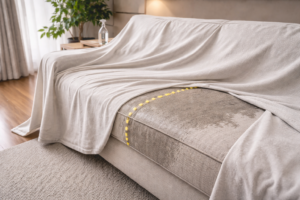
Why Covering a Damp Couch Feels Like a Good Idea
A damp couch can look unfinished or vulnerable. Covering it may feel like a way to protect it from dust, pets, or accidental contact while it dries. In the moment, this choice often feels careful rather than risky. Still, it helps to slow down and question whether the cover actually helps moisture leave the couch.
What feels like protection on the outside can act like a barrier underneath. Taking a moment to reconsider can prevent moisture from becoming trapped where it is hardest to remove.
How Covers Change Moisture Behavior
When a couch is covered while damp, airflow around the fabric is reduced. Reduced airflow can slow drying and increase the chance that moisture stays inside longer. Moisture that would normally evaporate into the room may instead remain inside the cushions or padding. This can extend drying time or cause moisture to settle unevenly. It is often safer to let moisture escape freely rather than sealing it in.
Some covers also press lightly against the fabric. That contact can push moisture back into the couch instead of allowing it to rise and evaporate. Even if nothing seems wrong at first, the internal conditions may be changing quietly.
Trapped Moisture and Delayed Problems
Moisture that stays trapped does not always cause immediate signs. The couch may look fine once the cover is removed, giving the impression that drying is complete. Later, odors, stiffness, or subtle fabric changes may appear with no obvious cause. This often happens when moisture remains trapped inside the couch instead of fully escaping. At that point, the original decision to cover the couch is easy to forget.
It can be reassuring to remember that doing less is sometimes safer. Leaving the couch uncovered longer may feel inconvenient, but it avoids locking moisture into hidden layers.
Fabric, Padding, and Cover Materials
Different couch fabrics release moisture at different speeds. Some dry quickly on the surface but hold dampness deeper inside. Padding materials can slow drying even further. Cushion construction plays a major role in how long internal moisture is retained. When a cover is added, these natural differences become more pronounced. Because it is rarely clear how a specific couch is constructed, caution is often the best assumption.
Cover materials matter as well. Some fabrics breathe poorly, while others absorb moisture themselves. Without certainty about how these materials interact, waiting becomes a reasonable choice.
When Waiting Is the Safer Option
If a couch was noticeably wet, exposed to high humidity, or cleaned thoroughly, covering it too soon is often a higher-risk move. Waiting until there is more confidence that internal moisture has escaped can prevent longer-term issues. It is acceptable to leave the couch uncovered longer than planned.
Choosing patience over quick fixes can feel uncomfortable, especially when the couch looks usable. Still, allowing more time often avoids the need for corrective actions later.
FAQ
Can a cover slow down drying even if it feels breathable?
Yes. Even covers that seem breathable can reduce airflow enough to change how moisture escapes. Waiting removes that uncertainty.
What if the couch only feels slightly damp?
Slight dampness can still mean deeper moisture. Treating it as fully wet is often the safer assumption.
Is it better to cover the couch overnight?
Overnight conditions often have less airflow. Leaving the couch uncovered can reduce the chance of trapping moisture.
Will problems always appear if a couch is covered too soon?
Not always, but there is no clear way to predict the outcome. Waiting avoids guessing.