
Dishwasher problems are often viewed as contained issues. A leak, a damp smell, or a small puddle nearby can feel like something limited to the appliance itself. As long as dishes are still getting clean, it may seem reasonable to treat the situation as minor. In reality, some dishwasher problems signal water damage that extends beyond the machine, affecting surrounding structures long before the dishwasher stops working.
Why Water Damage Is Easy to Miss at First
Dishwashers are designed to manage water internally, so moisture around them does not always feel alarming. A small amount of water on the floor or inside a cabinet can be blamed on splashing, steam, or a one-time spill. Because these explanations are familiar, they often end the assessment early. Dishwasher leaks often begin as internal failures before spreading beyond the appliance.
Water damage beyond the appliance usually starts quietly. It does not announce itself with obvious flooding. Slowing down instead of dismissing early moisture can help reveal whether the dishwasher is affecting areas it was never meant to reach.
How Dishwasher Issues Spread Beyond the Machine
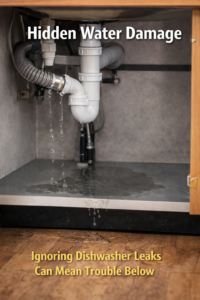
When a dishwasher develops internal leaks or sealing problems, water does not always stay near the source. Moisture can travel under flooring, behind cabinets, or into wall cavities. Water damage often spreads beyond appliances before the source feels obvious.
These paths are hidden, which makes the spread difficult to notice.
Because the dishwasher may continue operating normally, the damage can progress without interruption. Pausing to consider where water might be going, rather than focusing only on what is visible, can change how the situation is understood.
Subtle Signs Outside the Dishwasher
Problems that extend beyond the appliance often show up indirectly. Cabinet bases may feel soft, flooring may discolor slightly, or musty odors may appear without an obvious cause. These signs can feel disconnected from the dishwasher, especially if the appliance itself looks fine. Minor dishwasher issues are often overlooked until they cause broader damage.
These changes tend to develop slowly. When they appear gradually, it is easy to adapt to them rather than question their origin. Choosing to stop and reassess when small environmental changes appear can prevent normalization of damage.
Why Continued Use Increases the Impact
Each dishwasher cycle introduces more water into a system that may already be leaking. Even small amounts, repeated over time, can saturate materials that are not designed for ongoing moisture exposure. This repetition is what allows damage to move beyond the appliance.
Continued use does not guarantee immediate harm, but it does increase uncertainty. When water is escaping its intended boundaries, reducing use can limit how far and how fast the impact spreads.
The Difference Between Appliance Trouble and Property Damage
Appliance problems are often reversible or contained. Property damage is different. Once water affects structural materials, the consequences can outlast the dishwasher itself. Floors, cabinets, and walls may be affected even if the original issue seems small.
This distinction matters because it changes what is at stake. Recognizing when a dishwasher issue has crossed from appliance trouble into environmental impact can help prevent underestimating the situation.
Why Cleanup Alone Can Be Misleading
Wiping up visible water can create a sense of resolution. The surface looks dry, and nothing seems actively wrong. However, cleanup addresses symptoms, not pathways. Water that has already traveled beyond view remains unaddressed.
Repeated cleanup without understanding the source can delay recognition of broader damage. Pausing instead of immediately restoring normal routines can provide time to see whether moisture returns or spreads.
When Damage Becomes Harder to Reverse
The longer water damage continues unnoticed, the more complex it becomes. Materials weaken gradually, and early changes may not be obvious until they reach a tipping point. At that stage, the dishwasher problem may seem to “suddenly” become serious. Many appliance-related damages appear small long before they become critical.
In reality, the damage often developed quietly. Recognizing that dishwasher issues can affect more than the appliance itself allows earlier awareness, even if no immediate action is taken.
Why Hesitation Is Appropriate
Water-related problems often create pressure to act quickly, but speed does not always bring clarity. Hesitation allows observation. It creates space to understand whether the dishwasher is influencing its surroundings in subtle ways.
Choosing to slow down is not avoidance. It is a way to prevent small, contained issues from turning into widespread damage that is harder to manage later.
FAQ
Can a dishwasher cause damage outside the appliance without obvious leaks?
Yes. Small, repeated moisture exposure can spread through hidden areas before obvious leaks appear.
Are damp cabinets or odors always related to the dishwasher?
Not always, but when they appear near the appliance, they deserve closer attention.
Is it safe to keep using a dishwasher if damage seems minor?
Minor signs can still indicate spreading moisture. Continued use increases uncertainty.
Why does water damage often seem to appear suddenly?
It usually develops gradually and becomes noticeable only after accumulation reaches a visible point.