
Grease on a couch feels urgent because it looks obvious and seems like it might spread. But acting too quickly—especially with water or harsh rubbing—often pushes the grease deeper into the fibers or makes the stain larger than it started.
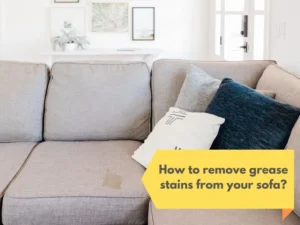
What to Do Immediately
The first instinct is usually to wet the area or scrub it, but grease and water don’t mix, so adding moisture early can actually seal the problem in.
Instead, if the grease is still fresh and thick, use something absorbent to lift what you can without pressing down. A paper towel or clean cloth laid gently on top might pull some of it up, though this doesn’t always work and shouldn’t be forced.
Don’t rub. Don’t add soap yet. Don’t pour anything directly onto the fabric. The goal right now is just to avoid making things worse, not to fix it completely.
A Careful Cleaning Approach
Once you’ve blotted what you can (or if the stain is already set), the idea is to break down the grease without soaking the couch.
Some people use a small amount of dish soap mixed with water, applied lightly with a cloth—not poured on. The soap is dabbed onto the stain, left for a short time, then blotted again. It’s hard to say exactly how long to wait or how much to use, since fabrics vary.
Others try sprinkling baking soda or cornstarch on the grease to absorb it, leaving it there for a while before vacuuming. This can help with fresh stains, though it’s less reliable on older ones.
Between each attempt, stop and look. If the stain isn’t budging after a few gentle passes, continuing in the same way probably won’t help.
Common Mistakes That Feel Logical
Scrubbing harder seems like it should work better, but it often just spreads the grease or damages the fabric texture. Repeated scrubbing can permanently change how couch fabric responds to cleaning.
Using hot water feels like it would dissolve grease faster, and sometimes it does—but it can also set certain stains or cause colors to bleed, especially if you don’t know what the upholstery is made of.
Piling on multiple cleaning products at once (soap, vinegar, store-bought cleaners) might seem thorough, but it usually creates a sticky residue that’s harder to remove than the original stain.
When This Approach Is Not Enough
If the stain fades but doesn’t disappear, or if the fabric starts to look discolored or stiff after cleaning, it’s worth stopping rather than trying stronger methods. In some situations, leaving the couch alone causes less damage than continuing to experiment.
Some grease stains—especially older ones, or those on delicate or untreated fabrics—won’t respond to home cleaning. That’s not a failure. It just means the stain has bonded with the material in a way that requires professional equipment or solvents that aren’t safe to use without training.
There’s no shame in calling a cleaner or deciding to leave a faint mark alone if the couch still functions fine. Grease and oil behave differently from water-based spills and tend to spread more easily within fabric fibers.
FAQ
How long do I have before a grease stain becomes permanent?
It’s hard to say. Fresh grease is easier to work with, but “permanent” depends on the fabric and how deep the grease penetrates. Some stains set within hours, others stay workable for days. Acting sooner is better, but waiting a bit to plan carefully is better than rushing.
Can I use rubbing alcohol or hairspray like some guides suggest?
Possibly, but both can discolor or stiffen certain fabrics. If you try them, test on a hidden spot first and use very little. They’re not guaranteed to work and can create new problems.
What if the stain looks worse after I try cleaning it?
Stop immediately. Sometimes cleaning spreads the grease or leaves a water ring. Let the area dry completely before deciding what to do next—it may look better once dry, or it may be time to consult a professional.
Do those couch cleaning machines work on grease?
Sometimes, but they’re designed more for water-based stains. Using one on grease without pre-treating can just push the oil around. If you rent or own one, it’s worth trying after you’ve blotted and treated the stain first, but keep expectations modest.