
Seeing multiple stains on a couch at the same time can feel overwhelming. When different spots appear together, it often triggers the urge to fix everything quickly before it gets worse. That reaction is understandable, but rushing usually increases the chance of spreading damage instead of reducing it. Taking a moment to slow down can make the situation more manageable.
What to Do Immediately
The first and most important step is resisting the impulse to treat all stains at once. Multiple stains create visual pressure, but they don’t all need attention immediately. Acting too fast can cause overlap, spreading moisture or residue from one area into another. Pausing briefly helps prevent that chain reaction.
It’s usually safer to mentally separate the stains rather than viewing them as one large problem. Moving cushions, flipping sections, or pressing down repeatedly can transfer moisture between areas. Even standing back and observing the couch for a short time can reduce the risk of accidental spreading.
If panic sets in, it’s often better to do less rather than more. Doing nothing for a short period can be a reasonable choice when the alternative is acting without a clear plan.
A Careful Cleaning Approach
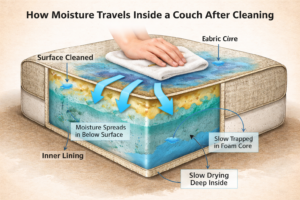
Multiple stains rarely behave the same way. Moisture moving unevenly through upholstered furniture can slow drying and trap residue. They may differ in age, moisture level, or how deeply they’ve settled into the fabric. Treating them as identical often leads to uneven results. A cautious approach means acknowledging that not every spot should be handled the same way, or even handled at the same time.
Light contact is generally safer than aggressive action. Scrubbing one stain while another remains damp can pull moisture across the fabric. It’s often better to limit attention to one area while leaving others untouched for the moment. Slowing the process can prevent the couch from becoming uniformly wet, which is harder to recover from.
If the fabric begins to look different between areas, that’s usually a sign to pause. Uneven texture or color changes suggest the couch is reacting, and continuing may lock in those differences.
Common Mistakes That Feel Logical
One common mistake is trying to “balance” the couch by cleaning all stains evenly. This often results in a larger, more noticeable problem. Adding liquid to untouched areas to match cleaned spots can spread residue and moisture far beyond the original stains. This shows why over-wetting a couch causes long-term damage that may not appear immediately.
Another logical-feeling mistake is switching between stains repeatedly. Moving back and forth can transfer moisture on hands or cloths without noticing. This can blur stain edges and create new marks where none existed before. Stopping between areas instead of rotating quickly can reduce this risk.
It’s also easy to feel committed once cleaning has started. That pressure can lead to continuing even when the couch shows signs of stress. Choosing to stop early is often safer than pushing forward just to finish.
When This Approach Is Not Enough
Some situations involving multiple stains are simply too unpredictable for continued home handling. If stains start merging visually, or if the couch develops an unusual smell or stiffness, those are signs that further action could make things worse. This can explain why couch fabric feels clean but still smells after dealing with multiple stains. At that point, restraint becomes more protective than effort.
When stains vary widely or cover several sections of the couch, internal moisture movement becomes harder to control. Even if the surface appears manageable, the inside of the couch may not be responding well. This helps explain how long moisture stays inside couch cushions after several stains are disturbed. Waiting and reassessing can prevent longer-term issues.
There’s no obligation to solve everything at once. Leaving some stains temporarily untouched can be a deliberate choice, not a failure.
FAQ
Should all stains be treated at the same time?
Not necessarily. Treating multiple stains at once can increase the risk of spreading moisture and residue between areas.
Is it bad to rotate between stains quickly?
Moving back and forth can transfer moisture and blur stain edges. Slowing down or stopping between areas can be safer.
Why does the couch sometimes look uneven after cleaning multiple spots?
Different moisture levels and fabric reactions can cause uneven drying, even when the same approach is used. This explains why couch stains sometimes look worse after drying when multiple areas dry unevenly.
When is it better to stop completely?
If stains begin to merge, the fabric changes texture, or odors develop, stopping early can prevent more serious damage.