
Body oil stains on upholstery develop gradually and often go unnoticed until darkened patches become obvious. Unlike food spills that leave immediate marks, body oils transfer through repeated contact—hands on armrests, heads on cushions, bare skin on seat edges. Over time, these oils bond to fabric fibers and attract dirt, creating areas that look grimy compared to the rest of the couch. Similar buildup patterns appear with moisture-related marks that seem to fade and then return after drying.
These stains are more complex than simple grease. Body oil contains sebum, dead skin cells, sweat residue, hair products, lotions, and airborne dust. Together, they form contamination that resists basic cleaning. Even when the surface looks improved after treatment, darkening may return as oils migrate back from deeper layers or new oils begin accumulating immediately with continued use.
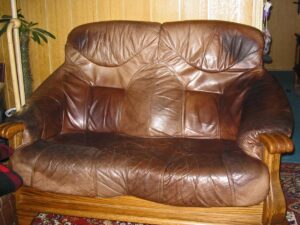
Why Body Oil Stains Develop Over Time
Human skin constantly produces sebum. Each contact with upholstery transfers a small amount, but daily use causes accumulation over weeks and months. This is why armrests, headrests, and seat edges darken faster than other areas.
Body oil does not remain on the surface. Compression from sitting and leaning pushes it deeper into the fabric weave. Natural fibers like cotton, linen, and wool absorb oils readily, while synthetics resist absorption longer but still trap oils in texture. As oils oxidize, they turn yellow or brown, intensifying discoloration even without additional contact.
Hair products, body lotions, and sunscreen accelerate this process. These substances transfer more readily than natural sebum and leave residue that bonds strongly to fibers. Once fabric finishes degrade, surrounding areas become more absorbent, allowing stains to spread gradually.
How Skin Oils Interact With Fabric and Padding
Skin oils are not water-soluble and do not evaporate. Once embedded, they remain until chemically broken down or dissolved. Repeated compression forces oils deeper, sometimes reaching backing fabric or cushion foam. This behavior is similar to how grease migrates through upholstery layers over time.
Foam padding can act as a reservoir. Oils absorbed into foam may wick back to the fabric surface during or after cleaning, which explains why stains sometimes reappear after drying. This effect is more common when oils have accumulated over long periods.
Protective fabric finishes also suffer. Body oils degrade soil-resistant treatments, making cleaned areas more vulnerable to future staining. As a result, even successful cleaning often has temporary results unless preventative measures are taken.
How Home Remedies Are Used (and Their Limits)
Home remedies focus on breaking down or absorbing oils using household products.
Dish soap can emulsify light oil on water-safe fabrics, but residue is difficult to rinse without over-wetting. Leftover soap attracts dirt and may worsen appearance within days.
Baking soda or cornstarch absorb surface oils but do not break down oil bonded to fibers. They are better as preventive maintenance than as solutions for established darkening.
Rubbing alcohol dissolves some oils and dries quickly, reducing moisture risk. However, it can strip dye or fabric finish and rarely removes deep or oxidized oil.
Vinegar is often suggested but is not an effective degreaser for sebum. It may slightly reduce surface grime but frequently causes odor, dye bleeding, or watermarks.
The key limitation: home remedies are not formulated for upholstery or for the layered contamination that body oil creates. They may improve light staining but rarely restore heavily darkened areas, and repeated attempts often enlarge the affected zone.
How Commercial Upholstery Cleaners Address Body Oil
Commercial cleaners use surfactants, solvents, or enzymes designed specifically for fabric.
Upholstery shampoos and foam cleaners lift oils with concentrated surfactants while limiting water exposure. They are effective on moderate body oil buildup when applied correctly but struggle with deep foam contamination.
Solvent-based cleaners dissolve oils directly without water and are suitable for solvent-only fabrics. They work better on set-in oil but require ventilation and careful testing to avoid damage.
Enzyme cleaners break down organic components like skin cells and residue from hair products. They help when biological material is present but are less effective on pure lipids alone.
Commercial products are generally more effective and predictable than home remedies, but even they cannot reverse permanent dye changes or fully remove oil stored deep in padding without professional equipment. Odors caused by organic buildup often behave the same way once contamination reaches internal layers.
Direct Comparison: Home Remedies vs Commercial Cleaners
| Factor | Home Remedies | Commercial Cleaners |
|---|---|---|
| Effectiveness | Limited | Higher |
| Risk to fabric | Unpredictable | Lower when matched to fabric code |
| Residue risk | High | Lower |
| Reappearing stains | Very common | Less common |
| Cost | Low | Moderate |
When Home Remedies Are Acceptable
-
Very light, recent darkening
-
Durable synthetic fabrics
-
Low-value furniture
-
Preventive maintenance between deeper cleanings
They are poor choices for long-standing stains or delicate upholstery.
When Commercial Cleaners Are the Better Option
-
Visible darkening from months of use
-
Natural fiber fabrics
-
Solvent-only upholstery
-
Failed home remedy attempts
-
High-value furniture
Even then, results should be measured as improvement rather than full restoration.
Common Mistakes People Make
-
Scrubbing instead of blotting
-
Using too much liquid
-
Skipping fabric testing
-
Applying heat
-
Mixing products
-
Spot-cleaning instead of treating entire panels
-
Ignoring ongoing oil transfer
These mistakes usually worsen staining and damage fabric.
Neutral, Realistic Conclusion
Body oil staining is a gradual, cumulative problem rather than a single cleanable event. Home remedies offer limited improvement and often increase risk when stains are established. Commercial upholstery cleaners provide better results, especially when used early and matched to fabric type, but they still have limits.
The most effective strategy combines early intervention, appropriate products, and prevention—such as covers and regular maintenance. In many cases, reducing darkening and slowing re-accumulation is a more realistic goal than complete removal. Accepting this prevents repeated aggressive cleaning that often causes more damage than the stain itself.