
Grease stains on upholstery create problems that water-based cleaning cannot solve. The oil binds to fabric fibers in ways that make complete removal uncertain, and attempting the wrong method first may spread the stain deeper or set it permanently. People often assume a quick home solution will work, while others immediately reach for a commercial cleaner. In reality, grease behaves differently than water-soluble stains, and fabric type plays a larger role than most realize before they start scrubbing.
Results vary significantly based on how long the grease has been sitting, whether the couch fabric is synthetic or natural, and whether the stain has already been exposed to heat or friction. Some approaches may lighten the appearance without actually removing the oil, leaving residue that attracts dirt over time.
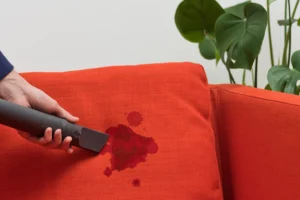
Why Grease Stains Are Difficult on Couches
Grease does not evaporate or dissolve in water. It penetrates fabric weave and clings to individual fibers, particularly in textured upholstery like microfiber or cotton blends. Unlike spills that sit on the surface, oil migrates through layers, sometimes reaching cushion foam before anyone notices. This is similar to how some stains appear lighter at first but return later as residue moves back toward the surface.
Upholstery fabrics further complicate removal because they cannot be laundered or aggressively scrubbed without causing pilling, color loss, or texture damage. Delicate materials like velvet, silk blends, or rayon may react poorly to solvents, surfactants, or even friction. Without knowing the fabric content or cleaning code, attempts at stain removal carry inherent risk.
Another factor is that grease often appears alongside other substances—butter mixed with crumbs, salad dressing with herbs, motor oil with dirt. These combinations require different treatment strategies, and addressing only the oil component may leave a visible shadow or ring behind.
How Home Remedies Typically Work (and Their Limits)
Home remedies for grease rely on common household products intended for kitchens or general cleaning, not upholstery. The most frequently suggested options include dish soap, baking soda, cornstarch, white vinegar, and rubbing alcohol. Each works through a different mechanism, though none are designed specifically for fixed fabric furniture.
Dish soap contains surfactants that emulsify grease on dishes. When diluted and applied to fabric, it may lift surface oil—but it also leaves residue if not thoroughly rinsed, which is difficult on a couch. Over-wetting can push grease deeper or damage cushion foam.
Baking soda and cornstarch act as absorbents. Sprinkled onto fresh grease, they can reduce surface oil before it spreads. This works best on new stains but rarely removes oil that has already bonded to fibers. Some fabrics also show chalky residue afterward.
Rubbing alcohol functions as a solvent and can dissolve certain oils. However, it may strip dye from some fabrics or leave rings on others. Testing in a hidden area is essential, though even successful tests do not guarantee identical results elsewhere on the couch.
White vinegar is often recommended, but its effectiveness against grease is limited. Vinegar can address odors and some mineral or soap residue, but it does not emulsify oil well. It may help neutralize residue left by previous cleaning attempts rather than remove grease directly.
The core limitation of home remedies is unpredictability. These products perform well on hard surfaces or washable textiles but behave inconsistently on upholstery with unknown fiber blends and finishes.
How Commercial Upholstery Cleaners Typically Work
Commercial upholstery cleaners are formulated with solvents, surfactants, or enzymes designed to break down specific stain types while minimizing fabric damage. Products marketed for grease removal usually fall into two categories: solvent-based and water-based.
Solvent-based cleaners dissolve oil directly and evaporate quickly, reducing the risk of water damage or mold inside cushions. However, solvents may discolor sensitive fabrics, produce strong fumes, and require good ventilation. Some formulas may leave a slick feel if not properly blotted or buffed away.
Water-based upholstery cleaners rely on concentrated surfactants that lift grease when gently agitated, then removed through blotting or extraction. These are often gentler on delicate fabrics but require careful control to avoid saturation. Heavy or aged grease may not fully respond without multiple applications.
Many commercial products reference fabric cleaning codes (W, S, WS, X), which indicate whether water or solvent is appropriate. These fabric cleaning codes are defined by industry standards and help prevent the use of improper cleaning methods. Ignoring these codes increases the likelihood of permanent damage, even when using products labeled as “safe for upholstery.”
Commercial cleaners generally require less physical scrubbing, reducing mechanical wear on fabric. The trade-off is higher cost and potential chemical exposure, particularly with solvent-based products in enclosed spaces.
Direct Comparison: Effectiveness, Risk, Fabric Safety, Residue
| Factor | Home Remedies | Commercial Cleaners |
|---|---|---|
| Effectiveness on Fresh Grease | Moderate; absorbents or diluted dish soap may reduce new stains but rarely remove all oil | Generally higher; solvent-based products dissolve grease more thoroughly |
| Effectiveness on Set-In Grease | Low; oil bonded to fibers is difficult to remove | Variable; stronger solvents may still help, but no guarantee |
| Risk to Fabric Color | Alcohol and vinegar may cause dye loss; soap is safer but not risk-free | Solvent-based products carry higher risk; water-based options are gentler |
| Risk of Over-Wetting | High with liquid-heavy remedies | Lower with solvents; moderate with water-based formulas |
| Residue After Treatment | Soap and powders often leave residue that attracts dirt | Some formulas may leave coatings; others evaporate cleanly |
| Effort Required | High; multiple attempts and drying cycles | Moderate; usually faster per application |
| Cost | Very low | Moderate to high |
| Fume Exposure | Minimal for most remedies | Can be strong with solvent-based cleaners |
This comparison assumes correct application. Misuse of either approach—too much product, excessive scrubbing, or skipping fabric testing—significantly increases risk.
Situations Where Home Remedies Are Acceptable
Home remedies can be reasonable in limited situations.
Fresh grease on durable fabric: On water-safe (W or WS) fabrics, absorbent powders or diluted dish soap may prevent oil from setting if applied immediately.
Minor surface oil: Light grease that has not penetrated deeply may respond to powders on tightly woven synthetic fabrics.
Budget constraints: Home remedies may serve as temporary mitigation when commercial products are unavailable, though results are uncertain.
Lower-risk materials: Some microfiber and polyester blends tolerate cautious experimentation better than natural fibers.
Home remedies should be avoided on expensive, antique, or natural-fiber upholstery such as silk, wool, or rayon, where the risk of irreversible damage outweighs potential savings.
Situations Where Commercial Cleaners Are Safer
Commercial cleaners are often the better choice when complexity or risk increases.
Set-in or heat-exposed grease: Older stains or those exposed to heat respond poorly to home remedies.
Delicate or high-value upholstery: Velvet, suede, and blended natural fibers require products designed for their vulnerabilities.
Large or spreading stains: Commercial cleaners allow broader coverage with less liquid, reducing saturation risk.
Unknown fabric type: Products formulated for mixed fabrics reduce guesswork when cleaning codes are missing.
Previous failed attempts: If a home remedy has already been tried, residue may interfere with further DIY efforts, making commercial products more appropriate.
Even with commercial cleaners, complete removal is not guaranteed—especially if the fabric has already been compromised.
Common Mistakes People Make with Both Approaches
-
Rubbing instead of blotting: Scrubbing spreads grease deeper.
-
Using too much product: Over-saturation leads to mold, rings, or foam damage.
-
Skipping fabric testing: Even “safe” products can discolor certain dyes.
-
Applying heat too soon: Heat can permanently set grease.
-
Mixing products: Layering cleaners without understanding chemistry often worsens stains.
-
Ignoring cleaning codes: “S” and “X” codes exist to prevent damage.
-
Overestimating absorption time: Leaving powders on too long offers no added benefit.
Prolonged moisture inside cushions is one of the main reasons odors and long-term damage develop after cleaning.
Neutral, Experience-Based Conclusion
No method guarantees grease removal from a couch. Home remedies are accessible and inexpensive but work inconsistently and carry hidden risks. They may help with fresh stains on durable fabrics but often fall short on older or deeper grease.
Commercial cleaners offer stronger, more targeted formulations with clearer usage guidance. They cost more and require caution, especially on delicate upholstery, but reduce guesswork when the stain or fabric presents higher risk.
The safest general approach is to blot immediately with an absorbent powder, test any product in a hidden area, and choose the gentlest method compatible with the fabric’s cleaning code. When uncertainty or upholstery value is high, professional cleaning avoids compounding damage—though even professionals cannot guarantee complete removal.
In many cases, success means reducing visibility rather than achieving perfection. Accepting that limitation prevents frustration and helps avoid turning a manageable stain into permanent damage.
FAQ
Can I use dish soap directly on a grease stain without diluting it?
Undiluted dish soap produces heavy suds that are difficult to remove from upholstery and often leave sticky residue. Dilution lowers this risk, but thorough blotting is still required.
How long should baking soda sit before vacuuming?
Around 30 minutes is usually sufficient. Leaving it overnight rarely improves results and may complicate removal.
Will rubbing alcohol damage couch fabric?
It can, depending on dye and fiber type. Always test first, though results may still vary across the couch.
Are commercial upholstery cleaners better than dry-cleaning solutions?
They often overlap in solvent content. Effectiveness depends more on stain type and fabric than on labeling.
What if the grease stain spreads after cleaning?
Stop, let the area dry completely, and reassess. Continued cleaning while wet often worsens spread.
Can steam cleaning remove grease?
Steam alone does not remove grease and may set it. It should only be used after oil is broken down and only on water-safe fabrics.
Can grease return after it seems gone?
Yes. Oil can wick back from deeper layers as the fabric dries or is used.
Should I always try home remedies first?
No. Fabric type and stain age matter more than method order. Starting with the wrong approach can make removal harder.