
When a couch stays damp longer than expected or develops odors after cleaning, airflow is often an invisible factor. It’s easy to focus on how much moisture was used or what product was applied, but how air moves around and through a couch plays a major role in what happens next. Understanding airflow helps explain why some couches dry unevenly, why smells linger, and why waiting or doing less is often the safer response.
Why Airflow Matters After Cleaning
Drying is not just about time—it’s about air movement. Moisture leaves materials through evaporation, and evaporation depends heavily on airflow. Without sufficient air exchange, moisture remains trapped, even if the surface appears dry.
Because airflow is not something most people can see or feel inside a couch, it’s often overlooked. Slowing down and allowing for natural air movement can prevent problems that no amount of extra cleaning can solve.
The Difference Between Surface Airflow and Internal Airflow
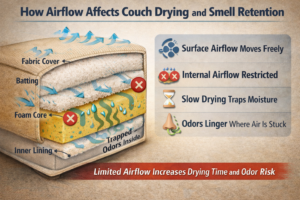
Air moves easily across exposed fabric but very poorly inside a couch. Cushions, padding, and internal covers create enclosed spaces where air barely circulates. As a result, moisture inside the couch behaves very differently from moisture on the surface. This internal behavior is closely tied to cushion design, as explained in How Cushion Construction Affects Drying and Odors.
This difference explains why a couch can feel dry to the touch while still holding dampness inside. Recognizing this gap makes it easier to justify waiting rather than assuming the couch is ready for more intervention.
How Couch Design Limits Air Movement
Most couches are designed for comfort, not ventilation. Tight upholstery, dense foam, and layered construction all restrict airflow. Once moisture enters these spaces, it has few paths to escape. Upholstered furniture is known to restrict internal airflow, contributing to slow evaporation and moisture retention.
Because the design itself limits drying, trying to speed things up through repeated cleaning or handling often backfires. Accepting these physical limits encourages restraint instead of frustration-driven action.
Why Cushions Dry Slower Than They Appear
Cushions are particularly prone to slow drying because they trap air as well as moisture. Foam and batting hold liquid while blocking airflow, creating a humid internal environment.
Even when airflow exists around the couch, it rarely reaches the cushion core. The way moisture moves beyond the surface is detailed in How Moisture Travels Inside a Couch After Cleaning. This is why odors often originate from inside cushions rather than from the fabric surface. Pausing instead of re-cleaning reduces the risk of reinforcing this trapped moisture.
How Poor Airflow Encourages Smell Retention
Odors tend to bind to moisture. When airflow is limited, moisture lingers, and odor-causing compounds remain active longer. Over time, these smells can become embedded in internal materials. This long-term odor behavior is explored further in Why Couch Cushions Hold Odors Longer Than Fabric.
This process happens quietly. Smells may fade temporarily and then return as internal moisture redistributes. Understanding this cycle helps explain why doing nothing for a while is sometimes the most effective choice.
Why Adding More Moisture Makes Airflow Problems Worse
When airflow is already limited, adding more moisture increases the burden on an already slow drying system. Instead of helping, additional wetting often extends drying time and pushes moisture deeper. This compounding effect is one of the risks described in Why Over-Wetting a Couch Causes Long-Term Damage.
At this stage, hesitation is protective. Choosing not to add more moisture prevents overwhelming the couch’s limited ability to dry from the inside out.
Airflow Variability Within the Same Couch
Airflow is not uniform across a couch. Some areas may dry faster due to exposure, while others—such as corners, seams, and cushion interiors—remain stagnant. This uneven drying creates patchy results and confusion.
When drying feels inconsistent, it’s a sign to stop intervening rather than to chase uniformity. Allowing time for slower areas reduces the chance of long-term odor or material stress.
Why Time Often Matters More Than Action
Because airflow is slow and uneven, time becomes the most important factor in drying. Rushing the process rarely improves outcomes and often worsens them. These delayed consequences align with patterns described in Why Some Couch Materials Show Damage Weeks Later.
Letting a couch rest allows moisture to dissipate gradually without forcing it deeper. This patience-based approach may feel passive, but it actively protects the couch from compounding issues.
When Limited Airflow Should Change Expectations
Not all couches can dry quickly or completely after cleaning. Dense construction and enclosed designs set clear limits. When these limits are reached, expectations should shift away from immediate improvement.
Accepting slower drying and temporary imperfections prevents unnecessary action that could lead to persistent smells or damage.
FAQ
Why does my couch still smell even after it feels dry?
Because airflow inside the couch is limited, moisture and odors can remain trapped below the surface.
Can airflow alone prevent odors?
Airflow helps, but it is often restricted by couch construction. Time and restraint are still important.
Is it a mistake to clean again if a smell remains?
Often, yes. Re-cleaning can add moisture without improving airflow, making the problem worse.
Is waiting really better than acting?
In many cases, yes. Waiting allows limited airflow to do its job without adding new stress.