
Most people clean their couches when they look dirty, then clean them again a few weeks later when new stains appear, without realizing that the cleaning itself might be weakening the fabric more than the dirt ever did. The urge to keep furniture looking fresh can lead to a cycle where each cleaning makes the next one necessary sooner, and the fabric begins to show wear that has nothing to do with normal use. Understanding rest periods between cleanings isn’t about following a maintenance schedule—it’s about recognizing that fabric has limits, and that sometimes the responsible choice is to leave it alone even when it doesn’t look perfect.
Understand the Material First
Before thinking about how often to clean, it’s worth spending real time figuring out what the couch is actually made of. This matters more than it seems like it should, because upholstery fabrics respond to moisture, agitation, and cleaning agents in vastly different ways. A microfiber couch might tolerate more frequent attention than a linen one, but even microfiber has a threshold where repeated cleaning starts breaking down the protective treatments applied during manufacturing. Natural fibers like cotton or wool can shrink, stiffen, or lose their texture if they’re exposed to water and soap too often, and once that texture changes, it doesn’t come back.
The cleaning codes on furniture tags—W for water-based cleaners, S for solvent-based, SW for either, and X for vacuum only—exist specifically because manufacturers know their fabrics can be ruined by the wrong approach. But even when you’re using the right type of cleaner, applying it too frequently creates cumulative stress. There’s a real temptation to trust that if a method worked once without obvious damage, it must be safe to repeat whenever needed. That assumption ignores how wear accumulates invisibly over time, and sometimes the smartest decision is to accept that you’re not entirely sure how much cleaning the fabric can handle. This is especially true for homeowners who already experienced fabric damage caused by over-cleaning.
Safe Methods That Often Work
When a couch does need cleaning, the gentlest approaches usually involve as little liquid as possible. Dry methods—vacuuming with upholstery attachments, using a soft brush to lift dirt, or applying dry cleaning powder that you work in and vacuum out—tend to cause less stress to fabric because they don’t saturate fibers or leave moisture trapped in cushion foam. These methods often work well for maintenance between deeper cleanings, and they typically allow shorter rest periods because they’re less invasive. Even so, aggressive vacuuming or repeated brushing can fray delicate weaves, so there’s still a point where doing it too often creates its own problems. Using gentle techniques instead of aggressive actions helps prevent long-term texture problems.
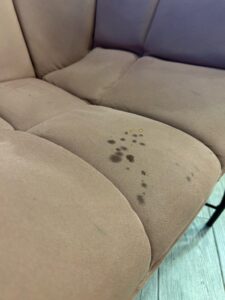
Water-based cleaning, which many people turn to for visible stains, introduces complications that aren’t always obvious until later. When you apply a cleaning solution and blot it out, you’re not just removing the stain—you’re also wetting the fabric, potentially pushing residue deeper into the fibers, and creating conditions where mildew might develop if the couch doesn’t dry completely. A couch that’s been cleaned this way generally needs at least four to six weeks before it should be cleaned again, and that’s assuming it dried thoroughly the first time. If the fabric still feels slightly damp or smells musty a day after cleaning, you’ve probably used too much liquid, and the next cleaning should be postponed even longer. There are moments during this process where it becomes clear that continuing would be a mistake, and stopping at that point takes more discipline than most people expect.
Steam cleaning and machine extraction pull more moisture into fabric than manual methods, and while they can remove deep-set dirt, they also require the longest recovery periods. Upholstery that’s been steam cleaned might need two to three months before it’s ready to go through that process again, because the heat and saturation can weaken sizing treatments and stretch the weave. The fabric might look clean immediately afterward, but the structural integrity doesn’t bounce back as fast as the appearance does. Some cleaning services recommend quarterly deep cleaning, but that frequency assumes the couch is in a high-traffic commercial setting, not a typical home. For residential furniture, that schedule is often too aggressive, and there’s something to be said for waiting until the couch truly needs it rather than cleaning on a fixed timeline.
Common Mistakes to Avoid
One of the most common patterns is cleaning a couch, being satisfied with the results, and then cleaning it again two weeks later when a new spill happens. This seems logical in the moment—the first cleaning worked, so why not repeat it?—but it doesn’t account for the fact that fabric needs time to fully dry, regain its texture, and settle back into its normal state. Cleaning too soon after a previous cleaning compounds any residue left behind, traps moisture that hadn’t completely evaporated, and prevents protective treatments from re-stabilizing. The couch might start attracting dirt more quickly, not because it’s getting dirtier, but because the repeated cleaning has stripped away the finishes that were supposed to repel stains.
Another mistake happens when someone assumes that because a cleaning method is labeled “safe” or “gentle,” it can be used as often as needed. Even pH-neutral cleaners and products marketed as fabric-safe create friction and moisture exposure every time they’re applied. Using them weekly, or even monthly, is almost always too much. The damage doesn’t announce itself right away—it shows up as fading, pilling, or a texture that feels rougher than it used to, and by the time those signs appear, the harm is already done. In some cases, leaving the couch untouched for a while is actually the safest option.
There’s also a tendency to clean harder or more frequently when stains don’t come out completely the first time. The instinct is to think that more effort will eventually solve the problem, but persistent stains often mean the fabric has absorbed something that cleaning can’t reverse, or that the original stain has bonded with the fibers in a way that makes removal impossible without damaging the material. Continuing to scrub or apply stronger cleaners usually just spreads the problem or creates a worn spot that’s more noticeable than the stain was.
When to Stop and Call a Professional
If a couch has been cleaned more than once in a two-month period and still doesn’t look right, that’s usually a sign that the problem is beyond what home methods can safely address. Professional upholstery cleaners have equipment that extracts moisture more thoroughly and can adjust their approach based on fabric type, but even they’ll often recommend against frequent service. A professional cleaning typically provides enough deep treatment that the couch shouldn’t need another full cleaning for six months to a year, depending on use. If you’re thinking about scheduling professional cleaning more often than that, it’s worth asking whether the issue is actually the cleaning frequency or something else—like a fabric that’s worn out, a recurring source of stains that needs to be addressed separately, or expectations that don’t match what the material can realistically maintain. Professional upholstery guidelines often recommend limiting deep cleanings to avoid fiber fatigue.
There are also situations where stopping all cleaning for a while is the better choice. If the fabric feels brittle, shows signs of color loss, or has developed a texture that doesn’t match the rest of the couch, adding more cleaning—even professional cleaning—might accelerate the deterioration rather than improve the appearance. At that point, the responsible decision is often to accept the couch as it is, use throws or covers to protect it, and plan for eventual replacement rather than trying to restore it to a condition it can’t sustain.
Final Thoughts
There’s no universal answer for how long couch fabric needs between cleanings, because the right interval depends on the material, the cleaning methods used, the environment the furniture lives in, and how much stress the fabric has already endured. What works for one couch might be too aggressive for another, and what seems safe based on the first cleaning might turn out to be excessive by the third. The cleanest couch isn’t necessarily the one that gets the most attention—it’s often the one whose owner knew when to stop, recognized the limits of what cleaning can accomplish, and chose restraint over repetition. Careful judgment about when to act and when to wait matters more than any product or technique.