
After a couch has been cleaned or exposed to moisture, it is easy to assume that drying is a simple countdown. Once the surface feels dry, normal daily use often resumes without much thought. What tends to be overlooked is that everyday activity does not just sit on top of a couch—it quietly reshapes how remaining moisture moves inside it. This delayed effect is often discussed when couches smell worse days after they first seem dry.
Understanding this requires looking at the couch as a system. Moisture does not vanish the moment cleaning ends. It responds to pressure, warmth, movement, and rest. Slowing down expectations can make these changes easier to notice and less surprising.
Why “Normal Use” Is Not Neutral
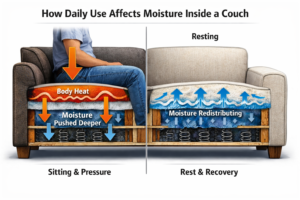
Normal daily use feels harmless because it is familiar. Sitting, shifting, standing up, and returning later all seem routine. Internally, however, each of these actions compresses and releases layers that may still be adjusting after moisture exposure.
Pressure from sitting can redirect moisture into deeper or denser areas. Similar concerns appear when examining whether sitting slows internal drying rather than helping it finish. When pressure is removed, moisture does not always return to where it started. Over time, this creates subtle redistribution rather than steady drying. Pausing use, even briefly, can reduce how much this internal reshuffling happens.
It is reasonable to want life to return to normal. Still, recognizing that normal use has an effect allows for more informed restraint.
How Repetition Shapes Moisture Movement
One of the biggest influences on internal moisture distribution is repetition. Sitting in similar ways, in similar spots, day after day applies patterned pressure. Moisture tends to follow those patterns.
Repeated compression can encourage moisture to settle where airflow is weakest or where materials recover more slowly. These shifts rarely happen all at once. They develop gradually, which is why they are often missed until odors or texture changes appear.
Choosing to slow repetition—by limiting use or allowing longer rest periods—can give internal layers time to stabilize without being redirected again and again.
The Role of Heat From Daily Activity
Daily use adds warmth, even when it does not feel significant. Body heat builds slowly during sitting and can soften materials temporarily. Softer materials allow moisture to move more easily within the cushion.
This does not mean warmth is always harmful. It does mean that heat changes conditions inside the couch. Moisture may become more mobile rather than evaporating. Once the couch cools again, moisture can remain in new positions.
If uncertainty exists, reducing the duration of sitting can limit how much heat accumulates. Doing less can sometimes preserve more balance inside the couch.
Movement Versus Stillness
A couch that is used sporadically experiences cycles of compression and rest. A couch that is used frequently may not get long enough rest periods for internal layers to recover evenly.
Movement redistributes moisture differently than stillness. Short periods of use followed by long rest may allow moisture to settle gradually. Frequent interruptions can keep moisture in motion, preventing it from stabilizing.
Allowing longer stretches without use—even overnight or during part of the day—can sometimes reveal whether internal conditions are calming or still shifting. Waiting is not inactivity; it is observation.
Why Changes Appear After Use, Not During It
Many moisture-related changes are noticed after sitting, not while sitting. Odors, temperature differences, or uneven cushion recovery often appear once pressure and heat are removed.
This delay can be confusing. It may feel like something new happened after the fact. In reality, daily use often sets conditions in motion that only become noticeable once the couch returns to rest.
When changes appear after use, continuing to sit often adds more variables. Pausing instead can help clarify whether the system is settling or becoming more unstable.
Common Assumptions That Hide the Process
One common assumption is that using the couch helps it “finish drying.” In practice, use often reshapes moisture distribution rather than completing drying. This belief can encourage more interaction at a time when less would interfere less.
Another assumption is that if a couch feels the same everywhere, moisture must be evenly distributed. Internal differences can exist long before surface changes appear. Relying only on touch can delay recognition of uneven internal conditions.
Accepting that some processes are invisible can reduce the urge to force outcomes.
Why Daily Use Can Extend the Adjustment Period
Normal use does not necessarily make things worse, but it can prolong adjustment. Each interaction nudges moisture into new positions, resetting parts of the internal drying process.
This is why some couches seem “almost done” for days. Daily use keeps the system active. Reducing interaction, even temporarily, can allow internal layers to reach a more stable state.
Choosing to step back can feel inconvenient. Still, restraint often shortens the overall period of uncertainty rather than lengthening it.
When Daily Use Becomes a Clear Interference
There are signs that daily use is affecting moisture distribution more than expected. Uneven firmness, lingering or shifting odors, cooler or heavier-feeling areas, and slow cushion recovery after sitting are common indicators.
When these appear, continuing normal use rarely evens things out. Stopping or significantly reducing interaction is often the clearer response. Doing so early can prevent patterns from becoming more established.
It is reasonable to pause rather than troubleshoot immediately. Not every situation needs action right away.
Seeing the Couch as a System, Not a Surface
A couch is made of layers that respond at different speeds. Daily use interacts with all of them, not just the fabric. Once this is understood, delayed changes feel less mysterious.
Moisture distribution is shaped by how the couch is treated over time, not just by the initial cleaning or exposure. Recognizing that reality can reduce frustration and prevent unnecessary intervention.
Sometimes the most supportive action is simply allowing the system to finish adjusting on its own.
FAQ
Does normal daily use always change moisture distribution?
Not always, but it often does when internal moisture is still present. Pressure, heat, and repetition can influence how moisture settles. When unsure, reducing use interferes less.
Is it better to stop using the couch completely?
Not in every situation. However, longer rest periods usually allow internal layers to stabilize more predictably than frequent use.
Why do changes show up days later?
Daily use can slowly redirect moisture. The effects often become noticeable only after patterns have formed. Time reveals what movement has shaped.
How do you know when daily use is a problem?
Uneven feel, odors, or slow recovery after sitting are common signs. When these appear, slowing down or pausing use is often the safest choice.
Normal daily use feels harmless because it is familiar. When a couch is still adjusting internally, though, familiarity can quietly shape moisture in ways that only become clear later. Choosing patience over habit often leads to fewer surprises.