
When a couch reacts unexpectedly during cleaning, the cause is often assumed to be the stain, the product, or the fabric type. What is easy to overlook is the couch’s own history. Previous cleanings quietly change how materials behave, even when those cleanings seemed gentle or successful at the time. Understanding this accumulated effect helps explain why slowing down or doing less is often safer than repeating what once worked.
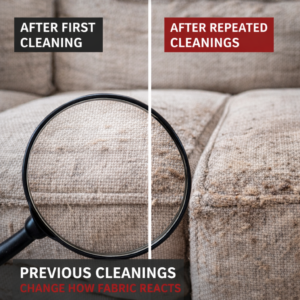
Why a Couch Is Never “Starting Fresh”
A couch does not reset after it dries. Each cleaning leaves behind subtle changes in fibers, finishes, and internal layers. This cumulative impact is central to Why Repeated Cleaning Starts to Damage a Couch. Some of these changes are invisible, while others only show up under certain conditions. Over time, they shape how the couch reacts to moisture, pressure, and handling.
Because these effects build gradually, it is easy to treat every cleaning as an isolated event. Pausing to consider past cleanings can prevent repeating actions that the couch may no longer tolerate well.
How Residue Builds Without Being Obvious
Many cleanings leave behind small amounts of residue, even when rinsing seems thorough. These residues can come from soaps, water minerals, or dissolved soils that settle back into the fabric. Individually, they may not cause problems.
As residue accumulates, however, it can change how fabric absorbs moisture or how evenly it dries. Residue accumulation is a known issue in textile cleaning history and material response. This can lead to patchy results or slower drying during later cleanings. Recognizing this buildup is a reason to hesitate rather than escalate effort.
Fiber Fatigue From Repeated Handling
Every time fabric is rubbed, blotted, or brushed, fibers shift slightly. While a single cleaning may not cause visible change, repeated handling reduces the fibers’ ability to return to their original position. Over time, this fatigue alters texture and appearance. These gradual texture shifts are described in Why Scrubbing Changes Couch Fabric Texture.
This is why a couch may begin to feel rougher or look less uniform after multiple cleanings. When these early signs appear, stopping is often safer than assuming more cleaning will restore the original feel.
How Moisture History Changes Absorption
A couch that has been cleaned before often absorbs moisture differently than it did when new. Previous wetting can open pathways into padding and seams, allowing liquid to travel farther and linger longer. This lingering moisture risk is explored further in Why Over-Wetting a Couch Causes Long-Term Damage.
This altered absorption increases the risk of internal dampness during later cleanings. Even if the surface feels dry, hidden layers may still be affected. Allowing longer rest periods or choosing not to re-clean can reduce this risk.
Why Past Success Can Be Misleading
One of the most common traps is relying on what worked last time. A method that seemed safe before may no longer be appropriate after multiple cleanings. Materials that tolerated moisture or friction once may now be less resilient.
This shift does not mean the earlier cleaning was wrong. It simply reflects cumulative change. Treating uncertainty as a signal to pause helps avoid pushing a couch beyond its current limits.
Changes to Finishes and Protective Layers
Some couch fabrics rely on surface treatments to maintain color, softness, or stain resistance. Repeated cleaning can gradually wear these finishes away, even when done carefully.
Once these layers are compromised, the fabric underneath reacts differently. It may absorb moisture faster or show marks more easily. At this stage, continuing to clean as before often causes faster deterioration, making restraint the safer choice.
Cushion Interiors and Memory Effects
Cushions remember their cleaning history as much as their use. Repeated moisture exposure can change how foam and padding compress and release liquid. These internal changes affect odor retention and drying behavior. This connection between moisture history and odor is explained in Why Couch Cushions Hold Odors Longer Than Fabric.
Because these effects are hidden, they are easy to underestimate. If a couch begins to dry more slowly or smell different after cleaning, stopping rather than repeating the process can prevent deeper issues.
Why Reactions Become Less Predictable Over Time
As cleaning history accumulates, couch behavior often becomes less consistent. One area may respond differently than another, even when treated the same way. This unevenness reflects differences in past exposure and wear. Cleaning history and age often overlap, a relationship explored in How Couch Age Affects Cleaning Safety.
When predictability disappears, continuing becomes riskier. Pausing allows the couch to stabilize and prevents compounding changes that are hard to reverse.
When Doing Less Is the Most Informed Choice
Understanding the impact of previous cleanings often leads to a simple conclusion: doing less can be safer than doing more. Allowing time between cleanings, or choosing not to address every issue, respects the limits created by past intervention.
This approach can feel counterintuitive, especially when cleaning once worked well. Still, restraint acknowledges that the couch is no longer in the same condition it was before.
FAQ
Why does my couch react differently now than it did before?
Because previous cleanings change fibers, finishes, and internal layers. These changes alter how the couch responds over time.
Can residue really affect cleaning results later?
Yes. Even small amounts of residue can change absorption and drying behavior after repeated cleanings.
Is it bad to clean a couch multiple times?
Not always, but each cleaning reduces tolerance. When reactions change, stopping is often safer than repeating.
How can I tell if previous cleanings are affecting my couch?
Signs include uneven results, slower drying, texture changes, or uncertainty about how the fabric will respond. When those appear, hesitation is justified.