
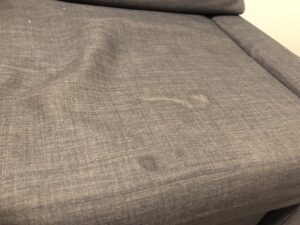
Old food stains don’t behave like fresh spills. Time changes their structure, allowing residue to dry, harden, and bond to fabric fibers in ways surface cleaning can’t easily reach. What looks like simple discoloration is often accompanied by deeper saturation in the padding below. The instinct to scrub these stains usually damages the fabric’s texture or color before it removes the residue—and often spreads the stain rather than lifting it.
Why This Stain Is Difficult
Food stains are complex because they’re made of multiple components that react differently over time. As a stain ages, parts of it oxidize, darken, or harden, while others migrate deeper into the fabric and padding. The visible mark on the surface is rarely the full extent of the problem. Because the stain has been present for months or longer, the fabric around it may also have changed—fading, weakening, or reacting unevenly to moisture.
Over time, stains can bond to materials and become more difficult to address without affecting the fabric itself.
Understanding the Fabric First
Different fabrics respond to old food stains in different ways. Natural fibers like cotton and linen absorb residue deeply and may develop permanent discoloration over time. Synthetic fabrics can trap hardened residue in tight weaves, while microfiber locks stains into its dense structure. Fabrics with stain-resistant coatings may hold dried food on top of the treatment, making it resistant to both water and friction. If the fabric has been exposed to heat, sunlight, or repeated use near the stain, color or texture changes may remain even if residue is removed.
Why Old Food Stains Behave Differently Than Fresh Ones
Fresh spills are still fluid and haven’t bonded to fibers. Fresh food stains behave very differently from older ones and are often easier to address before they set. Old stains have dried and undergone chemical and physical changes that make them more stable and harder to dissolve. Pressure from sitting, repeated contact, and environmental changes can push residue deeper into fabric and padding over time. Oils darken, sugars attract dirt, and pigments set, making older stains less responsive to methods that would have worked early on.
Why Scrubbing Often Makes the Problem Worse
Scrubbing affects only the surface layer, while most old food residue sits below it. Friction can fray fibers, dull color, and permanently alter texture without reaching the deepest parts of the stain. Scrubbing changes how fabric reflects light and feels to the touch, even when the stain lightens. Hardened residue may break into smaller particles that embed more deeply, spreading the discoloration. On textured fabrics, scrubbing can flatten or roughen fibers, leaving damage that remains even if the stain lightens.
Surface Discoloration Versus Internal Saturation
What you see on the surface is often only part of the stain. Food residue can soak into padding, where it hardens or spreads invisibly. Cleaning the surface may draw deeper residue back up as moisture dries, causing the stain to reappear. Some fabrics also develop shadows or halos around old stains as oils and dyes migrate outward over time.
Why Partial Removal Can Make Stains More Noticeable
When an old stain lightens unevenly, contrast can make it stand out more. Cleaning surrounding fabric more effectively than the stain itself can increase visibility, even if the stain is technically lighter. In some cases, removing residue reveals fabric damage or dye loss that was hidden before, creating a different kind of mark that’s harder to blend.
Why Repeated Cleaning Attempts Often Fail
Multiple attempts usually stress the fabric without reaching the deepest residue. Each round introduces moisture and friction that the material has to endure, increasing the risk of fading, texture change, or weakening. If a stain hasn’t improved after one careful attempt and full drying, additional efforts are more likely to cause damage than success.
Fabric Types That Require Extra Caution
Microfiber, velvet, silk, and textured fabrics are especially vulnerable to damage from attempts to remove old stains. Natural fibers may weaken where residue has been present for long periods. Fabrics with protective coatings may require compromising that layer to remove the stain, leaving the material exposed afterward.
When Stopping Is the Safer Choice
Not all old food stains can—or should—be removed. If the stain is stable, low-visibility, or the fabric has already changed, further cleaning may create more noticeable damage. Some stains reveal permanent dye loss or fiber wear once residue is lifted. When there’s uncertainty about how the fabric will respond, leaving the stain alone preserves options In some situations, leaving a couch untouched prevents further fabric damage. that aggressive cleaning can eliminate.
FAQ
Why does an old food stain look darker over time?
Oxidation, dust, and oils can accumulate, deepening color even without new spills.
How can I tell if the padding is affected?
Reappearing stains, odor, or texture changes with pressure suggest deeper saturation.
Why does the stain look worse after cleaning?
Moisture can spread residue, reveal underlying discoloration, or create uneven fading.
Is it worth removing very old food stains?
On delicate or worn fabrics, the risk of damage may outweigh the benefit.
Should I keep trying if the stain lightens but doesn’t disappear?
Repeated attempts often increase fabric damage without fully removing the stain.