
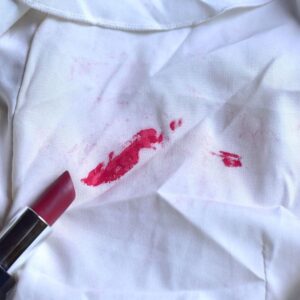
Makeup transfers onto fabric more easily than most people expect, and once it’s there, the instinct is usually to wipe it away immediately. But rubbing at foundation, lipstick, or mascara often spreads the oils and pigments deeper into the weave, turning a small smudge into a larger stain. Even though it feels wrong to leave it sitting there, pausing to think through your first move usually prevents more damage than acting on impulse.
What to Do Immediately
If the smudge is fresh, don’t wipe it. Lifting gently with a clean, dry cloth — pressing down and pulling straight up, not dragging across — sometimes removes surface makeup without pushing it further in. The goal is to pick up what hasn’t absorbed yet, not to spread or grind it into the fibers.
Don’t reach for makeup remover wipes or anything oil-based right away. Those products are designed for skin, not fabric, and the oils or chemicals in them can leave their own residue or create a greasy halo around the original smudge. Water alone isn’t always helpful either, especially with oil-based makeup — it can bead up or spread the stain sideways instead of lifting it.
Stop if you’re not sure what the makeup contains or what the couch fabric is. Some materials react badly to moisture, and certain makeup formulas bond with fabric in ways that make home cleaning risky. Doing nothing for a moment is better than doing the wrong thing quickly.
A Careful Cleaning Approach
If light blotting doesn’t work, you might try dabbing — not rubbing — the area with a barely damp cloth. Use as little moisture as possible and work slowly, checking after each touch to see if pigment is transferring onto the cloth or just moving around on the couch. Some makeup may lift this way, while other formulas resist gentle handling.
Let the spot dry completely before deciding whether to try again. Wet fabric hides discoloration, so you won’t know if you’re making progress or making things worse until it’s fully dry. Waiting can feel frustrating, but layering attempts on top of damp fabric often creates a bigger mess.
If the smudge fades but doesn’t disappear, that might be the limit of what gentle methods can do. Makeup contains dyes, oils, and setting agents that cling to fabric fibers, and pushing harder with stronger products often damages the couch itself more than it improves the appearance of the stain.
Common Mistakes That Feel Logical
Scrubbing at lipstick or foundation feels like the natural response, but friction breaks down the fabric’s texture and works pigment deeper into the weave. Repeated friction can permanently change how couch fabric looks and feels. Even if the color lightens, the area can end up looking worn or fuzzy compared to the rest of the couch.
Using dish soap or laundry detergent seems practical, but these are formulated to work with water and agitation in ways that don’t translate well to upholstery. They can leave behind residue, attract more dirt over time, or create a stiff spot that feels different from the surrounding fabric.
Assuming powder makeup is easier to remove than liquid is a common miscalculation. Powder can settle into the weave just as stubbornly, and adding moisture to it sometimes creates a paste that’s harder to lift than the original smudge.
When This Approach Is Not Enough
If the makeup has been sitting for hours or days, it’s likely bonded with the fabric in a way that surface cleaning won’t reverse. Set-in makeup stains involve oils and pigments that have migrated into the fibers, and trying to force them out at that point often does more harm than good. In situations like this, stopping early often prevents more visible damage.
Some fabrics — especially delicate weaves, anything with a nap, or materials labeled dry-clean-only — don’t tolerate moisture or friction well. If the couch came with care instructions that warn against water or DIY cleaning, it’s smarter to stop than to risk permanent texture changes or discoloration that spreads beyond the original smudge.
It’s also okay to leave a faint mark if what you’ve tried so far hasn’t worked. Many cosmetic products contain oils and pigments that can bind to fabric fibers once absorbed. A light shadow is often less noticeable than a damaged spot where the fabric’s been over-treated or discolored by repeated attempts.
FAQ
Does it matter what type of makeup it is?
It does, though it’s not always obvious which formulas will lift easily and which won’t. Oil-based products tend to cling more stubbornly, but even powder or cream makeup can be tricky depending on the fabric. If you’re not sure what you’re dealing with, assume it needs a lighter touch than you think.
What if the smudge is mascara or eyeliner?
Those tend to be harder to remove because they’re designed to resist smudging on skin, which means they also resist lifting from fabric. If gentle blotting doesn’t help, it’s usually better to stop than to scrub, since mascara especially can flake and spread when worked too aggressively.
Can I use rubbing alcohol or nail polish remover?
Some people suggest these, but both can strip dye from fabric or leave bleach-like spots, especially on darker couches. If you choose to test them, use a hidden area first and apply as little as possible. The risk often outweighs the potential benefit.
Should I cover the stain with a throw pillow and leave it?
If the smudge isn’t lifting and you’ve already tried the gentlest methods, covering it may genuinely be the most practical choice. Not every stain needs to be fought until the fabric gives out.